



INP-WealthPk
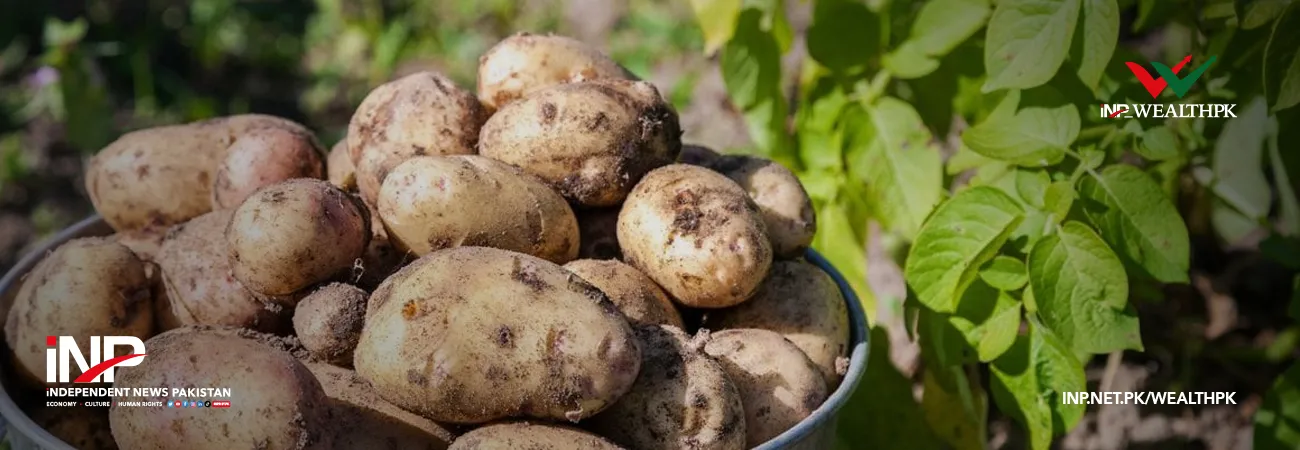
Freight subsidy, more exporters key to tapping Russian market for Pakistani potatoes
April 20, 2026
By Muhammad Luqman
Pakistan can better capitalise on the reopening of the Russian market for its potatoes by allowing more exporters to participate and offering freight subsidies to offset high transportation costs via Iran, according to growers and exporters.
“The export window for potatoes to Russia and Central Asian states is limited to around 45 days, after which their local crops enter the market,” said Waheed Ahmad, Patron-in-Chief of All Pakistan Fruit & Vegetable Exporters, Importers & Merchants Association (PFVA).
Talking to Wealth Pakistan, he noted that if Russia had lifted the import ban a month earlier, Pakistan could have exported a significant portion of the surplus stock currently stored in cold storage facilities.
Russia imposed a ban in May 2025 on Pakistani potato imports — particularly from Punjab and Okara — citing phytosanitary concerns. The restriction was lifted after 11 months, following the submission of laboratory reports by the Directorate of Plant Protection and the Trade Development Authority of Pakistan to Russian authorities.
However, exporters are facing mounting logistical challenges. The suspension of trade routes through Afghanistan has disrupted access to Central Asian markets, while instability in the Middle East has affected alternative routes via Iran.
“Transit time has increased to 20 days from the earlier 7-8 days due to the change in routes,” Waheed Ahmad said. “Previously, shipments to the Commonwealth of Independent States (CIS) moved through Afghanistan. Now, via Iran, the process is longer and significantly more expensive.”
Freight costs have doubled, with container charges rising from $3,500 to $7,000. Sea transport is also not a viable alternative, as shipping lines take up to 70 days — too long for a perishable commodity like potatoes.
Despite these constraints, Pakistan exports potatoes to over two dozen countries, including Malaysia and Sri Lanka. In 2024, the country exported potatoes worth $169 million, making it the 11th largest exporter globally.
“Exporters continue to face high freight costs, logistical bottlenecks, and inadequate cold storage infrastructure,” he added. Growers are urging the federal government to introduce freight subsidies to improve competitiveness in Russian and CIS markets.
“The Punjab chief minister proposed a 25% freight subsidy in January, but the recommendation is still pending with the Ministry of Commerce,” said Chaudhary Maqsood Ahmad Jatt, Vice-President of the Potato Growers Cooperative Society of Pakistan.
He emphasised that reviving the Punjab Potato Board could help farmers secure better prices through both exports and domestic sales. He also called for the inclusion of growers’ representatives in export committees to ensure policies reflect ground realities.
At present, the federal government’s potato export committee includes representation from other provinces, but not from Punjab, Maqsood Jatt claimed. He said that Punjab produces over 90% of the country’s total potato crop.
This year, Pakistan’s potato market has suffered due to a bumper crop of 12 million tons, compared to the usual 8-9 million tons, causing prices to crash.
Maqsood Jatt stressed the need for long-term planning. “Pakistan must learn from this situation and diversify potato varieties for both industrial processing and table consumption.”
Credit: INP-WealthPk