

آئی این پی ویلتھ پی کے
Strategy proposes joint farmer–factory ownership model for tea industry in Pakistan
December 13, 2025
Moaaz Manzoor
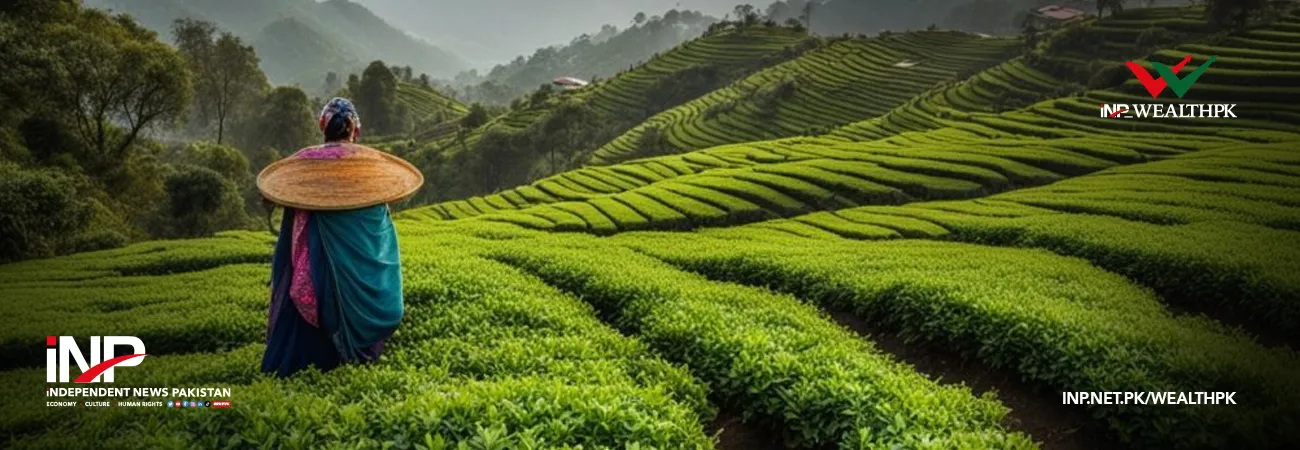
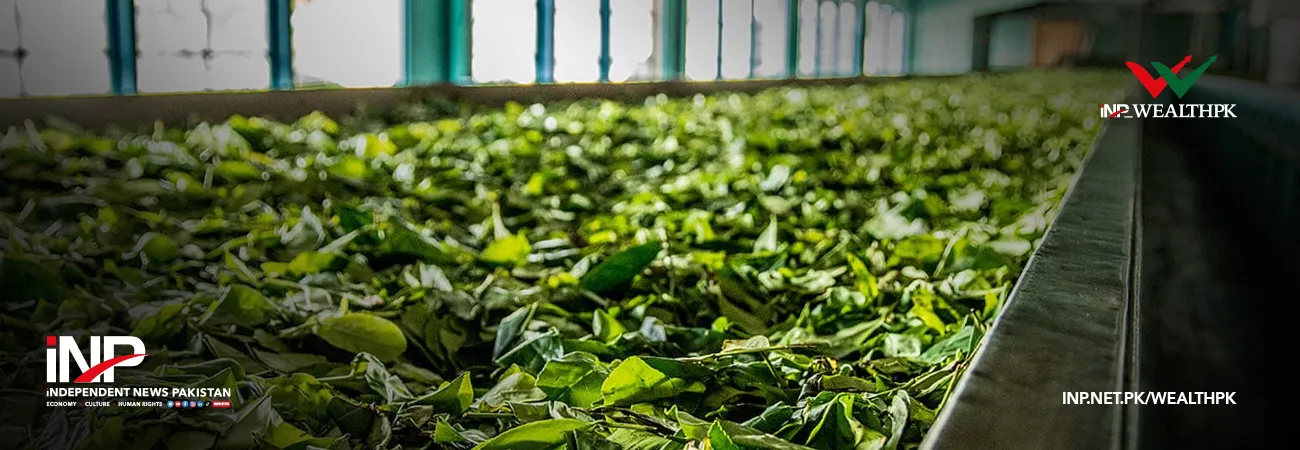
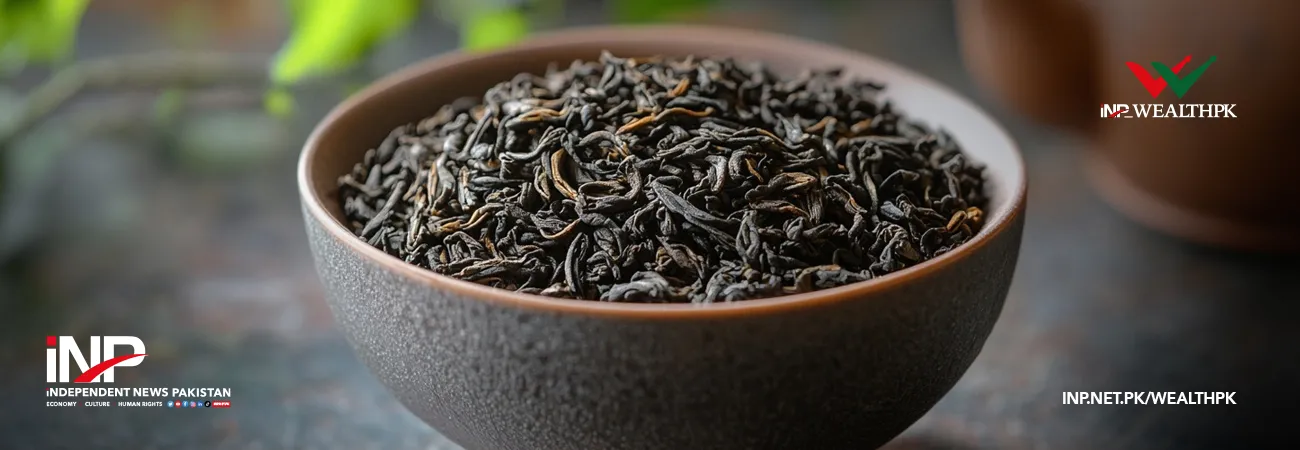
Pakistan’s proposed tea development framework recommends a centralised system for agricultural inputs and extension services, alongside a joint ownership model linking farmers with processing factories, to ensure uniform quality, reduce production risks and strengthen rural income stability. A strategy document prepared under the FAO Technical Cooperation Programme states that tea is a technically demanding perennial crop requiring strict adherence to planting, pruning and plucking standards.
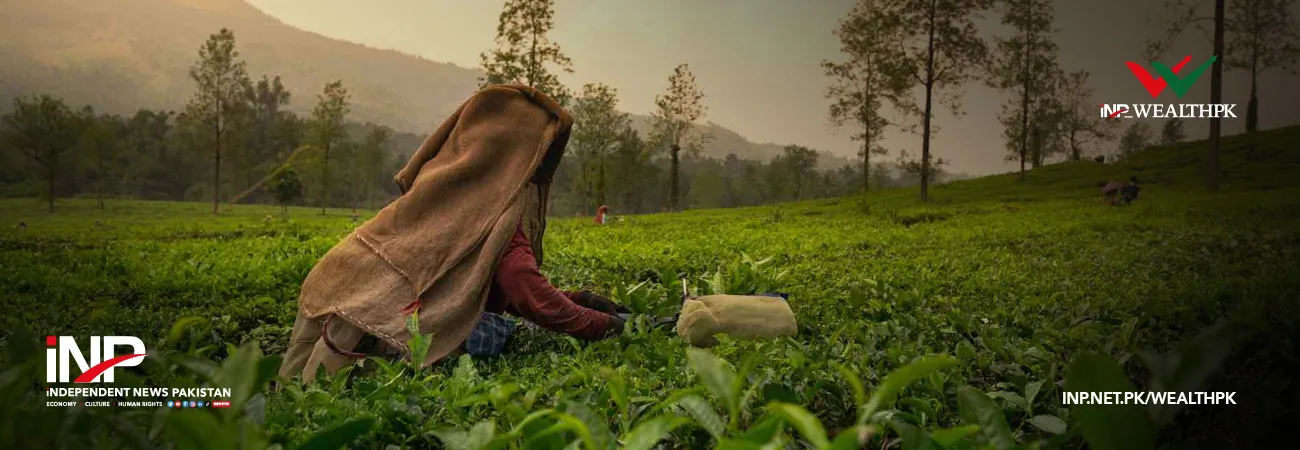
Variations in farming practices—common in fragmented smallholder systems—can lead to inconsistent leaf quality and lower factory yields. To address this challenge, the strategy proposes a centralised management structure that oversees fertilizer distribution, crop protection materials, shading guidelines, pruning cycles and leaf-collection procedures across all growers.
According to the document available with Wealth Pakistan, under this system, farmers would not be required to make immediate cash payments for agricultural inputs. Instead, inputs would be provided centrally and later deducted from leaf payments. This arrangement is designed to ease farmers’ financial burdens during the years when tea bushes are still maturing and not yet generating income.
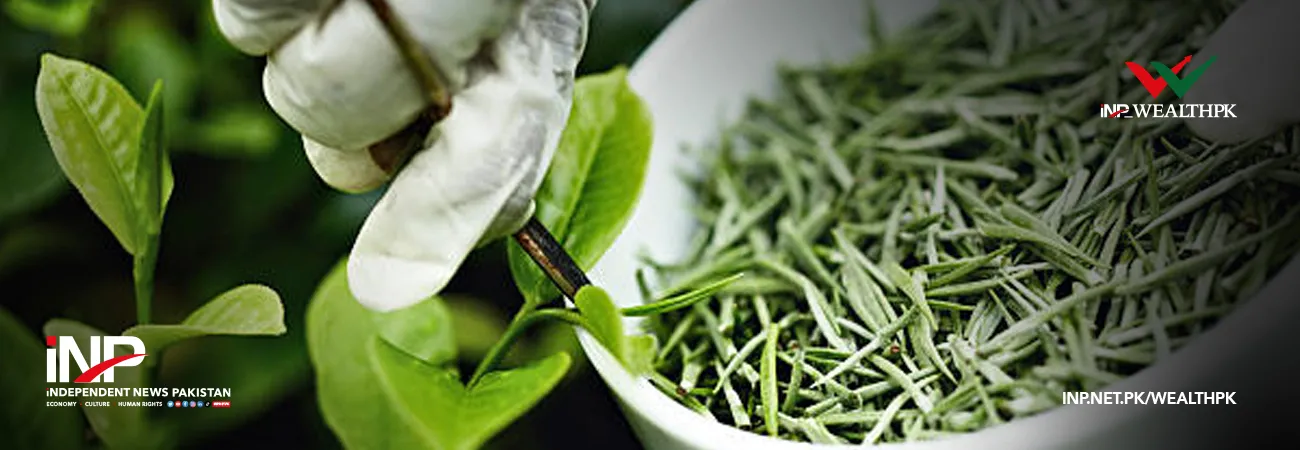
It also allows extension teams to ensure that only approved fertilizers, safe chemical applications and correct volumes are used, helping Pakistan meet international residue standards. The strategy highlights that centralised control will allow the Tea Development Board, extension services and processors to closely monitor plucking standards. The document emphasises the goal of maintaining at least 70 percent fine leaf content—a requirement for premium orthodox and green teas.
Trained field monitors would assess plucking quality at collection points, enabling immediate feedback to growers and ensuring that factories receive consistent raw material. Alongside centralised input management, the report outlines a joint farmer–factory ownership model inspired by successful smallholder-led systems in other tea-producing countries.
Under this model, farmers would become equity partners in vertically integrated processing units, receiving returns not only from green leaf sales but also from profits generated further down the value chain. According to the document, the joint ownership structure also helps mitigate political and social risks. The strategy notes that community stakeholding reduces the likelihood of disruptions and strengthens the long-term sustainability of plantation and processing operations.
The report cautions that while the model draws lessons from Kenya’s well-known smallholder tea system, it must be shielded from political interference, which has weakened similar structures elsewhere. To prevent governance issues, the strategy recommends that the revived Pakistan Tea Board play an oversight and regulatory role to ensure transparency, quality control and equitable profit distribution.
In addition to ownership reforms, the strategy recommends calendarised extension support. These services would include field visits to monitor plant health, implementation of scheduled pruning cycles, soil and nutrient management guidance, training in leaf-handling techniques and support for shade-tree planting and intercropping.
The document states that these extension functions will be essential for maintaining consistency across different landholding models—smallholders, clusters and large plantation blocks. The strategy concludes that centralised input control combined with shared factory ownership offers Pakistan the most effective framework for developing a modern, quality-driven tea industry capable of expanding sustainably.
Credit: INP-WealthPk
متعلقہ مضامین