

آئی این پی ویلتھ پی کے
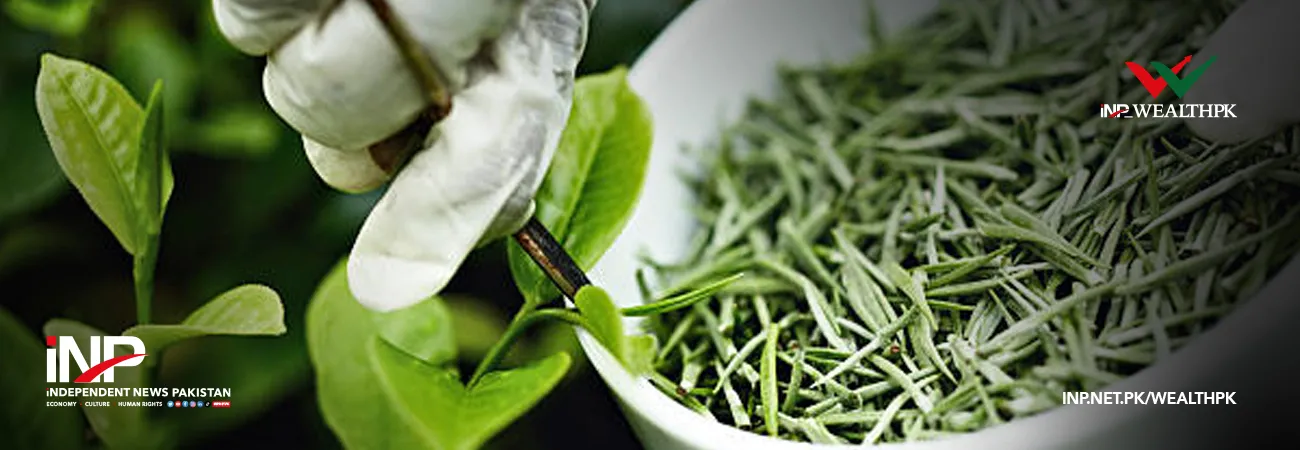
Pakistan plans to restructure NTHRI with overseas training and external expert support
December 13, 2025
Abdul Ghani
Pakistan plans to restructure the National Tea and High-Value Crops Research Institute (NTHRI) by introducing specialised tea research teams, overseas training programmes and external technical assistance to address capacity gaps in the country’s tea development efforts, according to a strategy document prepared under the FAO Technical Cooperation Programme.
The report, available with Wealth Pakistan, notes that NTHRI, originally established as a tea research institute, gradually shifted toward commercial production and expanded its mandate, resulting in the dilution of the essential expertise required for tea agronomy, processing, and field extension. The document states that these changes weakened the institute’s ability to support a national-scale tea development programme and now require urgent institutional reforms.
A key recommendation is the creation of a dedicated tea research unit within NTHRI. The unit would consist of at least four permanent researchers assigned exclusively to tea-related functions, including bush management, pruning cycles, leaf quality assessment, agronomy and processing techniques. According to the document, this restructuring is intended to realign NTHRI with its original purpose as a technical institution rather than a commercial operator.
To strengthen technical capacity, the strategy proposes sending NTHRI researchers to selected “friendly origins” for three-month immersive training. Sri Lanka and China have been identified as priority destinations due to their established expertise in orthodox, green, oolong and specialty tea manufacture. Sri Lanka is highlighted for its terrain and clone similarities, while China’s Fujian province is noted for its advanced technical capabilities across multiple tea categories.
The report also calls for hiring external tea experts, particularly from Nepal, to provide hands-on guidance in critical technical areas. These include pruning systems, nutrient application, plucking standards, field-level leaf quality management, and factory-level processing parameters for black, green, oolong and white teas. The document describes this expert engagement as necessary to bridge Pakistan’s current knowledge gap.
The strategy emphasises that NTHRI must withdraw from commercial-scale production and focus on research and pilot testing. It recommends leasing out the institute’s existing processing machinery and planted areas to private tea companies for a two-year transition period. This arrangement would allow commercial operations to continue while freeing NTHRI’s staff and facilities for research, experimentation and skill development.
According to the document prepared under the FAO Technical Cooperation Programme and available with Wealth Pakistan, NTHRI is advised to invest in benchtop pilot plants to support controlled experimental work. These units would help optimise processing parameters, establish quality benchmarks, and provide data to guide the commercial factory designs planned for Phase 1 of Pakistan’s tea expansion.
The report also stresses the importance of developing NTHRI’s capacity to deliver effective extension services. These services will include training growers on land preparation, spacing, soil management, shading techniques, plucking cycles and pest control. Given literacy challenges in some areas, the strategy recommends producing training materials in multiple formats, such as videos, illustrated manuals and field demonstrations.
The document further proposes introducing tea-focused modules into university agriculture programmes to build a long-term talent pipeline, while also strengthening collaboration between NTHRI and provincial extension departments.
According to the strategy, improving NTHRI’s technical capacity is essential for the success of Pakistan’s tea cultivation programme. Without a fully equipped research and extension system, the report warns that expansion goals will face significant operational and quality-related challenges.
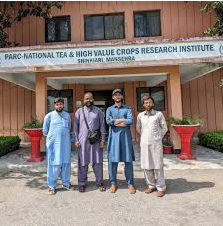
Credit: INP-WealthPk
متعلقہ مضامین