


i INP-WEALTHPK
Iran transit corridor poised to expand Pakistan’s access to Central AsiaBreaking
April 29, 2026
By Azam Tariq
Pakistan’s newly activated transit corridor through Iran is giving exporters a practical, lower-cost westward route to Central Asia at a time when predictable market access is crucial. According to analysts, if compliance and infrastructure challenges are managed effectively, the corridor could strengthen Pakistan’s trade reach, regional connectivity, and long-term energy options.
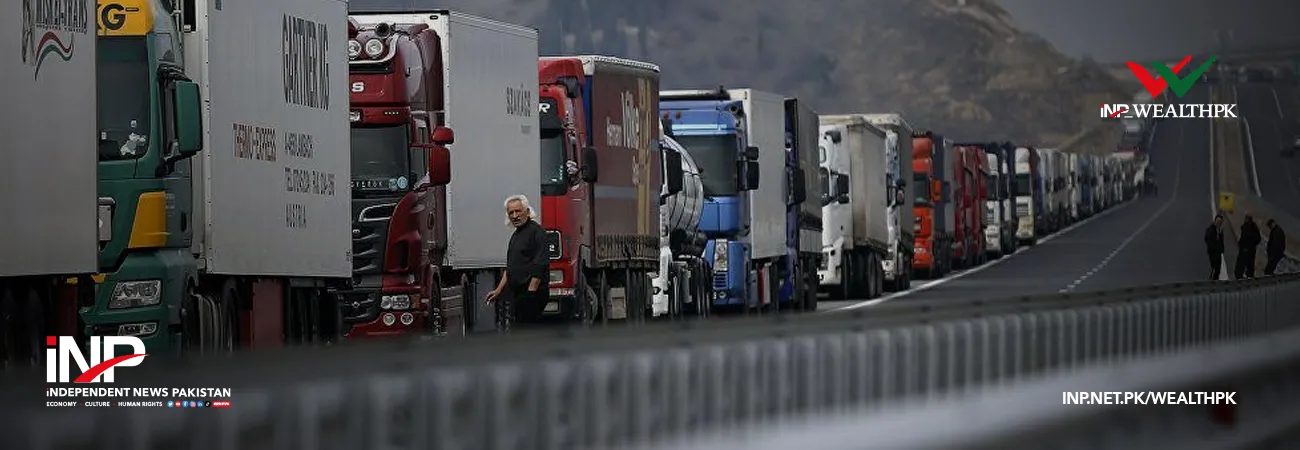
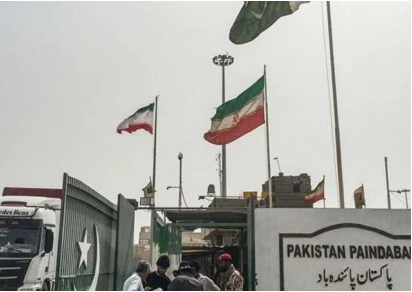
The route gained operational momentum this month after Pakistan activated the Gabd-Rimdan border terminal under the Transports Internationaux Routiers (TIR) system and dispatched its first export consignment — a frozen meat shipment — from Karachi to Tashkent via Iran.
Business Recorder reported that the terminal became operational for containerised and refrigerated cargo in April 2026, offering a shorter, safer, and more modern alternative to routes passing through Afghanistan.
In parallel, the government has allowed certain exports to Iran by land without mandatory banking instruments from March 24 to June 21, while also permitting rice exports to Central Asian countries and Azerbaijan through Iran, signalling a policy push to operationalise the corridor and facilitate early trade flows.
According to the Pakistan Business Council, Pakistan’s total trade with the Central Asian countries stood at only $429.12 million in 2024, accounting for just 0.33% of its global trade over 2020–2024, highlighting significant untapped potential in the region.
Earlier, speaking with Wealth Pakistan, Federal Minister for Board of Investment Qaiser Ahmed Sheikh said the Pak-Iran trade route could open access to Central Asian markets, with Iran serving as a natural gateway for Pakistan’s westward trade expansion.
This argument gains further importance as Pakistan faces increasing pressure to diversify its trade routes. Exports to Afghanistan declined sharply to $219.5 million in July–December 2025 from $505.8 million in the same period a year earlier, according to data from the State Bank of Pakistan.
In this context, a functioning Iran corridor can help reduce reliance on a single western passage while addressing delays and unpredictability that have often discouraged exporters from treating Central Asia as a viable commercial destination.
Sheikh further noted that improved access to Iranian oil, subject to evolving regional conditions, could eventually help lower Pakistan’s energy costs, adding a longer-term economic dimension to the corridor’s significance.
Even so, the corridor enhances Pakistan’s strategic optionality by maintaining an additional trade and energy channel at a time when both governments and businesses are seeking more resilient and diversified supply routes.
Irfan Bukhari, founding president of the Export Import Bank of Pakistan, told Wealth Pakistan that the corridor’s real promise lies in improving competitiveness. Under the TIR framework, he said, Pakistan can move goods more reliably to Central Asia, reduce logistics costs, and give practical momentum to the Economic Cooperation Organization’s regional connectivity vision.
However, he cautioned that without workable solutions to sanctions exposure, banking channels, and customs alignment, trade volumes may remain constrained despite improved physical connectivity.
The TIR system itself is designed to streamline customs procedures and reduce time and costs at border crossings, but these gains can only translate into sustained export growth if financial compliance mechanisms and settlement pathways are equally reliable.
Bukhari also pointed to a longer-term opportunity that is often overlooked: the expansion of services and joint ventures. If the route becomes dependable, Pakistani firms could collaborate with Chinese and Turkish contractors to export construction, engineering, and related services alongside goods into Central Asian markets.
According to the State Bank of Pakistan’s data for the six-month period from September 2025 to February 2026, Pakistan’s services exports to the Central Asian countries totalled about $2.21 million. Kazakhstan accounted for the largest share at approximately $1.21 million, followed by Uzbekistan at around $724.87 thousand, Tajikistan at about $177.51 thousand, Kyrgyzstan at roughly $96.91 thousand, and Turkmenistan at about $1.13 thousand.
The Pakistan Business Council notes that Pakistan’s exports to the Central Asian countries remain concentrated in a narrow range of products, including rice, sesame seeds, fruits, frozen bovine meat, and medicaments. A more reliable Iran route, therefore, could serve not only as a transit passage but also as a platform for export diversification.
For Pakistan, the Iran corridor is best viewed not as a standalone solution but as a timely opportunity. If supported by efficient border management, credible banking channels, and consistent policy implementation, the route could gradually translate geographic proximity into export growth, stronger regional connectivity, improved energy resilience, and broader participation in regional commerce.
Credit: INP-WealthPk
Related News