


INP-WealthPk
Global trade fragmentation opens new avenues for Pakistan amid shifting economic order
April 20, 2026
By Qudsia Bano
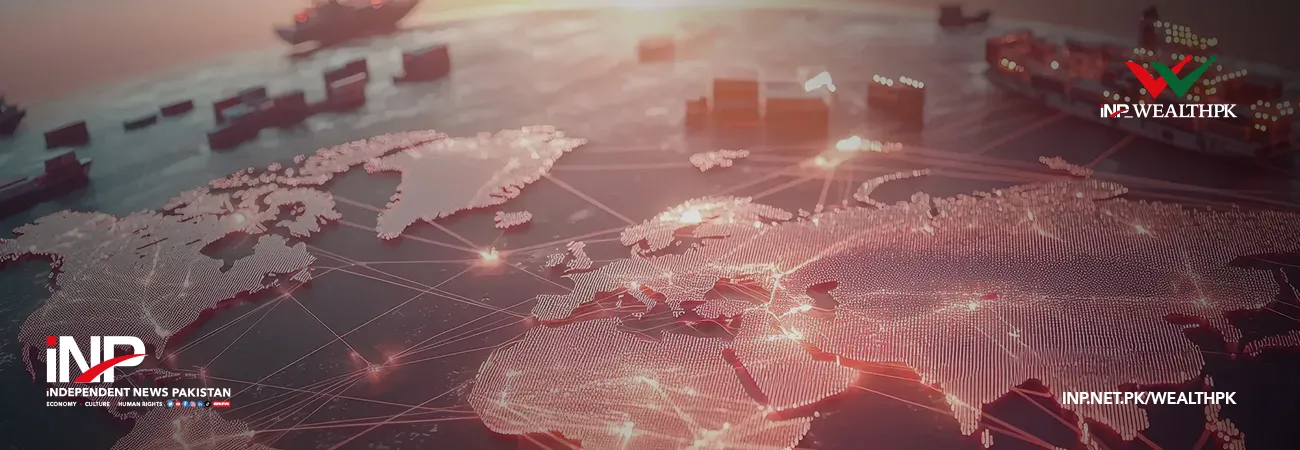
The global trading system is undergoing a structural shift, creating both risks and opportunities for developing economies, including Pakistan, as traditional trade patterns give way to a more fragmented and regionally driven order.
Recent data from the United Nations Conference on Trade and Development shows that global trade is being reshaped by geopolitical tensions, protectionist policies, and ongoing supply chain realignments. These forces are influencing investment flows and global value chains, with the most pronounced effects observed in emerging markets.
At the same time, the multilateral trading system is facing increasing pressure. According to estimates by the World Trade Organization, global merchandise trade growth is expected to slow sharply to around 0.5 per cent in 2026 due to rising tariffs and policy uncertainty. This moderation reflects a broader transition from globalisation towards regionalisation and more selective trade partnerships.
Despite this slowdown in real growth, overall trade volumes remain historically high. Global trade surpassed $35 trillion in 2025, supported in part by sustained demand for technology-related goods and adjustments in supply chains. In parallel, South–South trade — commerce between developing countries — has expanded significantly, reaching approximately $6.8 trillion and accounting for more than a quarter of global trade. This trend holds particular relevance for countries like Pakistan, which are increasingly strengthening ties with regional and emerging market partners.
Analysts note that such structural changes are creating new opportunities for countries positioned to integrate into evolving supply chains. Abid Qaiyum Suleri of the Sustainable Development Policy Institute observes that fragmentation in global trade often leads to the reconfiguration of production networks. Countries offering competitive production costs and strategic connectivity, he notes, are better placed to attract relocated manufacturing and trade activity.
Supporting this perspective, Kamran Ahmed, Policy Advisor at the All Pakistan Business Forum, says that the weakening of a rules-based multilateral system is increasing the importance of bilateral and regional trade arrangements. He highlights that Pakistan’s geographic position — linking South Asia, Central Asia, and the Middle East — provides a natural advantage in an increasingly regionalised trade environment.
Available data further underscores this evolving landscape. While real trade growth is slowing, nominal trade values have continued to expand in recent years, with merchandise exports increasing by around 6.5%, partly reflecting price effects and sector-specific demand. At the same time, trade and investment flows are being shaped more by strategic considerations — including national security, technology controls, and energy access — than by cost efficiency alone.
For Pakistan, these developments present a mixed outlook. On one hand, rising protectionism and weaker global demand could constrain export growth, particularly in traditional sectors such as textiles. On the other hand, the ongoing reorganisation of supply chains offers opportunities to integrate into new production networks, especially in areas such as information technology, light manufacturing, and agri-based exports.
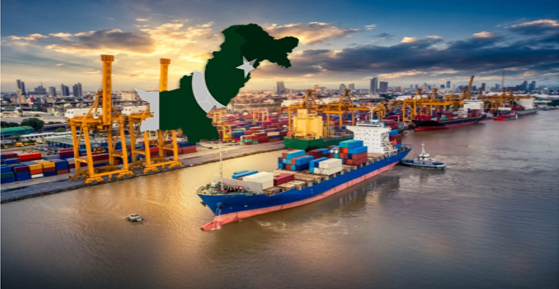
The growing emphasis on regional trade and alternative economic corridors may further enhance Pakistan’s prospects. As countries increasingly prioritise shorter and more secure supply routes, investments in connectivity and logistics could strengthen Pakistan’s role as a transit and trade hub within the broader region.
However, realising these opportunities will depend on timely and targeted policy responses. Improving trade facilitation, diversifying the export base, and enhancing overall competitiveness will be critical for Pakistan to effectively respond to the changing global trade environment.
In this context, the transformation of the global trading system represents a critical juncture. While the erosion of traditional trade structures introduces uncertainty, it also creates space for emerging economies to reposition themselves. For Pakistan, the key challenge will be to translate these structural shifts into tangible economic gains through strategic planning and sustained reform efforts.
Credit: INP-WealthPk