


INP-WealthPk
EU-India FTA set to intensify pressure on Pakistan’s textile exports
September 24, 2026
By Muhammad Zulqarnain
Pakistan’s textile industry faces growing competitive pressure in the European Union as the EU-India Free Trade Agreement moves towards implementation, threatening to narrow Pakistan’s preferential tariff advantage in a market that absorbs a large share of its apparel and textile exports.
The risk is particularly significant because Pakistan’s exports to the EU are heavily concentrated in textiles and apparel, while India competes in many of the same product categories. Lower tariffs on Indian goods could influence European sourcing decisions and enable Indian exporters to compete more aggressively on price.
The EU absorbs 49.3% of Pakistan’s non-knitted apparel exports, 42.5% of its made-up textile exports and 40.5% of its knitted apparel exports, making any change in competitive conditions in the European market particularly important for the industry.
Pakistan currently retains a strong position in several European textile categories. It holds around 14% of the EU market for cotton products, compared with India’s 8.5%, and 10.9% of the market for made-up textile articles, against India’s 5.2%.
According to a brief by the Pakistan Institute of Development Economics (PIDE), the EU-India FTA would provide preferential access for nearly 99.5% of Indian exports once ratified, eroding the tariff advantage of around 9% to 12% that Pakistan currently enjoys under the EU’s Generalised Scheme of Preferences Plus (GSP+), which provides duty-free access on approximately 66% of EU tariff lines.
The removal of tariffs on Indian products could therefore increase competitive pressure on Pakistani suppliers, with experts identifying apparel, home textiles, cotton yarn and fabrics among the higher-risk categories.
Speaking to Wealth Pakistan, Dr Junaid Ahmed, chief of research at PIDE, said Pakistan’s vulnerabilities extended beyond the expected erosion of its tariff advantage.
He said India had stronger trade complementarity with major EU markets, including Italy, Spain, Greece and France, indicating that its export basket was more closely aligned with European demand. India also maintained a comparative advantage in man-made fibres, carpets and textile intermediates, while Pakistan remained concentrated in cotton-based textiles and apparel.
Ahmed said Pakistan also faced structural disadvantages in energy pricing, access to finance, trade facilitation, logistics and institutional effectiveness.
Pakistan’s electricity tariff stood at 13.2 cents per kilowatt-hour, compared with 9.3 cents in India, while its policy interest rate was 10.5%, against India’s 5.25%, he added.
India also performed better in customs, infrastructure, international shipments, logistics competence, tracking and delivery timeliness. These advantages could enable Indian exporters to respond more efficiently to European demand once tariff barriers are removed.
Wajid Islam, Research Economist at PIDE, warned that even limited erosion of Pakistan’s European market share could create concentrated employment risks, as the textile and apparel sector supports around 15 million people and accounts for roughly 40% of industrial employment.
With the country’s GSP+ status due for review by year-end, uncertainty over the continuation of these preferences could place exporters under additional pressure as India moves towards treaty-based access, he told Wealth Pakistan.
Islam recommended improving energy efficiency, labour productivity, trade facilitation and logistics while investing in automation and compliance with EU sustainability, labour and product standards.
Pakistan also needed to diversify its export markets and move from low-value production towards design, branding and higher-value textile products, he said.
The experts stressed that Pakistan’s ability to preserve its textile position in the EU would depend on retaining preferential access while addressing domestic competitiveness constraints.
They said reducing production costs, improving productivity and logistics, increasing value addition and strengthening supply reliability would become increasingly important as Indian exporters gain stronger tariff and commercial access to European markets.
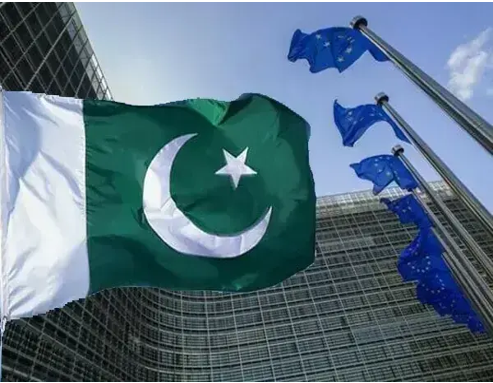
Credit: INP-WealthPk
Related Articles