


INP-WealthPk
China’s pharma innovation boom opens new collaboration avenues for Pakistan
September 24, 2026
By Qudsia Bano
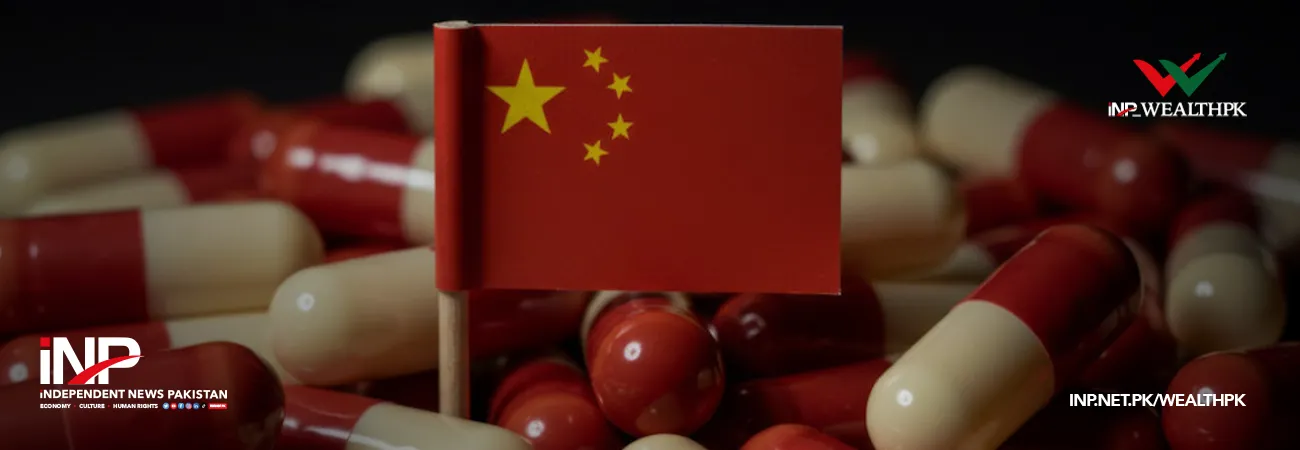
China’s rapidly expanding role in global pharmaceutical innovation is opening new avenues for Pakistan to pursue technology transfer, joint research and local manufacturing partnerships, potentially helping the country build domestic capabilities rather than remain heavily dependent on imported pharmaceutical technologies and inputs.
The opportunity has gained significance as Chinese-developed drugs attract growing international interest. Official Chinese data show that innovative-drug out-licensing deals reached about $110 billion in the first half of 2026 through 81 transactions, equivalent to around 80% of the total value recorded during all of 2025.
The deals covered 10 therapeutic areas, including oncology, metabolic, immune and neurological diseases, with buyers spanning about 20 countries and regions.
China’s National Medical Products Administration said the country accounted for about 30% of new drugs under development globally, while the number of clinical trials conducted there surpassed 5,000 for the first time in 2025. Of these, 2,997, or 57.5%, involved new drugs.
The momentum accelerated during 2025, when China approved 76 innovative drugs, up from 48 in 2024. More than 150 overseas licensing transactions involving Chinese innovative medicines were concluded during the year, with their potential value exceeding $130 billion, according to official data.
Building stronger university-industry linkages, joint research programmes, clinical-research capacity and mechanisms for absorbing and adapting transferred technology are essential if Pakistan wants to develop its own innovation capabilities.
China’s growing position in global pharmaceutical innovation therefore offers Pakistan an opportunity to deepen cooperation at a time when bilateral pharmaceutical engagement is already expanding.
Experts say the bigger objective should be to use those partnerships to move progressively from dependence on imported inputs and technologies towards local research, technology absorption, advanced manufacturing and greater participation in the global life-sciences value chain.
Speaking to Wealth Pakistan, Dr Muhammad Saalim, Assistant Professor at the Capital University of Science & Technology (CUST), Islamabad, and R&D Consultant at PsiMega2 (Pvt.) Ltd., a biotechnology R&D and contract research organisation, said China’s experience demonstrated the importance of close collaboration between academia and industry in developing commercially viable innovation.
“From my experience of studying and working in China, I believe a major strength is the close collaboration between academia and industry, allowing China to address both current and future challenges,” he said.
For Pakistan, Saalim identified technology transfer, capacity building and joint research as the most promising areas for cooperation.
“Rather than simply importing finished technologies, Pakistan could learn from China’s approach of acquiring, localising, adapting and further developing technologies,” he said.
Saalim said China’s high-speed rail development provides a broader example of technological absorption and localisation. A similar approach in life sciences could help Pakistan develop its own research, manufacturing and technological capabilities instead of remaining dependent on imported solutions.
Recent Pakistan-China engagements indicate that cooperation in the pharmaceutical sector is already moving towards commercial projects.
The Ministry of National Health Services said a Pakistan-China pharmaceutical conference held in Islamabad in July generated 22 commercial agreements worth $629.5 million, alongside 84 memoranda of understanding with an estimated value of around $800 million.
The commercial agreements included projects in active pharmaceutical ingredients, local vaccine production, clinical trials, generic formulations and injectables, and medical-device manufacturing. The conference brought together 240 Chinese delegates representing 140 companies and 430 Pakistani representatives from 210 local firms.
Earlier, in May 2026, Pakistani and Chinese companies signed 10 MoUs covering API manufacturing, technology transfer, vaccine collaboration and pharmaceutical investment, providing another platform for industrial cooperation.
The technology-transfer opportunity is particularly important because Pakistan currently imports about 95% of the raw materials used in medicine manufacturing despite producing nearly 85% of its pharmaceutical products domestically, according to the Ministry of National Health Services.
Greater cooperation in APIs, vaccines, biotechnology and pharmaceutical manufacturing could therefore help Pakistan progressively increase local value addition while developing the technical capabilities required for more sophisticated production.
The opportunity also comes as Pakistan’s pharmaceutical industry seeks a larger international presence. Pharmaceutical exports registered a record 34% year-on-year increase in 2025, according to the Finance Division, while the industry has proposed a dedicated PharmEx Pakistan platform to support market diversification, international certification and export expansion.
Saalim said the longer-term opportunity goes beyond attracting Chinese factories or importing newly developed medicines.
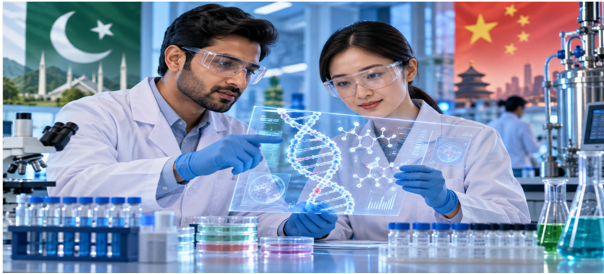
Credit: INP-WealthPk
Related Articles