

آئی این پی ویلتھ پی کے

Pakistan’s REER rises to 105.8 in April, raising concerns over export competitiveness
May 20, 2026
By Moaaz Manzoor
Pakistan’s real effective exchange rate (REER), a key indicator used to measure the rupee’s inflation-adjusted competitiveness against the currencies of major trading partners, increased to 105.8 in April 2026, according to data released by the State Bank of Pakistan (SBP).
The latest SBP data showed the REER index rose from 104.29 in March 2026 to 105.8 in April 2026, registering a month-on-month increase of 1.45 percent.
Meanwhile, the nominal effective exchange rate (NEER), which measures the rupee’s trade-weighted value without adjusting for inflation, declined slightly during the same period.
According to the SBP, the NEER index eased to 37.89 in April from 38.02 in March, reflecting a monthly decline of 0.35 percent.
The effective exchange rate indices track the rupee’s movement against the currencies of Pakistan’s major trading partners after applying trade weights, while the REER additionally adjusts for inflation differences between Pakistan and its trading partners.
The increase in REER during April suggests that a combination of domestic inflation and exchange rate movements raised the rupee’s real trade-weighted value.
A higher REER generally signals weaker export competitiveness because domestic goods become relatively more expensive compared with those of trading partners. Conversely, a lower REER can support exports by making local products comparatively cheaper in international markets.
The latest SBP data showed the REER remained above the 100-base benchmark throughout the review period. The index stood at 104.88 in November 2025 before declining to 103.55 in December and 103.99 in January 2026. It eased further to 103.11 in February before increasing to 104.29 in March and 105.8 in April.
The NEER index, meanwhile, remained relatively stable over the six-month period. It stood at 38.18 in November 2025 before gradually declining to 37.97 in December, 37.83 in January and 37.64 in February. The index recovered slightly to 38.02 in March before easing again in April.
Month-on-month changes in the REER also reflected greater volatility during the period. After declining by 1.27 percent in December 2025, the REER increased by 0.42 percent in January 2026 before falling by 0.84 percent in February. It then rose by 1.14 percent in March and 1.45 percent in April.
The latest movement in the exchange-rate indices comes amid broader external-sector stabilisation in Pakistan during FY2025-26, supported by improved remittance inflows, relative exchange-rate stability and reserve accumulation.
At the same time, rising imports and changing global commodity prices continued to influence the country’s external competitiveness and currency dynamics.
Changes in the REER are closely monitored because they serve as an important indicator of Pakistan’s export competitiveness, particularly for the manufacturing and textile sectors that depend heavily on international markets.
A sustained increase in the REER can create pressure on exporters if domestic production costs rise faster than those in competing economies.
However, overall competitiveness depends on several other factors as well, including productivity, energy costs, trade policy, infrastructure and global demand conditions.
The latest SBP data indicate that while the rupee remained relatively stable in nominal terms during April, inflation-adjusted movements pushed the REER higher, potentially affecting export competitiveness if the trend continues in the coming months.
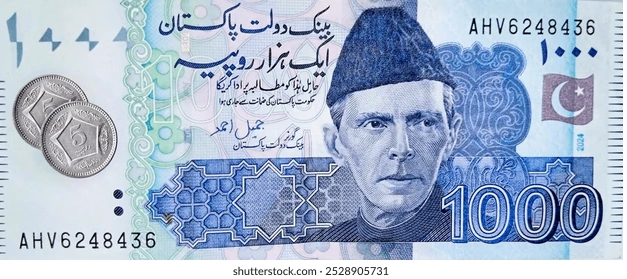
Credit: INP-WealthPk
متعلقہ مضامین