

آئی این پی ویلتھ پی کے
Pakistan’s $250m Panda Bond marks strategic shift in external financing model
May 20, 2026
By Azam Tariq
Pakistan’s inaugural Panda Bond issuance in China’s onshore capital market is viewed as a transformational step for the country’s external financing architecture, offering a strategic pathway to diversify funding sources, reduce dependence on the US dollar, and deepen financial connectivity with the world’s second-largest capital market under the broader framework of Pakistan-China economic cooperation.
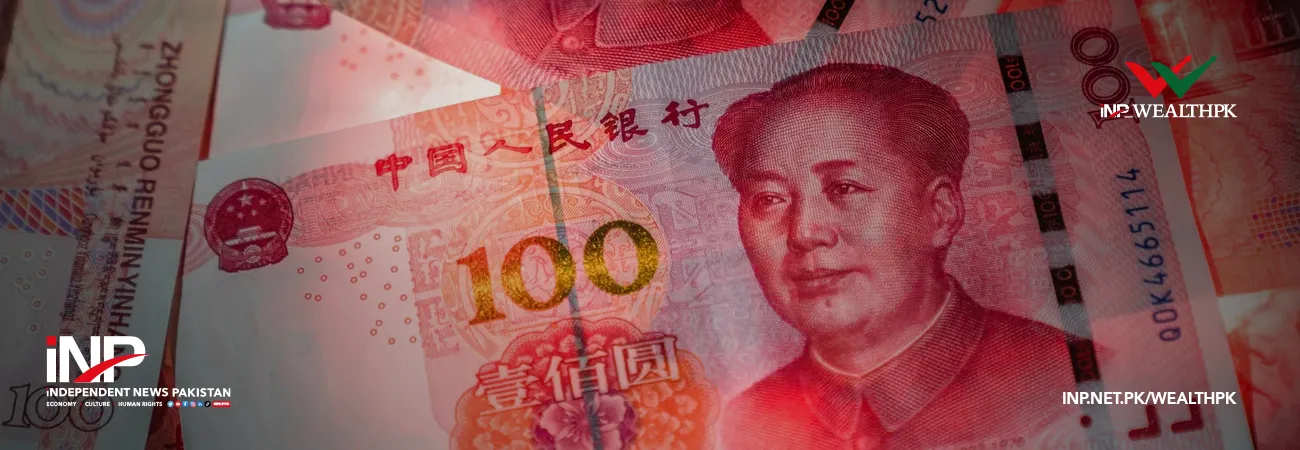
Pakistan made its debut in the Chinese market with a 1.75 billion yuan (around US$250 million), three-year fixed-rate Panda Bond, which attracted investor demand of more than 8.8 billion yuan (approximately US$1.3 billion), resulting in an oversubscription of more than five times. The bond carried a coupon rate of 2.5 percent.
According to a report published by the Associated Press of Pakistan, Prof Cheng Xizhong, Senior Research Fellow at the Charhar Institute, a non-governmental Chinese think-tank on diplomacy and international studies based in Beijing, said the coupon was the lowest in Pakistan’s sovereign bond issuance history and significantly below the average 7.7 percent yield on its existing dollar-denominated bonds.
The issuance was supported by credit-enhancement guarantees from the Asian Development Bank (ADB) and the Asian Infrastructure Investment Bank (AIIB), and received a domestic AAA rating in China.
The proceeds are earmarked for sustainable development projects, including water resource management, energy infrastructure and healthcare improvement. The overall Panda Bond Programme is valued at US$1 billion.
Speaking with Wealth Pakistan, Dr Murtazain Raza, Assistant Vice President at Habib Bank AG Zurich, Karachi, said the bond represented a strategically important development for Pakistan’s external financing architecture as it opened access to China’s onshore capital market and broadened the country’s funding base beyond conventional financing sources.
He said the move reduces concentration risk, expands investor outreach and strengthens Pakistan’s financial connectivity with Asian capital markets, particularly within the broader framework of Pakistan-China economic cooperation.
Dr Raza said the strong investor response also reflected improving confidence in Pakistan’s macroeconomic stabilisation efforts, including fiscal discipline, external account management and ongoing structural reforms.
He noted that investors increasingly appear willing to assess Pakistan from a medium- to long-term perspective rather than focusing solely on short-term vulnerabilities.
He added that the successful pricing and strong subscription of the Panda Bond sent a positive signal about Pakistan’s re-entry into international capital markets and could pave the way for more innovative financing instruments in the future. In his view, the issuance was not merely a financing transaction but a sign of growing international confidence and a strategic shift towards diversified and sustainable external funding sources.
Waqas Ghani, Head of Equity Research at JS Global, told Wealth Pakistan that the Panda Bond marked a shift away from Pakistan’s traditional reliance on dollar-based borrowing and emergency financing from multilateral lenders.
By tapping China’s domestic capital market, Pakistan gained access to a large institutional investor base while creating a financing avenue that complements the country’s broader economic partnership with China.
He said the strong subscription suggested that investors were beginning to view Pakistan’s fiscal reforms as structural rather than temporary crisis-management measures.
According to him, the response signalled growing confidence that Pakistan’s macroeconomic stabilisation efforts were gaining credibility, debt sustainability was improving, and the country was gradually strengthening its investment profile.
Finance Minister Muhammad Aurangzeb, who attended the issuance ceremony in Beijing, described the milestone as a “transformational step” that reflects growing confidence among Chinese institutions and global investors in Pakistan’s macroeconomic stability and reform agenda.
Adviser to the Finance Minister Khurram Schehzad noted that demand for the inaugural tranche alone exceeded Pakistan’s entire planned programme size, sending a powerful signal to global investors regarding the country’s improving fundamentals and sovereign repayment capacity.
The success of the Panda Bond indicates that Pakistan can broaden its financing options if reform momentum continues. For policymakers, the key lesson is to view the issuance not as a one-time borrowing exercise but as a platform for deeper capital market access, sustainable infrastructure financing and stronger regional financial integration.

Credit: INP-WealthPk
متعلقہ مضامین