



i NEWS PAK-CHINA
Pakistan's agricultural exports to China gain momentum as cotton and sesame seed demand on riseBreaking
April 01, 2026
Pakistan's agricultural exports to China recorded steady growth in the first two months of 2026, with cotton yarn and sesame seeds emerging as key contributors, China Economic Net reported quoting the latest data from the General Administration of Customs of China (GACC).
During January–February 2026, Pakistan’s cotton-related exports to China reached $74.63 million, marking a 3 percent increase compared to $71.63 million in the same period of 2025.
The growth reflects sustained demand from China’s textile sector. In January- February of 2026, exports of uncombed cotton yarn (with cotton content above 85 percent) exceeded $18.16 to Fujian Province, followed by Zhejiang Province with $9.78 million as per data from GACC. Additional consignments to Guangdong and Anhui added several million dollars more, underscoring strong and geographically diverse demand from major textile-producing regions.
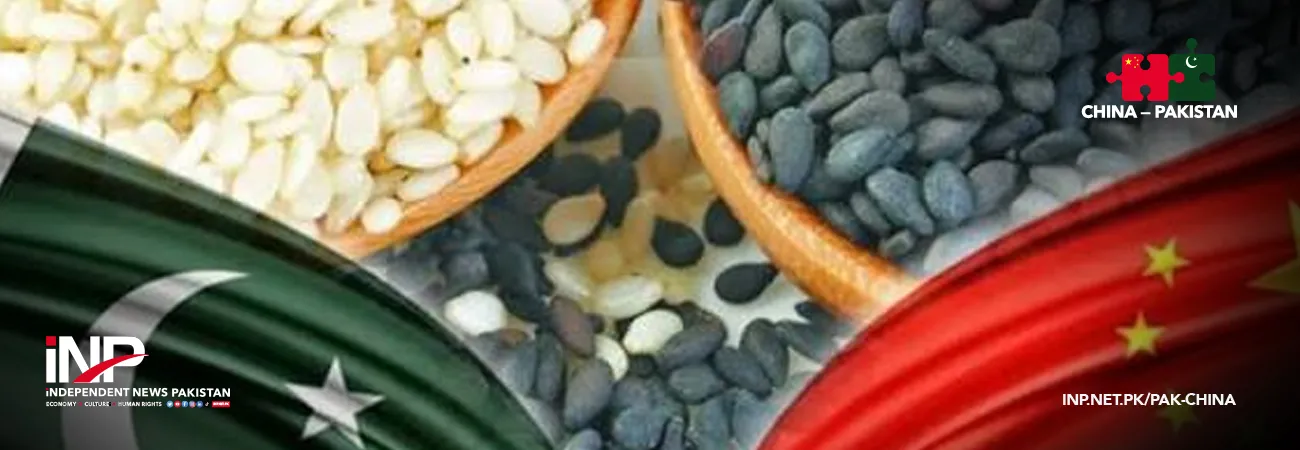
Sesame seed exports also demonstrated solid performance, with total shipments surpassing $14.07 million during the two months.
A major consignment to Anhui Province was valued at approximately $4.59 million, followed by exports of approximately $4 million to Beijing and $2.48 million to Fujian, along with additional volumes to Shandong and Beijing, Chinese Customs data showed.
These figures highlight China’s increasing reliance on Pakistan as a supplier of oilseeds for food processing and edible oil production.
Muhammad Imran, Trade and Investment Counsellor at Pakistan’s Consulate in Guangzhou, told China Economic Net that Southern China has seen continued growth in tropical fruit processing, juice production, and ready-to-drink beverage manufacturing. Guangdong, Guangxi, and Fujian are home to major processing hubs for bananas, pineapples, lychees, and other tropical fruits.
These facilities require stable supplies of complementary ingredients, including Pakistani rice, sesame seeds, and spices used in flavor formulations and packaged food products.
Industry reports indicate that processed fruit and beverage production in these provinces increased by approximately 8–10 percent year-on-year in early 2026, supporting demand for agricultural imports.
Industry analysts note that the continued rise in cotton yarn exports aligns with the needs of China’s large-scale textile manufacturing industry.
At the same time, growing sesame seed imports are supported by rising demand in China’s food sector, particularly in edible oils and processed products, reinforcing the role of agriculture in strengthening bilateral trade ties.
Credit: Independent News Pakistan (INP) — Pak-China
Related News