


i NEWS INTERNATIONAL
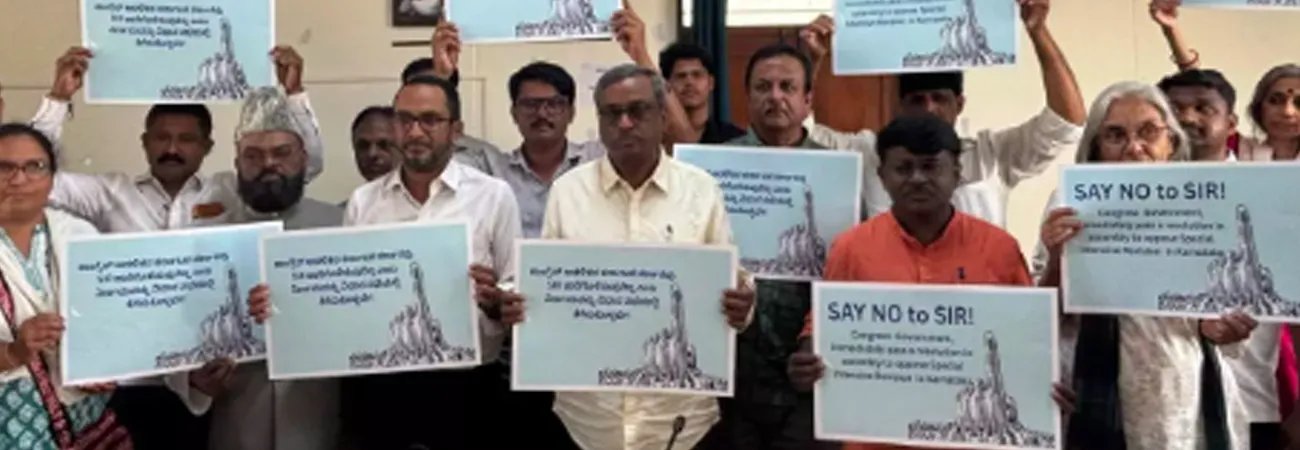
‘Electoral genocide’: Civil society coalition urges Karnataka govt to oppose voter roll revision Breaking
February 20, 2026
A coalition of activists and civil society organizations under the banner “My Vote, My Right” has urged the Congress-led Karnataka government to formally oppose the Special Intensive Revision (SIR) of electoral rolls, warning that the process could lead to large-scale exclusion of vulnerable communities from voter lists.
At a press conference in Bengaluru, members of the collective criticized both the design and implementation of the SIR exercise, saying it has raised concerns in several states and union territories where it has been rolled out. They also flagged issues with the ongoing voter roll mapping exercise in Karnataka.
The coalition demanded that the State government pass a resolution against the SIR in both the Assembly and the Council during the upcoming budget session. They called on the Congress government to take a clear and firm stand against what they described as a process that risks mass disenfranchisement.
Clifton D’Rozario, National Vice President of the All India Central Council of Trade Unions, argued that the revision process is arbitrary and inconsistently applied across states. “They are making it as difficult as possible for people to get on the electoral rolls,” he said.
Activist and writer Sripad Bhat questioned the stringent documentation requirements under the SIR framework, arguing that the structure of the process appears designed to exclude many citizens. Mavalli Shankar, State Convenor of the Dalit Sangharsha Samiti – Ambedkarvada, described the SIR as a threat to constitutional safeguards.
“It is nothing but electoral genocide,” he said, and urged the Congress government in Karnataka to take a clear stand. Women’s rights activist Mamatha Yajaman of Naaveddu Nilladidre expressed concern that women, especially those who relocate after marriage, could face difficulties under the mapping exercise.
“The SIR blatantly threatens the constitutional guarantee of equality to women and must be strongly opposed,” she said. Nisha Gulur of the Movement for Gender and Sexual Pluralism highlighted that many in the transgender community may struggle to produce documentation or trace earlier records due to displacement from families.
Credit: Independent News Pakistan (INP)
Related News