


i INP-WEALTHPK
Punjab starts developing pigmented, seedless kinnow varietiesBreaking
December 22, 2025
Muhammad Luqman
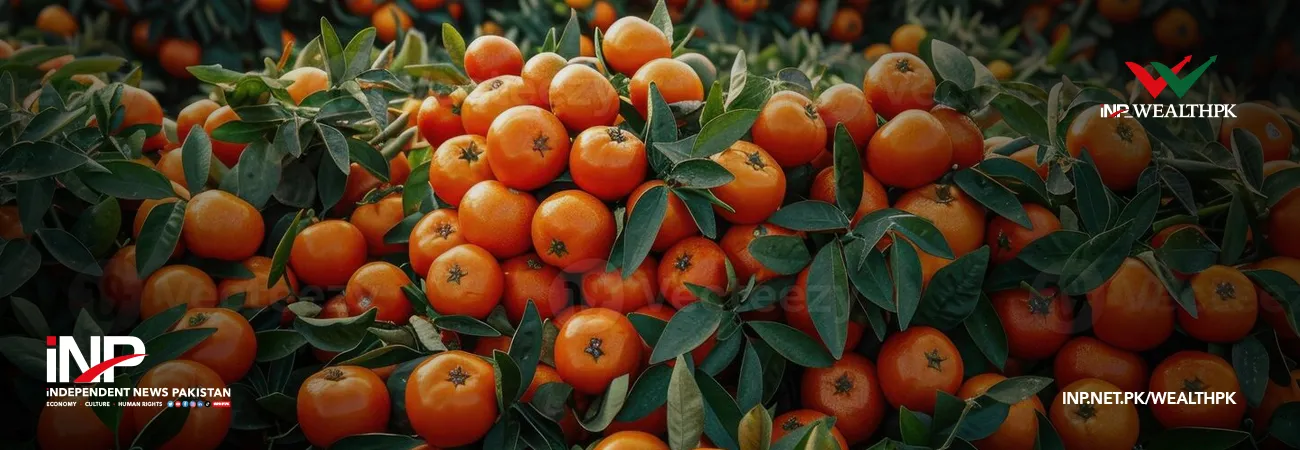
In response to declining citrus exports, the Citrus Research Institute (CRI), Sargodha, has launched an initiative to develop new kinnow and orange varieties better aligned with global market requirements. “Punjab’s varietal spectrum is not fully aligned with international market demand, as it remains heavily dependent on traditional seedy kinnow,” said Dr. Akbar Hayat Saggu, Director of the CRI, Sargodha.
Punjab has 358,000 acres under citrus cultivation, with expected production for the current season estimated at 3.3 million metric tons. Speaking to Wealth Pakistan, Dr. Saggu said CRI is currently developing pigmented and seedless kinnow varieties that enjoy strong global demand. He explained that international markets prefer seedless, easy-peeling, high-quality mandarin varieties, whereas most citrus types grown in Pakistan do not meet these characteristics.
Pakistan’s citrus landscape is dominated by kinnow — a mandarin hybrid often containing around 20 seeds — along with other varieties including Musambi, Valencia Late oranges, Succri, Ruby Red, Eureka and Lisbon lemons, and Kaghzi limes, primarily cultivated across Punjab, particularly in Sargodha. Dr. Saggu said climate change has placed substantial stress on kinnow production in Punjab, as rising temperatures, irregular rainfall, and intensified pest and disease pressure have reduced yields.
Heat stress during flowering and inconsistent winter patterns have resulted in weak fruit set and declining fruit quality. “We have to take care of both international trends and the climate-related issues presently affecting kinnow orchards,” he said. He added that persistent smog in Punjab has further affected kinnow production by reducing sunlight needed for photosynthesis, slowing growth, and impairing fruit development. Smog traps pollutants that weaken trees and increase vulnerability to diseases.
Dr. Saggu said around 100 citrus varieties are currently cultivated in Pakistan, with an additional 70 varieties being imported for research and development. However, imported varieties cannot be exported without breeder agreements due to intellectual property restrictions. Citrus exporters agree that Pakistan urgently needs competitive, export-quality citrus varieties.
“We can’t compete with countries like China, Turkey and Mediterranean countries with the existing decades-old kinnow varieties,” said Waheed Ahmad, Patron-in-Chief of the Pakistan Fruit and Vegetable Exporters Association. He said Pakistani kinnow exports have dropped to 250,000 tons from 550,000 tons over five years due to shorter shelf life and excessive seeds.
He noted that the current kinnow varieties grown in Punjab have lost their vigor, resulting in reduced storage life and weaker fruit characteristics. “Shipments to Russia take at least one month. The current kinnow varieties do not have that much shelf life,” he said. Ahmad added that Pakistani scientists should have introduced at least three to four new citrus varieties to remain competitive in the international market.
Credit: INP-WealthPk
Related News