i INP-WEALTHPK
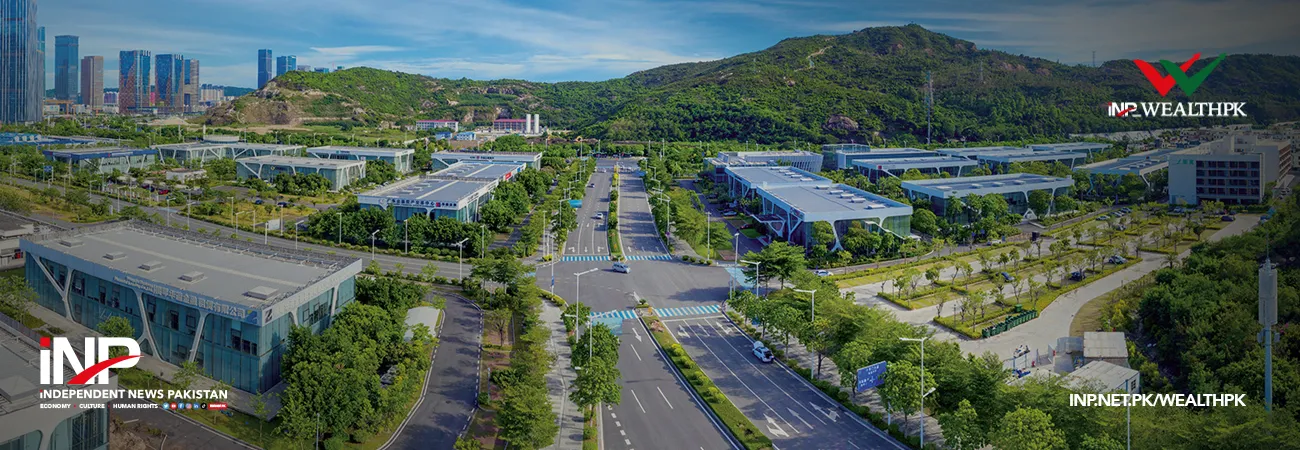
Pakistan can boost manufacturing competitiveness through China's green industrial modelBreaking
August 25, 2026
By Azam Tariq
Pakistan can strengthen manufacturing competitiveness by adapting elements of China's integrated green industrial model, including cleaner energy, energy efficiency and green financing, alongside policies that encourage low-carbon production, industry and climate experts say. Under a roadmap running through 2030, China's Ministry of Industry and Information Technology (MIIT) aims to peak industrial carbon emissions, reduce energy use per unit of industrial output by more than 10% and establish 500 zero-carbon factories.
The plan also envisages expanded use of green equipment and clean hydrogen, along with stronger recycling systems and industrial standards. The approach integrates industrial decarbonisation with manufacturing development and competitiveness rather than treating it solely as an environmental objective. Pakistan already has elements of such a framework. The National Energy Efficiency and Conservation Authority (NEECA) has set an industrial-sector target of saving 2.3 million tonnes of oil equivalent and reducing carbon dioxide emissions by 8.97 million tonnes by 2030.
NEECA's roadmap includes the use of more efficient motors, boiler retrofits and mandatory energy audits, along with five-year energy-saving plans for designated industrial consumers. Speaking to Wealth Pakistan, Angelo Kairos Dela Cruz, Executive Director of the Institute for Climate and Sustainable Cities, said Pakistan could encourage businesses, particularly micro, small and medium enterprises (MSMEs), to move towards cleaner production by providing incentives for eco-friendly and lower-carbon products. He said electrification should be an important part of green industrialisation, with businesses encouraged to shift their energy consumption towards renewable sources.
Greater use of renewable energy, he said, would help industries reduce their carbon footprints while supporting the transition towards cleaner manufacturing. Dela Cruz also suggested developing economic corridors and industrial zones powered substantially by renewable energy. Such infrastructure, he said, could help attract investment in emerging industries, including data centres and other technology-based businesses. He said electric vehicles could contribute to greening the automobile sector and activities such as solid-waste management.
Restrictions on single-use products, coupled with greater emphasis on the reduce, reuse and recycle, or 3R, model, could further support the development of a circular economy. For manufacturers, however, the cost and policy environment surrounding energy remain important considerations. Asim Riaz, Energy Advisor at the All Pakistan Textile Mills Association (APTMA), told Wealth Pakistan that shifting industrial energy consumption from thermal sources towards alternatives such as solar and wind was one of the major routes towards greener manufacturing.
"All the textile and other industries should adopt alternative sources of energy like solar, wind and other sources. It will ultimately reduce the carbon footprints as well," he said. Riaz identified the government's captive power levy as a major hurdle to the transition, arguing that it could discourage industrial investment in cleaner energy solutions. The financing framework for green investment is also developing. The State Bank of Pakistan (SBP) has advised banks and development finance institutions to use the Pakistan Green Taxonomy (PGT) as a reference for their green-banking policies.
The taxonomy provides a common classification system for identifying economic activities and investments that qualify as green, providing financial institutions with a framework for directing financing towards environmentally sustainable activities. Sundas Saifullah, Chief Operating Officer at Atom Power, told Wealth Pakistan that green banking and green bonds could play an important role in advancing green industrialisation in Pakistan.
She said the government should consider subsidies and incentives for eco-friendly businesses and start-ups to help them overcome financing constraints and expand cleaner technologies and business models. Pakistan has also begun developing financing mechanisms for climate-related investment. The Ministry of Finance has cited the issuance of a Green Sukuk and the establishment of a Sovereign Sustainable Financing Framework as part of efforts to align financing with the country's climate and development objectives.
Experts said combining industrial energy efficiency with renewable power, green financing and incentives for cleaner production could help Pakistan lower manufacturing costs and improve competitiveness. They stressed that achieving these gains would require consistent policies, effective implementation and clear institutional responsibility for the country's green industrial transition.
Credit: INP-WealthPk
Related News