




i INP-WEALTHPK

Global fuel-shock responses offer roadmap for Pakistan’s subsidy reformBreaking
April 07, 2026
By Moaaz Manzoor
Global responses to the 2026 fuel shock provide a practical roadmap for Pakistan’s subsidy reform, according to the Institute of Cost and Management Accountants of Pakistan, with policy lessons ranging from targeted support and fuel rationing to strategic reserve coordination and tighter market monitoring.
ICMA Pakistan said the Middle East conflict has driven sharp increases in fuel prices, prompting governments to shift away from broad, untargeted subsidies toward more focused and efficient interventions. The report noted that these international examples can help Pakistan refine its proposed mobile-app-based fuel quota system.
Among the measures cited, Australia temporarily reduced fuel excise tax by 50pc for three months to ease prices at the pump. Sri Lanka reintroduced QR-coded fuel rationing and adopted a four-day workweek for public institutions to conserve energy. The Philippines declared a national energy emergency to facilitate faster fuel procurement, distribution, and price monitoring, while Bangladesh introduced supply adjustments and import waivers, including for diesel, to meet rising demand.
The report further highlighted that South Korea and other Asian economies deployed emergency budget support and price-relief measures. Japan and G7 countries coordinated the release of strategic oil reserves and shared energy market data to stabilise prices. The United Kingdom increased monitoring of fuel stocks and issued advisories about temporary shortages, while Germany and France focused on targeted support for vulnerable households and essential sectors instead of blanket subsidies. Malaysia, meanwhile, reviewed longer-term subsidy reforms in response to sustained price pressures.
According to ICMA, these global responses converge around three core requirements: targeted support, transparent monitoring, and strategic fuel management. Based on these lessons, the report recommends that Pakistan’s fuel quota system incorporate inclusive access mechanisms, tiered allocation structures, real-time digital tracking, public awareness campaigns, region-based quota assignment, and regular quarterly reviews to ensure adaptability to changing demand and market conditions.
The report also emphasised the need to integrate fuel planning with broader public transport initiatives, urban mobility strategies, and delivery-sector logistics to optimise fuel use and reduce unnecessary travel. It further proposed incentive mechanisms, such as bonus credits or small rewards for users who consistently remain below their allocated quota.
ICMA concluded that Pakistan’s fuel subsidy challenge should not be treated solely as a fiscal issue. Rather, it is a broader policy design task aimed at protecting vulnerable users, reducing inefficiencies, and building resilience against external shocks — a goal that global experience suggests is achievable with well-targeted and transparent systems.
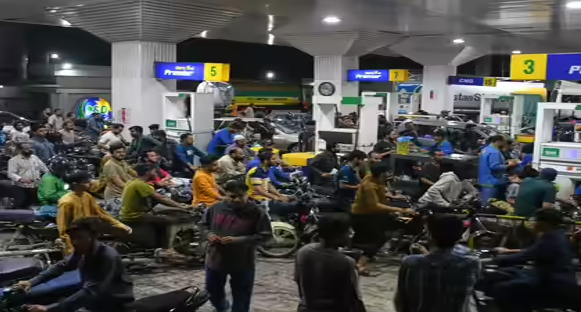
Credit: INP-WealthPk
Related News