


INP-WealthPk
WAICO membership could boost Pakistan's textile competitiveness
July 23, 2026
By Qudsia Bano
Pakistan's founding membership of the World Artificial Intelligence Cooperation Organization (WAICO) could help strengthen the global competitiveness of its textile industry by facilitating technology partnerships, research collaboration and access to advanced AI-driven manufacturing solutions, experts say.
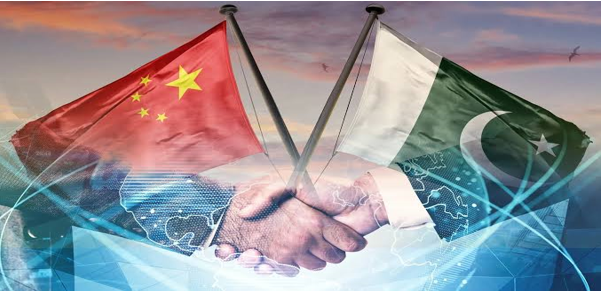
The opportunity emerged after Deputy Prime Minister and Foreign Minister Senator Mohammad Ishaq Dar signed the agreement establishing WAICO in Shanghai on July 16 ahead of the World Artificial Intelligence Conference (WAIC). During the conference, Dar called for equitable access to artificial intelligence technologies, stronger international cooperation and greater capacity building for developing countries. He also held talks with Chinese Foreign Minister Wang Yi, during which both sides agreed to expand cooperation in artificial intelligence, science and technology, innovation and the digital economy under the broader Pakistan-China partnership.
Experts believe the initiative comes at a critical time as artificial intelligence rapidly reshapes global textile manufacturing, enabling producers to improve efficiency, reduce costs and respond more effectively to increasingly demanding international markets.
The global market for artificial intelligence in textiles is projected to expand from $2.64 billion in 2024 to nearly $43.8 billion by 2034, reflecting the industry's accelerating adoption of smart manufacturing technologies. Across major textile-producing countries, AI is increasingly being used for automated fabric inspection, predictive maintenance, production planning, inventory optimisation and energy management.
For Pakistan, where textiles account for around 60% of the country's merchandise exports, improving productivity has become increasingly important as international buyers demand higher quality, shorter delivery times, greater traceability and more sustainable production.
Speaking to Wealth Pakistan, Dr Hasan Daood Butt, Senior Advisor at China Energy Engineering Group, said Pakistan's participation in WAICO provides an opportunity to accelerate the adoption of AI technologies across the textile value chain.
He said collaboration with leading AI economies could improve access to technical expertise, research partnerships and advanced manufacturing solutions, but sustained domestic investment in digital infrastructure, computing capacity and workforce development would be essential to realise these benefits.
Butt said AI could deliver significant productivity gains across Pakistan's textile industry.
"AI-powered visual inspection systems can identify fabric defects with accuracy approaching 99%, substantially reducing quality-related losses and improving consistency in export orders. Predictive maintenance technologies can detect equipment faults before machinery fails, helping manufacturers reduce unexpected downtime by up to 40% while lowering maintenance costs and extending the operational life of expensive textile machinery," he said.
Artificial intelligence is also transforming supply-chain management. By analysing production data, customer demand and international market trends, AI systems enable manufacturers to forecast orders more accurately, optimise raw material inventories and improve production scheduling. These capabilities help factories shorten lead times, reduce excess inventory and respond more quickly to changing customer requirements.
Energy efficiency is another area where AI could strengthen Pakistan's textile industry. As energy remains one of the sector's largest production costs, AI-enabled monitoring systems can analyse factory operations in real time, identify inefficiencies and optimise electricity consumption across spinning, weaving, processing and finishing units. Experts say such improvements can significantly reduce operating costs while enhancing environmental performance.
Pakistan could also benefit through stronger collaboration between universities, research institutions and technology companies. As a founding member of WAICO, the country may gain greater access to joint research initiatives, specialised training programmes, technical exchanges and AI capacity-building projects designed to help developing economies narrow the technology gap.
Such cooperation could help develop the skilled workforce needed to support wider adoption of AI across Pakistan's textile industry and other manufacturing sectors.
Areeb Masood, Assistant Marketing Manager at Ebrahim Textile Mills, said artificial intelligence is rapidly becoming a competitive necessity rather than an optional technology.
She said AI applications in quality control, predictive maintenance, production planning and energy management could significantly improve factory efficiency while helping Pakistani exporters meet increasingly stringent international requirements for quality, sustainability and delivery performance.
However, she noted that international partnerships alone would not transform Pakistan's textile sector. Real progress would require complementary domestic reforms, including investment in digital infrastructure, high-performance computing, engineering education, applied research and incentives encouraging manufacturers to adopt Industry 4.0 technologies.
As global textile manufacturing becomes increasingly AI-driven, Pakistan's participation in the China-led cooperation platform offers more than diplomatic visibility. If supported by effective domestic policies and translated into practical industrial collaboration, it could help modernise the country's largest export industry and strengthen its competitiveness in global markets.
Credit: INP-WealthPk