



INP-WealthPk
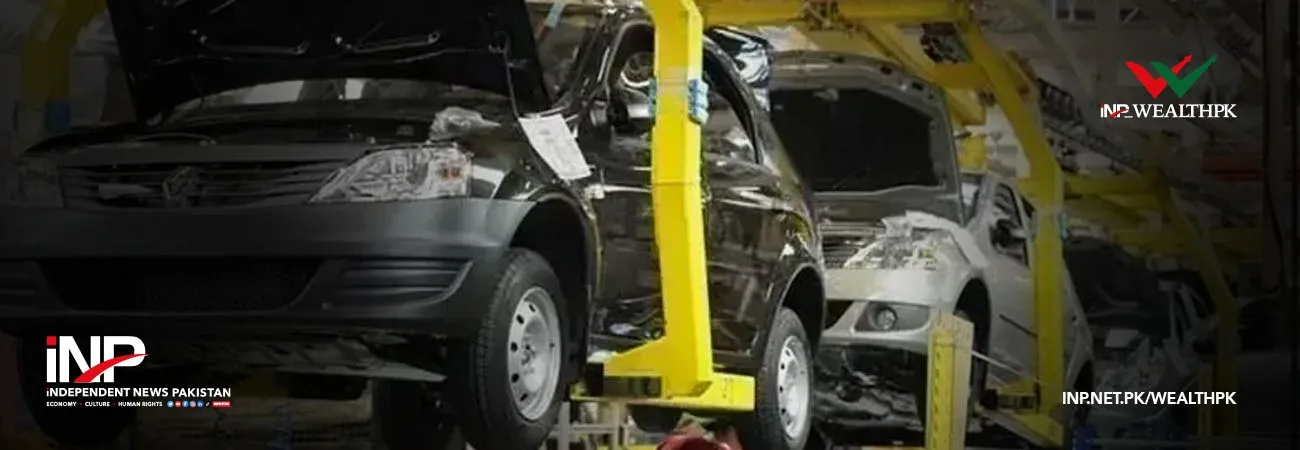
Policy vacuum leaves Pakistan’s auto sector idling
August 21, 2026
By Muhammad Luqman
Inordinate delay in finalizing and announcing the next five-year auto policy has brought activity in Pakistan’s automobile sector to a standstill, with industry stakeholders uncertain about the features of the new policy, particularly its tariff and tax structure.
“We don’t know what the new policy is going to offer to the auto sector,” said Mian Muhammad Ali Hameed, Chief Operating Officer at Great Wall Motors Pakistan, while talking to Wealth Pakistan.
He said the absence of a new policy following the expiry of the previous one on June 30 had badly affected the automobile industry.
He said it was high time the government announced the new policy at the earliest so that companies could effectively plan their production and marketing strategies.
According to other stakeholders in the automobile sector, the new policy should introduce a tariff structure that supports the local industry rather than benefiting foreign companies alone.
“Pakistan’s auto parts industry faces an estimated 34 percent cost disadvantage compared with regional competitors because manufacturers rely almost entirely on imported raw materials while also paying higher energy costs, taxes and borrowing costs,” said Syed Nabeel Hashmi, former chairman of the Pakistan Association of Automotive Parts & Accessories Manufacturers (PAAPAM).
He said investment decisions, capacity planning and technology upgrading across the vendor industry remained stalled in the absence of policy clarity, urging the government to finalize the framework quickly because “continued ambiguity is eroding investor confidence.”
He said the vendor sector, which accounts for approximately 80 percent of the total employment generated by the auto industry, should receive due incentives under the upcoming policy.
He said the new policy should prioritize localization, strengthen domestic suppliers, encourage technology transfer and help manufacturers achieve economies of scale.
Syed Nabeel Hashmi said the delay in formulating and announcing the new auto policy is also hurting the industry, as production of plug-in hybrid electric vehicles (PHEVs) and hybrid vehicles has reportedly been affected by uncertainty about the applicable sales tax.
“It is mainly due to a lack of vision on the part of the people at the helm,” he said.
He said customers had also stopped buying vehicles because they did not know how the new tariff structure would affect prices.
Nabeel said internal combustion engine (ICE) vehicles were under greater pressure than electric vehicles (EVs), arguing that higher taxes had been imposed on conventional vehicles while EVs continue to receive various tariff and tax concessions.
EV buyers are mostly from higher-income groups, while conventional vehicles such as Suzuki Every and Alto are widely purchased by lower- and middle-income consumers.
“Vehicles such as Alto and Cultus serve as basic mobility options for middle-income families yet receive no meaningful tax relief. In contrast, buyers who can afford vehicles worth Rs10 million or more benefit from concessions introduced to encourage new energy vehicle adoption,” he said.
While promoting cleaner transportation is an important policy objective, incentives should not disproportionately benefit wealthier consumers, he said.
Nabeel expressed hope that the new policy would help increase car production to 500,000 units by 2031, up from the current level of around 200,000 units.
According to stakeholders, the policy should also help rationalize tariffs on vehicles, components and raw materials.
“Better tariffs can increase the local production of two-wheelers and four-wheelers besides boosting electric vehicles,” said Almas Hyder, former chairman of Engineering Development Board (EDB).
Talking to Wealth Pakistan, he said the new policy should be announced as soon as possible to provide a framework for the auto sector to operate, as the previous five-year policy had expired five weeks earlier.
He said the upcoming policy should increase localization and enhance the share of NEVs, but the key to success lay in addressing structural weaknesses in the economy that had little to do with the auto policy itself.
Credit: INP-WealthPk