


INP-WealthPk
Pakistan’s blue economy contributes just 1% to GDP despite vast maritime potential
April 20, 2026
By Farooq Awan
Pakistan’s blue economy currently contributes only about 1% to the national GDP, significantly below the 7–35% contribution seen in comparable maritime economies, highlighting a major gap between potential and actual utilisation of ocean-based resources.
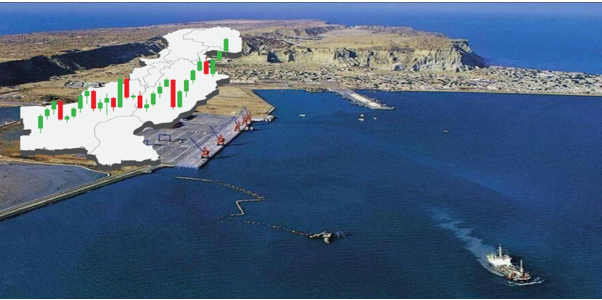
According to the “Blue Economy under URAAN Pakistan 2026” report prepared by the Planning Commission, the country possesses a 1,001-kilometre coastline, a continental shelf of approximately 290,000 square kilometres, and a strategic location near major international shipping routes, yet its maritime sector remains underdeveloped.
The report describes the maritime domain as a “strategic asset” that has long remained undervalued despite its immense economic promise. It emphasises that Pakistan’s extended continental shelf effectively acts as a “sixth province,” expanding the country’s economic space far beyond its land boundaries.
Globally, the blue economy has emerged as a major driver of growth, valued at around $2.85 trillion in 2024 and projected to exceed $5 trillion by the early 2030s. In comparison, Pakistan’s share remains minimal, with economic activity largely concentrated in ports, maritime trade, and fisheries.
The document highlights that major maritime economies such as the Maldives, Norway, and the United Arab Emirates derive a far larger share of their GDP from ocean-based sectors, supported by diversified activities including coastal tourism, offshore energy, aquaculture, and shipping services.
In Pakistan’s case, limited diversification, weak governance structures, and inadequate investment in value-added sectors have constrained the growth of the blue economy. Fisheries, which support nearly one million livelihoods, remain largely volume-driven with limited processing and export value addition, while the shipping and shipbuilding sectors remain underdeveloped.
Similarly, the country’s ports, which handle approximately 95% of trade, face operational inefficiencies and increasing competition from regional players. Coastal tourism, offshore energy, and marine resource development also remain largely untapped, further limiting the sector’s contribution to economic output.
The report underscores the need for an integrated approach to fully harness maritime potential, involving coordination among federal and provincial governments, private sector participation, and improved regulatory frameworks.
It also stresses the importance of aligning maritime development with the broader URAAN Pakistan National Economic Transformation Plan, which aims to expand exports, strengthen infrastructure, and promote sustainable growth.
The document concludes that while Pakistan has the resources, location, and human capital required to build a strong maritime economy, unlocking this potential will depend on sustained policy focus, institutional coordination, and targeted investments across key sectors.
Credit: INP-WealthPk