



INP-WealthPk
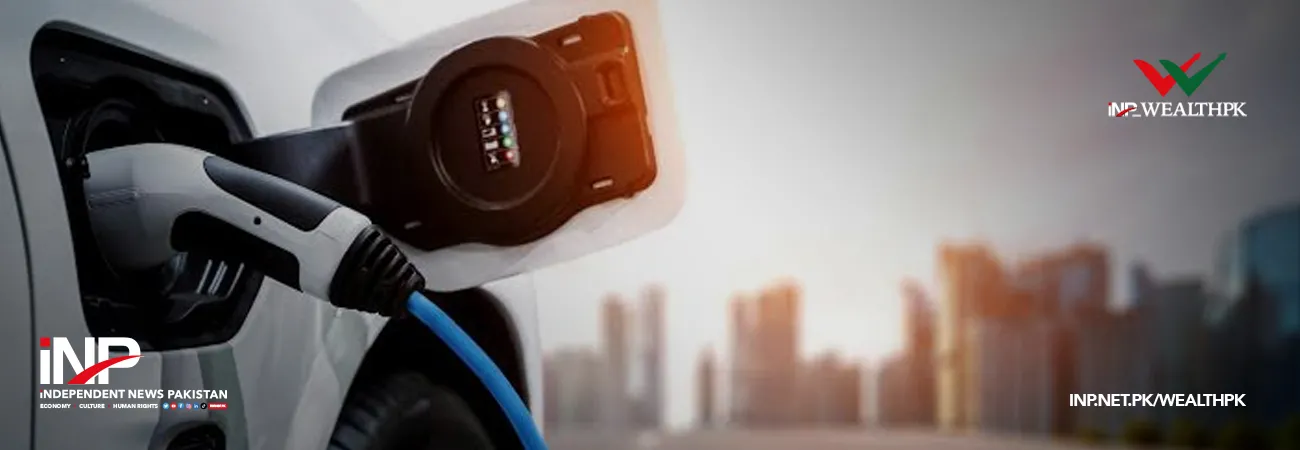
Pakistan targets 30% share of new energy vehicles in annual sales by 2030
July 13, 2026
By Moaaz Manzoor
Pakistan has set a target for new energy vehicles (NEVs) to account for 30% of total new vehicle sales by 2030, with the government aiming to deploy around 2.2 million NEVs under its newly launched New Energy Vehicle (NEV) Policy 2025-30.
According to official documents of the Engineering Development Board (EDB), available with Wealth Pakistan, the policy is designed to institutionalize and sustain the country's transition towards electric and hybrid mobility through a comprehensive framework covering manufacturing, charging infrastructure, localization and regulatory reforms.
The documents show that Pakistan's electric vehicle manufacturing sector is already operating under the Automotive Industry Development and Export Policy (AIDEP) 2021-26. Under the policy, electric vehicle-specific parts and components are subject to a concessional customs duty of 1%, while the incentive structure and manufacturing regime are administered through SRO 656(I)/2006 of the Fifth Schedule of the Customs Act, 1969.
The EDB noted that the earlier Electric Vehicle Policy 2020 introduced fiscal incentives for two- and three-wheelers as well as low commercial vehicles (LCVs). Expanded under AIDEP 2021-26, these incentives now cover four-wheelers and sport utility vehicles (SUVs) to promote investment, enhance investor confidence and support continuity in Pakistan's automotive sector.
The document states that the policy measures have contributed to the development of a domestic manufacturing ecosystem for electric mobility. At present, 82 companies have been granted manufacturing licences for two- and three-wheelers, while nine companies have obtained licences for four-wheeled electric vehicles, hybrid electric vehicles (HEVs) and plug-in hybrid electric vehicles (PHEVs), reflecting the sector's preparedness for cleaner transport technologies.
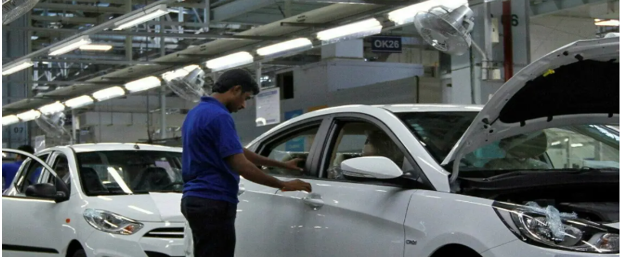
Production data included in the documents indicate strong growth in local electric vehicle manufacturing. During FY2024-25, total production stood at 78,501 units, while production during the current fiscal year (July-May 2025-26) exceeded 228,000 units, indicating rapid expansion in domestic manufacturing capacity and rising market demand.
To support wider adoption of electric vehicles, the government has also prioritised charging infrastructure development. Through the National Energy Efficiency and Conservation Authority (NEECA), 71-72 licences have been issued to Charging Point Operators (CPOs) across the country, while nearly 40 public charging stations have either become operational or are at advanced stages of registration. The NEV Policy 2025-30 also envisages the establishment of 3,000 EV charging stations by 2030 to support large-scale adoption of electric mobility.
The documents further state that the policy places strong emphasis on reducing Pakistan's dependence on imported oil by encouraging battery manufacturing and advanced component production. Under the NEV framework, manufacturers will gradually localise critical vehicle components, including battery packs, electric motors and associated systems, to strengthen domestic industrialisation, promote technology transfer and increase value addition within the automotive sector.
In addition, environmental considerations form part of the new policy framework. The EDB has prioritised the development of dedicated regulatory and policy frameworks covering battery disposal, recycling and second-life battery storage applications as Pakistan expands its electric mobility ecosystem.
Credit: INP-WealthPk