



INP-WealthPk

Pakistan loses most monsoon rainwater due to inadequate storage: experts
July 20, 2026
By Muhammad Luqman
More than 70% of Pakistan's annual rainfall occurs during the monsoon season, yet the country continues to lose most of this vital resource because of inadequate water storage capacity and limited rainwater harvesting, experts warn.
They say Pakistan's inability to capture monsoon rainwater stems from a combination of inadequate infrastructure, weak planning, rapid urbanisation and poor water management. Without expanding storage capacity and investing in rainwater harvesting and groundwater recharge systems, the country will continue to waste billions of cubic metres of water while facing worsening water shortages and recurring flood damage.
"Of the total 111 million acre-feet (MAF) of water generated by annual rainfall in Pakistan, 83 MAF comes from the monsoon season alone. Of this quantity, only 14 MAF is stored in major reservoirs such as Tarbela, Mangla and Chashma," said Dr Ghulam Zakir Hassan Sial, Director of the Irrigation Research Institute (IRI), Punjab.
Talking to Wealth Pakistan, he said most of the remaining 97 MAF either flows through rivers into the Arabian Sea or is lost through evaporation.
"Only a small portion of this water infiltrates into the soil, recharging aquifers or becoming part of temporary wetlands and local ponds," Dr Sial explained.
He said Pakistan could significantly increase water availability by adopting both centralized and decentralized water storage systems.
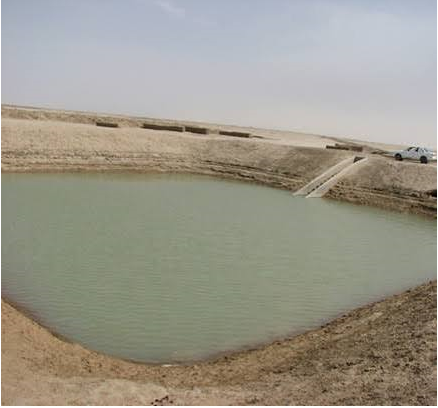
"Recharge basins, recharge ponds, recharge wells, check dams, flood-spreading basins and injection wells in suitable aquifers are among the most effective techniques available," he said.
Dr Sial noted that while constructing large dams requires substantial investment, Pakistan should also prioritize small and medium-sized dams, hill torrent dams and delay-action dams to capture rainwater that would otherwise be lost.
In urban centres such as Lahore, Islamabad, Faisalabad and Rawalpindi, rooftop rainwater harvesting, underground storage tanks and recharge pits could significantly improve groundwater replenishment, he added.
Pakistan's rapidly expanding cities have replaced large areas of natural land with roads and concrete surfaces, causing rainwater to flow quickly into storm drains instead of seeping into the ground. This not only contributes to urban flooding but also limits groundwater recharge.
Water experts also advocate nature-based solutions that use wetlands, forests and floodplains to regulate water flows, improve water quality and reduce disaster risks.
"In addition to engineered grey infrastructure such as dams for large-scale water storage, flow regulation and hydropower generation, there is tremendous potential to store floodwater in natural floodplains," said Sohail Ali Naqvi, Director of Water Resources at WWF-Pakistan.
Talking to Wealth Pakistan, he said Pakistan extracts more than 55 MAF of groundwater annually for agricultural, domestic and commercial use, creating significant opportunities for aquifer recharge.
"Floodwater can be diverted to floodplains and allowed to infiltrate into aquifers, helping replenish depleted groundwater reserves," he said.
According to Naqvi, one of the most effective Managed Aquifer Recharge (MAR) techniques is the use of artificial recharge wells.
He said the technique was introduced by the Pakistan Council of Research in Water Resources (PCRWR) and has since been promoted by several institutions, including WWF-Pakistan, in different cities across Punjab to support groundwater recharge.
Naqvi also said India's suspension of the Indus Waters Treaty has made the conservation and efficient use of Pakistan's available rainwater, surface water and groundwater resources even more critical.
"The monsoon season provides the best opportunity to augment water resources for agriculture and other uses, particularly at a time when transboundary water resources are becoming increasingly uncertain," he said.
Credit: INP-WealthPk