


INP-WealthPk

Pakistan can bridge skills gap through China's TVET model
July 21, 2026
By Muhammad Zulqarnain
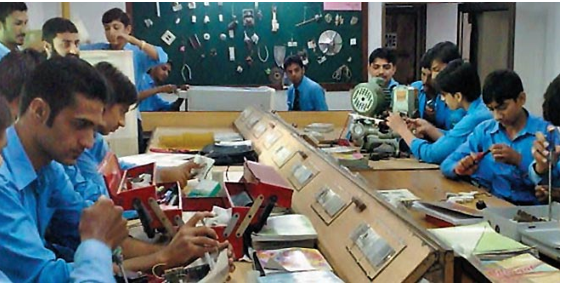
Pakistan can bridge its widening skills gap and transform its young population into a major driver of economic growth by strengthening Technical and Vocational Education and Training (TVET), with experts saying China's industry-driven model offers valuable lessons for building a skilled and globally competitive workforce.
More than 60% of Pakistan's population is under the age of 30. Experts believe this demographic advantage can become a powerful economic asset only if young people are equipped with market-relevant skills through meaningful reforms in TVET.
As Pakistan seeks to expand higher-value manufacturing, digital technologies, renewable energy, and other emerging sectors under initiatives such as CPEC 2.0, experts believe strengthening TVET has become increasingly urgent. They say China's experience demonstrates that vocational education delivers the best results when it is closely aligned with industry needs, backed by consistent long-term policies, and treated as a strategic investment in national development.
Speaking to Wealth Pakistan, Sadaf Abid, TVET and human capital development specialist, said China's success in vocational education lies not merely in technical training but in the close relationship between educational institutions and employers, fostering strong industry-academia ties.
"What makes China's TVET model genuinely effective isn't just the technical training itself; it's the depth of the employer relationship behind it," she said.
According to her, curricula in China are co-designed with industry rather than developed in isolation, ensuring that graduates possess skills employers actually need. She noted that teachers often come directly from industry or periodically return to it, allowing classroom instruction to remain current and practical.
She emphasized that another defining feature of China's approach is its long-term planning.
"China plans for the next two or three generations, not the next budget cycle," she remarked, adding that Pakistan often struggles to sustain reforms due to policy discontinuity and frequent changes in direction.
She observed that reforms in Pakistan are frequently introduced midway through existing academic cycles, reducing their effectiveness.
"If Pakistan is serious about sustainability, new entrants need to start in the new system from day one and not be used as a transition experiment halfway through their training," she stressed.
She said Pakistan's demographic dividend will only translate into economic gains if the skills being taught align with labour market needs and reforms are given sufficient time to mature.
Sharing similar views, Shahana Fateh, Vocational Training Expert at Government College of Technology, Rawalpindi, told Wealth Pakistan that the greatest strength of China's TVET model is its ability to keep education closely connected with industry.
"In China, the curriculum evolves with market needs, instructors receive continuous professional development, and students gain practical, hands-on experience through industry placements," she said.
She noted that vocational education in China is treated as a respected career pathway rather than a second choice, contributing significantly to the country's skilled workforce.
Citing data from the Organisation for Economic Co-operation and Development (OECD), she pointed out that around half of China's upper secondary students are enrolled in vocational education, underscoring the country's long-term commitment to human capital development.
For Pakistan, she said, reforms should focus on strengthening partnerships between industry and training institutions, modernizing curricula, improving teacher training, and expanding quality internships and apprenticeships.
"Pakistan's young population is a tremendous asset, but it must be supported with the right skills," she added. "Stronger industry partnerships, updated curricula, and quality apprenticeships can help turn our youth into a skilled, employable, and globally competitive workforce."
Credit: INP-WealthPk