



INP-WealthPk

Pakistan can boost water efficiency by adapting China's model
July 21, 2026
By Azam Tariq
Pakistan can significantly improve water efficiency and agricultural productivity by adopting elements of China's outcome-based water management system, with experts saying better governance, integrated planning and technology are as important as new infrastructure in addressing the country's growing water challenges.
Pakistan's agriculture-dependent economy faces mounting pressure as per capita water availability has declined from 5,260 cubic metres in 1951 to less than 1,000 cubic metres today. Although agriculture contributes about 23.4% to the country's GDP, overall irrigation efficiency remains below 40%, with an estimated 61% of water lost between the canal head and the field, according to the Pakistan Economic Survey 2025-26 and the Pakistan Council of Research in Water Resources (PCRWR).
China's recent experience demonstrates how long-term institutional reforms can significantly improve water productivity. According to the annual bulletin of the Ministry of Water Resources, China used 4.5% less water in 2025 to generate the same 10,000 yuan of gross domestic product than a year earlier, while water consumption per 10,000 yuan of industrial added value declined by 7.2%. Total national water use reached 594.45 billion cubic metres, with efficiency gains achieved through integrated water allocation, agricultural planning and measurable performance targets.
Experts believe Pakistan's water challenge is as much a governance issue as a resource constraint. They say integrated data systems, measurable performance indicators, stronger enforcement, farmer incentives and efficient irrigation technologies can substantially improve water productivity without relying solely on new dams and canals.
Speaking with Wealth Pakistan, Awais Javed, Director at the Petroleum Division of the Ministry of Energy, said China did not improve water efficiency simply by building more infrastructure.
"China progressively transformed water management into a system governed by measurable outcomes," he said, explaining that institutions are evaluated on water productivity and conveyance efficiency rather than the volume of water supplied alone.
In his view, Pakistan's deeper challenge is not only water scarcity but also the low economic return generated from every cubic metre of water used.
China's experience, he said, also demonstrates the value of integrated planning, where water allocation, agricultural production and economic planning reinforce one another instead of operating in institutional silos.
On technology, he described a national irrigation information platform that combines satellite imagery, telemetry, groundwater monitoring, weather forecasts and crop data.
Such a system would enable policymakers to anticipate water stress, detect excessive withdrawals early and use artificial intelligence (AI) to support evidence-based policy decisions rather than simply automate administrative processes.
That, however, requires stronger data architecture, he said. Pakistan already possesses substantial hydrological and agricultural data, but it remains fragmented across agencies such as the Indus River System Authority (IRSA) and the Water and Power Development Authority (WAPDA). A unified national water information system would allow policymakers to make decisions based on complete and integrated information.
Sharing a similar perspective, Dr Shehla Batool, CEO of Water Stewards (Pvt) Ltd, a recognised water treatment and infrastructure firm in Islamabad, told Wealth Pakistan that although Pakistan's water management system differs significantly from China's, several elements of the Chinese model can be adapted.
"There is a lot of emphasis on water pricing in China, but we have not regulated any rates in the agricultural sector," she said, arguing that Pakistan needs to establish and effectively enforce a water pricing mechanism.
She also pointed to a shift towards more sustainable farming practices already underway at the Ministry of National Food Security and Research (MNFSR), while stressing that further initiatives are needed to accelerate adoption.
She cited drip irrigation as one example, noting that many farmers avoid adopting the technology because of the mistaken belief that it reduces crop yields.
Rainwater harvesting, along with the use of geographic information systems (GIS) and remote sensing for crop planning, could also deliver significant efficiency gains at relatively low cost, she said.
On water allocation among provinces, Batool said Pakistan's southern provinces "are not all wrong," adding that a sustainable solution requires technological intervention rather than political debate alone.
But reform, she emphasized, must begin at the grassroots level.
"Farmers need to be made aware and trained first before new rules and interventions are introduced," she said.
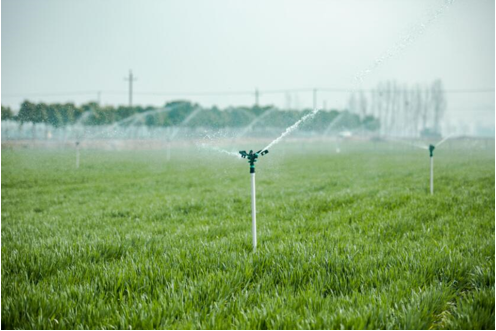
Credit: INP-WealthPk