


INP-WealthPk
Govt plans 100% private wheat procurement by 2030
October 14, 2026
By Azeem Ahmed Khan
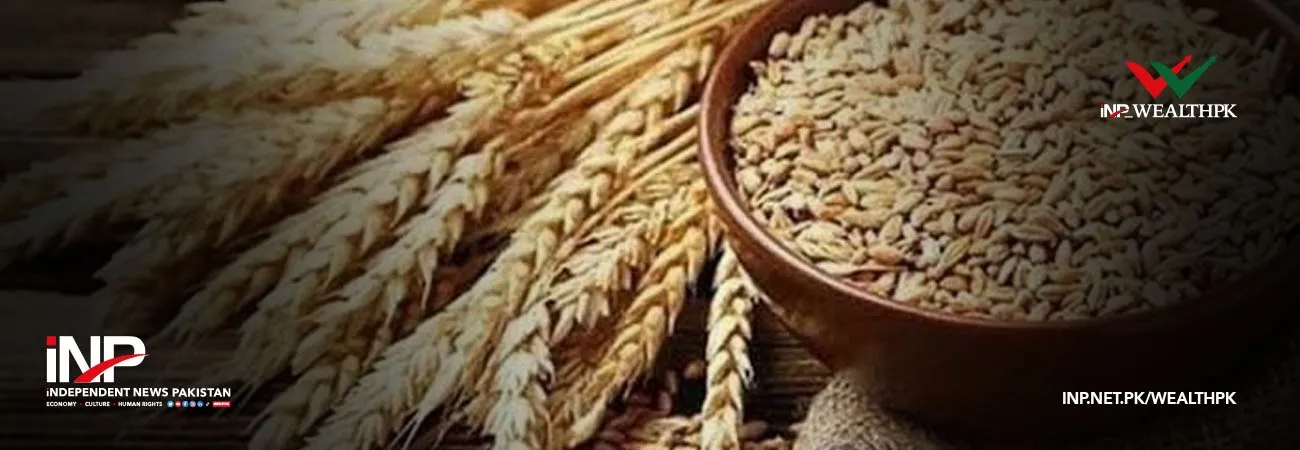
The government has finalized the National Wheat Policy 2026-30, setting out a four-year transition towards a market-based wheat system in which private-sector procurement for annual strategic reserves would rise progressively to 100% by 2030.
According to official documents available with Wealth Pakistan, the Ministry of National Food Security and Research finalized the policy after consulting the provincial governments and other relevant stakeholders. The ministry submitted the policy to the Prime Minister’s Office on September 14, 2026, for consideration and approval. It was subsequently forwarded to the Law Division for views and comments.
The framework covers wheat production, market stability, strategic reserves, private-sector participation, and national food security from 2026-27 onward. The wheat sector is being deregulated end to end to make it more competitive, and private-sector participation is emphasized for sustainable growth.
A proposed procurement roadmap envisages the public sector accounting for 60% of wheat procurement for annual strategic reserves in 2027 and the private sector 40%. The balance would reverse to 40% public and 60% private in 2028, 20% public and 80% private in 2029, and 100% private procurement by 2030.
The policy also proposes a transparent digital procurement system to support equitable and efficient intervention. Financial tools, including subsidized loans and insurance mechanisms, are envisaged to encourage farmers and private investors to participate in the wheat value chain.
The shift also aims to reduce the fiscal burden of procurement on the government. According to the documents, federal and provincial governments were spending around Rs550-800 billion on wheat procurement, storage and release operations, while the longer-term goal is to move from a state-dominated procurement system to market-based commodity management.
On pricing, the federal government is no longer envisaged to undertake public procurement or announce a Minimum Support Price (MSP) under the deregulated framework. Instead, an illustrative price based primarily on international parity price is being considered for the upcoming Rabi season to provide a market signal and encourage farmers to remain engaged in wheat cultivation.
The transition builds on the Interim National Wheat Policy 2025-26, implemented in consultation with the provinces from November 2025 to April 30, 2026. That framework replaced the support-price system with an illustrative price aligned with international import parity price, allowed free inter-provincial movement of wheat, provided for private-sector procurement and assigned provinces responsibility for maintaining strategic reserves.
The draft national wheat policy has a broader reform agenda covering productivity and resource efficiency, procurement and value-chain reforms, wheat pricing, strategic reserves and stock management, quality, import-export policy, nutrition and health, and research and development.
Its other features include data digitalization, traceability and market intelligence, social protection and targeted food access, gender and youth inclusion in productivity and extension services, a governance and implementation framework, key performance indicators (KPIs), and a monitoring and evaluation (M&E) mechanism.
The Wheat Board will continue to provide a consultative and coordination forum on production, stocks, provincial requirements, prices, market conditions, imports, and other policy matters. The board, notified in January 2022 and reconstituted in August 2024, had held 10 meetings by July 27, 2026.
Credit: INP-WealthPk
Related Articles