


INP-WealthPk

Germany partnership offers Pakistan pathway to stronger climate resilience
July 03, 2026
By Azam Tariq
Pakistan's expanding development partnership with Germany has created new opportunities to strengthen climate resilience, accelerate the clean energy transition and enhance social protection for vulnerable communities through long-term technical cooperation, according to experts.
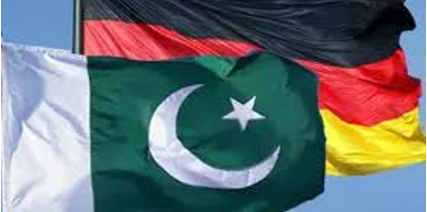
The cooperation has gained fresh momentum following the signing of a €40.5 million technical cooperation agreement between Islamabad and Berlin covering nine development projects focused on climate resilience, renewable energy and social protection.
The German Development Bank (KfW) will provide financial and technical support for the projects, adding to a bilateral development portfolio that has grown to around €550 million since cooperation between the two countries began in 1961.
The partnership comes at a critical time for Pakistan. According to the United Nations Development Programme (UNDP), the country contributes only about 1.01% of global greenhouse gas emissions but remains among the world's most climate-vulnerable nations. At the same time, Pakistan's updated Nationally Determined Contributions (NDC) 3.0 estimate that the country will require approximately US$565.7 billion in investment by 2035 to achieve its climate goals.
Experts believe the Pakistan-Germany partnership provides more than development financing. They say it offers an opportunity to strengthen institutions, modernise climate governance and build long-term resilience through technology transfer, capacity building and integrated policy implementation. They stressed, however, that sustained political commitment, effective coordination and measurable results would ultimately determine the partnership's long-term success.
Speaking to Wealth Pakistan, Umair Rahman, Associate at the Office of the Coordinator to the Prime Minister on Climate Change and Environmental Coordination, described the agreement as both timely and strategically important.
"Germany, as a leading voice in the global energy transition and a champion of loss and damage financing under the United Nations Framework Convention on Climate Change (UNFCCC), brings both technical credibility and political alignment to this partnership," he said.
Rahman said the agreement reflects an integrated approach to development by combining climate resilience, renewable energy and social protection within a single cooperation framework.
"Flood-affected communities cannot benefit from clean energy interventions if their social protection nets have collapsed, and vice versa," he said.
He noted that Germany's implementing agencies—Deutsche Gesellschaft für Internationale Zusammenarbeit (GIZ) and KfW—have extensive operational experience in Pakistan, enabling new initiatives to build on established institutional capacity rather than starting from scratch.
Rahman added that German technical cooperation could also support implementation of Pakistan's Nationally Determined Contributions (NDC) 3.0 while reducing dependence on imported fossil fuels. He said Germany's own Energiewende, or energy transition, offers practical lessons in grid modernisation, decentralised renewable energy and just transition policies.
To ensure the partnership delivers measurable benefits at the community level, Rahman outlined three priorities.
First, he said, institutional responsibilities should be clearly defined from the federal level down to provinces and districts, particularly in climate-vulnerable regions such as Balochistan, Sindh and Khyber Pakhtunkhwa.
Second, social protection initiatives should be integrated with existing national delivery mechanisms, including the Benazir Income Support Programme (BISP) and the National Disaster Management Authority (NDMA), to avoid duplication and strengthen Pakistan's own institutional capacity.
Third, Pakistan should establish stronger monitoring, evaluation and learning systems capable of generating real-time evidence on project performance and community outcomes.
"The €550 million bilateral portfolio Pakistan and Germany have built since 1961 is a testament to trust earned over decades, and sustaining that trust requires demonstrating that each agreement produces verifiable community-level impact, not just disbursement milestones," he said.
Speaking to Wealth Pakistan, Moiz Khan, Research Officer at the Centre for International Strategic Studies (CISS), Islamabad, said Pakistan's climate vulnerability makes international cooperation increasingly important.
"Pakistan is one of the most vulnerable states to climate change despite not being a major contributor. Mutual cooperation among states is necessary to address this challenge," he said.
Khan said future cooperation should prioritise water management, disaster risk reduction and climate-resilient infrastructure, where German technical expertise can deliver the greatest practical benefits.
He added that digital governance and technical assistance could strengthen the delivery of social protection programmes while improving support for vulnerable communities.
Khan also emphasised the importance of aligning projects with national development priorities and local community needs through inclusive planning and consultation. He said Germany could further assist Pakistan by promoting stronger public-private partnerships to maximise the effect of climate-resilient investments.
Credit: INP-WealthPk