



INP-WealthPk
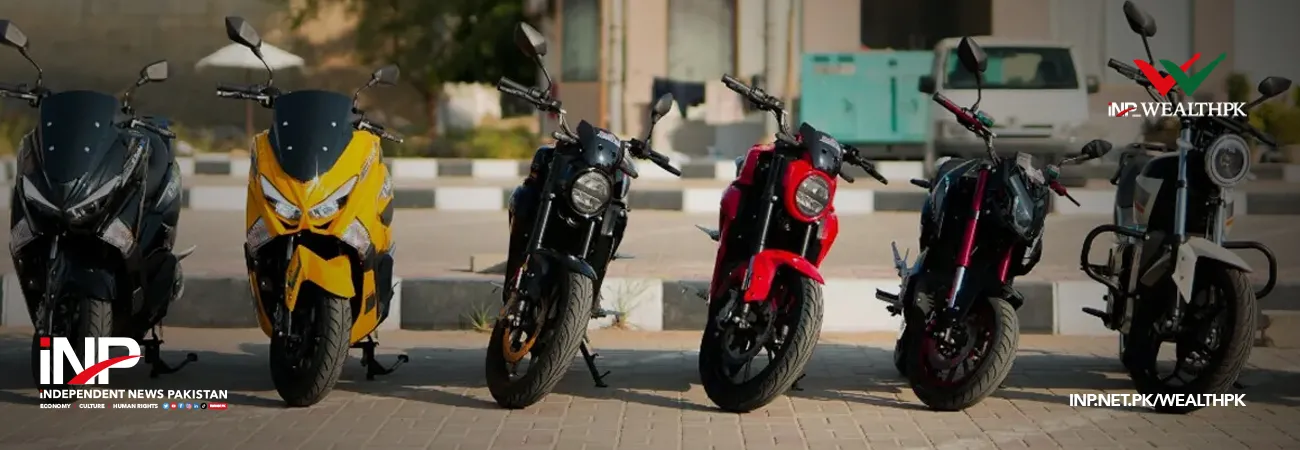
EDB licences 101 EV firms as e-bike output surges to 194,498 units
July 20, 2026
By Ayesha Saba
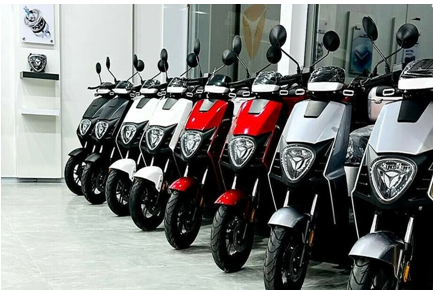
The output of two-wheeler electric bikes in Pakistan jumped to 194,498 units during the first 11 months (July-May) of FY2025-26.
According to an official document available with Wealth Pakistan, the Engineering Development Board (EDB) has so far permitted 101 companies for the production of two- and three-wheelers in Pakistan, highlighting expanding private-sector participation in the country's emerging electric vehicle (EV) industry.
The latest statistics show a sharp upward trajectory in electric motorcycle manufacturing over the past five years. The production increased from 7,302 units in FY2021-22 to 14,910 units in FY2022-23, 21,555 units in FY2023-24, and 59,633 units in FY2024-25, before reaching 194,498 units during FY2025-26 (up to May).
In comparison, the production of conventional motorcycles stood at 2,162,473 units in FY2021-22, 1,282,393 units in FY2022-23, 1,218,761 units in FY2023-24, 1,643,396 units in FY2024-25, and 1,990,265 units during FY2025-26 (up to May).
According to the EDB, the manufacturing regime for two- and three-wheelers is governed under SRO 656(I)/2006, which prescribes the minimum mandatory in-house manufacturing facilities required for vehicle production in Pakistan.
The document notes that under the existing tariff regime for conventional motorcycles, the customs duty on non-localised parts is 15%, while localised parts attract a customs duty of 46% to encourage domestic manufacturing. The localisation level of conventional motorcycles has exceeded 90%.
The EDB also clarified that the government does not provide any subsidy to vehicle manufacturers or assemblers.
However, to support the shift toward electric mobility, EV-specific components are subject to a concessional customs duty of 1%, while the duty on localised and non-localised conventional parts used in electric two- and three-wheelers remains unchanged.
The document attributes the rapid rise in electric motorcycle production to the existing incentive framework and increasing market acceptance of electric mobility, signalling growing momentum for cleaner transportation technologies in Pakistan.
The EDB further noted that the formulation, enforcement and certification of mandatory quality and safety standards fall within the mandate of the Pakistan Standards and Quality Control Authority (PSQCA), which is responsible for the applicable standards and quality compliance framework for the sector.
The latest figures indicate that while conventional motorcycles continue to dominate Pakistan's two-wheeler market, electric motorcycles are gaining ground at an accelerated pace, supported by policy incentives, expanding manufacturing capacity and rising consumer interest in electric mobility.
Credit: INP-WealthPk