

INP-WealthPk
CPEC portfolio reaches $50.34bn; 45 of 95 projects completed
October 26, 2026
By Ijaz Kakakhel
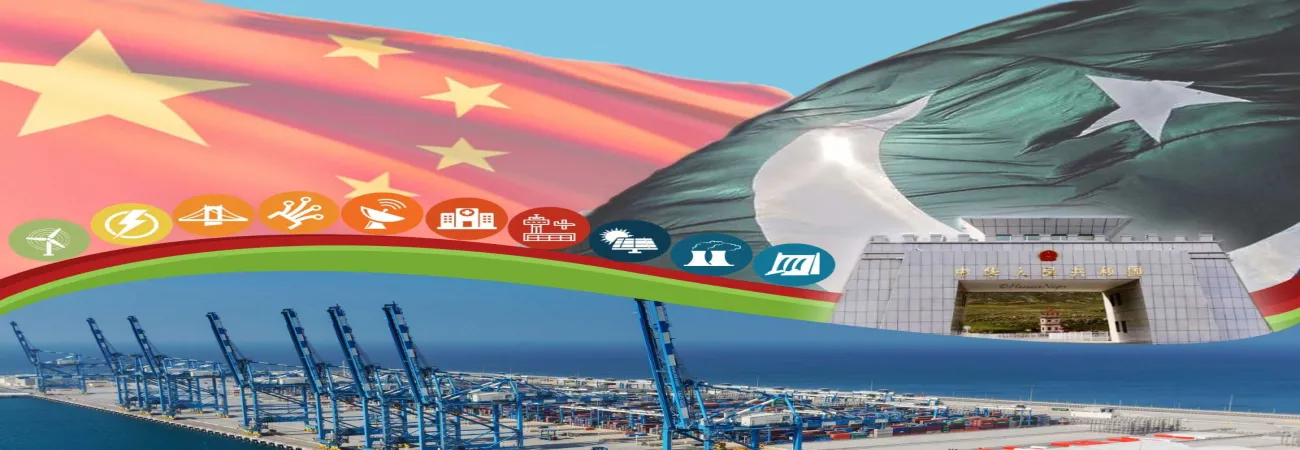
Pakistan's China-Pakistan Economic Corridor (CPEC) portfolio comprises 95 projects with a combined estimated cost of $50.33 billion, of which 45 have been completed, 15 are under implementation and 35 remain in the pipeline or under consideration, according to an official parliamentary response.
The details, shared by Federal Minister for Planning, Development and Special Initiatives Ahsan Iqbal Chaudhry and available to Wealth Pakistan, show that the 45 completed projects have a combined cost of $25.62 billion, accounting for slightly more than half of the overall CPEC portfolio by value.
Another 15 projects, with an estimated cost of $1.61 billion, are currently under implementation, while 35 projects involving proposed investments of $23.11 billion are at different stages of planning and consideration.
The government clarified that projects in the pipeline should not necessarily be classified as delayed, as they are at various stages of conceptualisation, feasibility studies, approval, financing, negotiations and preparation for implementation.
Responding to a parliamentary question about the progress, cost overruns and implementation delays of CPEC projects during the past three years, the minister said the government had continuously monitored their implementation status, financing arrangements, bottlenecks and outstanding issues.
He said periodic project-wise reviews had been conducted to identify implementation challenges, assess financing requirements, resolve inter-ministerial issues and formulate measures for the timely completion and effective operationalisation of CPEC investments.
According to the response, the completed portfolio includes major energy projects such as Sahiwal Coal Power, Port Qasim Coal Power, China-HUB Coal Power, Engro Thar Power and Mine, Quaid-e-Azam Solar Park, Karot Hydropower and Suki Kinari Hydropower.
Completed transport and infrastructure projects include the Multan-Sukkur Motorway (M-5), Orange Line Metro Train, Karakoram Highway Phase-II (Havelian-Thakot), Hakla-D.I. Khan Motorway, Eastbay Expressway, Gwadar Port and Free Zone, and New Gwadar International Airport.
The completed portfolio also includes socioeconomic development initiatives in health, education, agriculture, disaster preparedness, vocational training and human-resource development.
Among the 15 projects under implementation are the Awaran-Naal Road, Nokundi-Mashkhel Road, Hoshab-Awaran M-8, Zhob-Quetta Road and Gilgit-Shandur-Chitral-Chakdara Road.
Other ongoing schemes include infrastructure development at Gwadar Free Zone Phase-II, Allama Iqbal Industrial City, Rashakai Special Economic Zone (SEZ), Dhabeji SEZ and Bostan SEZ, along with various socioeconomic development projects.
The pipeline of 35 projects includes the Kohala Hydropower Project, Azad Pattan Hydropower Project, Main Line-1 (ML-1) railway project, Karachi Circular Railway, Karakoram Highway Phase-I Thakot-Raikot and D.I. Khan-Zhob Highway.
It also includes other proposed energy, connectivity, industrial cooperation and socioeconomic development initiatives.
The parliamentary response identifies several factors responsible for delays in certain CPEC projects, including financial closure issues involving Chinese financial institutions, land acquisition difficulties and right-of-way constraints.
Other challenges include changes in project scope and design requiring fresh approvals, delays in procurement and contracting, coordination issues between federal and provincial stakeholders, and legal, regulatory and environmental clearances.
Security and operational challenges, particularly in remote areas, have also affected the implementation of some projects.
The minister said these constraints were being addressed on a project-by-project basis through coordination among relevant federal ministries, provincial governments, executing agencies and Chinese counterparts.
He said project monitoring and coordination had been strengthened through the Cabinet Committee on Chinese Investment Projects, CPEC Progress Review Meetings, the National Steering Committee, Joint Working Groups and the CPEC Joint Cooperation Committee.
The government is also prioritising projects nearing completion to bring them into operation, while considering financial and operational sustainability throughout project implementation.
Under CPEC 2.0, greater emphasis is being placed on the effective utilisation of completed assets and extending the corridor's socioeconomic, connectivity, industrial and livelihood benefits to less-developed and remote areas, particularly Balochistan, Khyber Pakhtunkhwa and Gilgit-Baltistan.
Credit: INP-WealthPk
Related Articles