



INP-WealthPk
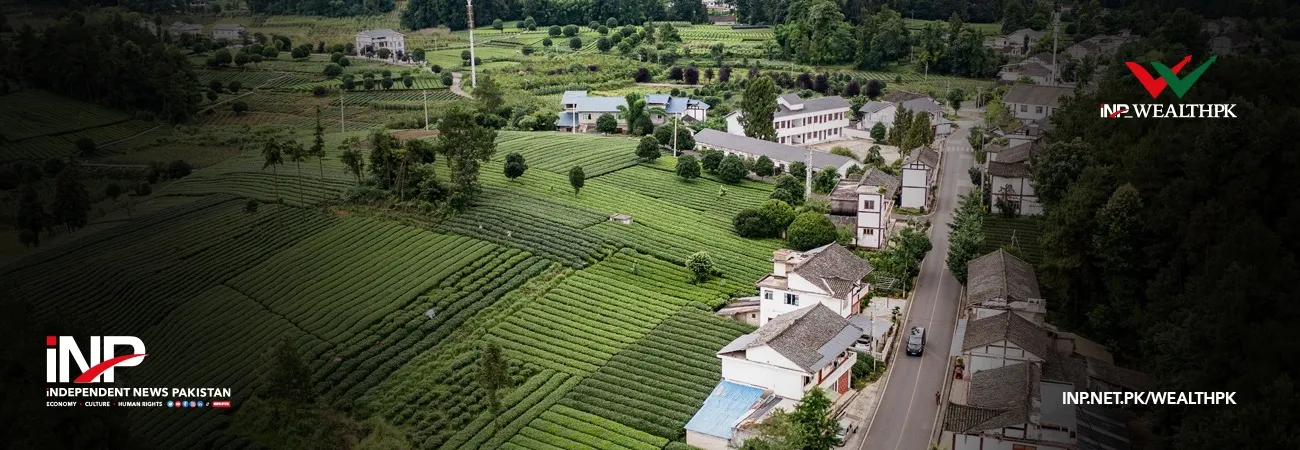
China’s rural reforms point to new model for Pakistan’s rural economy
March 30, 2026
By Azam Tariq
China’s 2026–30 development agenda places rural revitalisation at the centre of economic planning by linking farm output, local industries, poverty prevention and rural services, offering Pakistan a practical model to strengthen rural incomes, food security and local economic opportunities.
Under the 15th Five-Year Plan (2026-2030), China has prioritised agriculture, rural areas and rural residents, aligning policy support with grain security, county industries, employment, poverty prevention and rural services to position rural development as a key pillar of economic and social progress.
Speaking with Wealth Pakistan, Dr Hidayat Ullah Khan, Associate Professor of Comparative Economics and Regional Development at the National University of Modern Languages (NUML), said China’s success lies in transforming agriculture into a driver of both food security and poverty reduction.
He said Pakistan can draw from this approach by linking biodiversity protection, community conservation and rural livelihoods instead of treating them as separate policy areas. China’s data reflect the scale of this push. Its 2025 development review reported record grain output of 714.9 million metric tons, alongside a new round of measures to raise production capacity by another 50 million metric tons under the new plan.
Dr Hidayat said Pakistan can build on this production-focused approach by expanding community-based conservation and planting efforts. He suggested introducing community seed banks, managed conservation fields, training centres and research linkages to create locally adapted livelihood options in rural areas. China’s rural strategy also emphasises income protection and local enterprise development.
The budget report shows that rural households received over 5 trillion yuan in risk protection through 125 million agricultural insurance policies. At the same time, the government supported 50 modern agro-industrial parks, 40 leading agro-industrial clusters and 198 towns with distinctive agro-industrial strengths.
The plan also encourages counties to develop industries that benefit local residents and ensure farmers receive a greater share of value addition. Dr Hidayat said this is where Pakistan can adapt the model most effectively by promoting community nurseries, local employment, marketable skills and benefit-sharing mechanisms so environmental conservation becomes part of a stronger rural economy.
He also highlighted the importance of green financing and institutional continuity to ensure such initiatives move beyond short-term pilot projects. Sumaiya Afridi, Women Councillor from District Khyber, told Wealth Pakistan that Pakistan must first strengthen the basic support system for rural producers. She said farmers need access to quality seeds, fertilisers, extension services and training in modern techniques and value chain development to improve productivity and incomes.
China’s rural framework also focuses on preventing people from falling back into poverty. Its 2025 review shows that more than 7,000 labour-intensive work relief projects were implemented, helping over 4 million people secure jobs locally, while employment was ensured for more than 30 million people previously lifted out of poverty. For 2026, the budget allocates 177 billion yuan in regular assistance funds, mainly for industrial development and employment.
Afridi said Pakistan must also treat rural poverty as a structural issue rather than a temporary welfare concern. She pointed out that inadequate access to education, particularly for girls, and limited vocational training opportunities for youth and women continue to restrict upward mobility in many rural and tribal areas. She said expanding education, skills development and local employment opportunities is essential to break long-term poverty cycles.
China’s rural revitalisation strategy is also backed by improvements in living conditions. The 2025 development review reported that sanitary toilets were available in 77% of rural areas, waste disposal systems covered over 90% of administrative villages, rural sewage treatment exceeded 55%, and tap water coverage reached 96%. In addition, 5G networks covered more than 95% of administrative villages.
Afridi said Pakistan needs a similarly grounded approach, focusing on better access to education and healthcare, improved use of local data and stronger local governance. She said local representatives understand community needs most closely but require greater authority, financial resources and institutional support to respond effectively.
Experts said the key lesson for Pakistan is to adopt a full-chain approach to rural development by increasing farm output, supporting local industries, protecting vulnerable households, improving services and ensuring communities share in economic gains.
Credit: INP-WealthPk