



INP-WealthPk
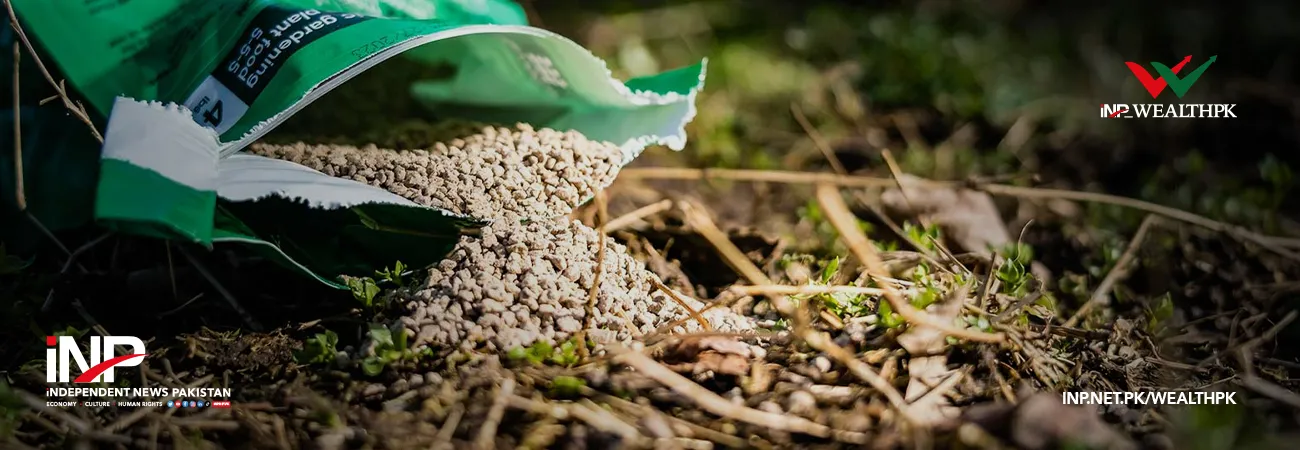
Global fertilizer crunch opens opportunity for Pakistan’s local producers
May 31, 2026
By Qudsia Bano
Pakistan’s fertilizer industry sees the global 2026 supply crunch as an opportunity to strengthen domestic manufacturing base and gradually position the country as a more reliable regional supplier of crop nutrients, according to industry stakeholders.
They believe Pakistan can benefit from rising international fertilizer prices and supply disruptions, provided the country maintains stable gas supplies, efficient port operations and uninterrupted raw material imports.
Pressure on global fertilizer markets has intensified this year. The World Bank’s April 2026 Commodity Markets Outlook reported that its fertilizer price index rose by more than 12 percent during the first quarter of 2026, while prices in March climbed to their highest level since 2022.
The report projected the fertilizer index to rise by more than 30 percent in 2026, driven mainly by higher input costs for nitrogen and phosphate fertilizers and sustained global demand. Urea prices alone are expected to increase by nearly 60 percent this year.
The latest disruption is closely linked to energy and shipping pressures. According to the World Bank, natural gas accounts for 80 to 90 percent of ammonia production costs, making urea particularly vulnerable to gas price volatility.
The Agricultural Market Information System (AMIS) Market Monitor for April 2026 also highlighted sharp increases in nitrogen and phosphate prices, noting that global fertilizer supply chains have been disrupted by the Middle East conflict and shipping constraints.
For Pakistan, the key advantage lies in its relatively strong urea production base.
According to the Press Information Department, following a Fertilizer Review Committee meeting in March 2026, Pakistan’s annual urea demand ranges between 6.5 million and 7 million tons, while annual DAP demand stands between 1.2 million and 1.5 million tons.
The same official statement said Pakistan has annual urea production capacity of around 7 million tons and that the government expects a comfortable supply position for both urea and DAP during the Kharif 2026 season.
However, experts cautioned that Pakistan remains heavily dependent on imported phosphatic fertilizers.
Business Recorder reported in March 2026 that domestic DAP output stands at around 0.75 million tons annually, with FFC PQ remaining the country’s only DAP manufacturing facility. Pakistan’s total DAP requirement, meanwhile, ranges from 1.3 million to 2.3 million tons annually.
Even so, Pakistan’s existing manufacturing and distribution structure gives it an advantage over countries that rely almost entirely on fertilizer imports.
The Competition Commission of Pakistan’s 2025 fertilizer industry assessment noted that the domestic market is dominated by three major groups — Fauji, Engro and Fatima — while urea and DAP remain the most widely used fertilizers among Pakistani farmers.
A senior manufacturing adviser at Fatima Group, requesting anonymity, said Pakistan’s immediate opportunity lies more in import substitution than aggressive export expansion.
The adviser noted that local producers already possess diversified production capabilities beyond conventional urea. According to Fatima Group’s official website, the company has annual production capacities of 1.045 million tons of urea, 920,000 tons of calcium ammonium nitrate (CAN), 820,000 tons of NP and 1.145 million tons of ammonia.
According to industry stakeholders, consistent gas supply remains the single most important factor for sustaining production at or near full capacity.
If fertilizer plants continue operating smoothly, Pakistan can reduce reliance on costly imported urea while keeping domestic prices relatively stable for farmers.
Fatima Fertilizer’s 2025 annual report also noted that the company manages imports through southern ports to support nationwide distribution, a significant advantage at a time when global shipping routes and fertilizer freight movements are facing delays.
Muhammad Kashif, a zonal sales manager at Engro Fertilizers, said Pakistan’s immediate priority should remain ensuring reliable domestic supply before pursuing large-scale exports.
He noted that Pakistan cultivates around 22 to 23 million hectares annually across the Rabi and Kharif seasons, making timely fertilizer availability essential for major crops such as wheat, rice, cotton and sugarcane.
Industry experts believe Pakistan’s longer-term regional role will depend heavily on logistics efficiency and supply chain discipline.
They argue that if local producers maintain adequate buffer stocks and successfully avoid seasonal shortages, Pakistan could gradually emerge as a more credible fertilizer manufacturing and supply hub for nearby regional markets.
However, experts cautioned that any meaningful regional expansion would require stable feedstock pricing, efficient port handling, transparent distribution systems and continuous monitoring of global fertilizer market trends.

Credit: INP-WealthPk