



INP-WealthPk
China’s green buildings highlight new pathway for Pakistan’s energy transition
April 15, 2026
By Azam Tariq
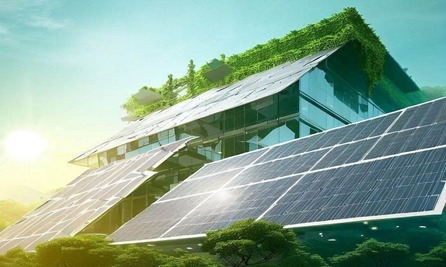
As China reimagines its urban landscape through building-integrated photovoltaics and smart energy systems, Pakistan is exploring how similar approaches could help address its persistent power challenges.
China’s urban development strategy has shifted from expansion to carbon-conscious optimization. According to a report published by Beijing Review, the country’s urbanization rate has surpassed 67%, with buildings accounting for around 21.7% of national carbon emissions.
In Beijing’s Tongzhou District, a former chemical plant has been converted into a “whole-region zero-carbon park” using geothermal wells and rooftop photovoltaic systems. The project has reduced annual carbon dioxide emissions by about 11,000 tons, highlighting how urban infrastructure can be redesigned to support climate and energy goals. Pakistan, meanwhile, has begun taking initial steps in this direction.
The 2025 Pakistan Green Taxonomy identifies construction as a key sector, while the Energy Conservation Building Code 2023 aims to improve energy efficiency in the building sector by 15–20%. However, the country remains heavily reliant on imported fuels such as LNG and coal. Renewable energy still constitutes a relatively small share of the overall power mix, according to available official assessments. Speaking with Wealth Pakistan, Arfa Ijaz, a researcher at the Sustainable Development Policy Institute, said Pakistan can draw lessons from China’s integration of solar energy, efficient materials and urban planning at scale.
However, she cautioned that “direct replication may not be feasible,” given differences in state capacity, financing availability and policy continuity. Ijaz suggested a phased approach, including targeted tax incentives, pilot projects in major cities and stricter enforcement of building energy codes. She noted that rooftop solar is already gaining traction among households and businesses facing high electricity costs and supply uncertainty.
She added that while green rooftops may expand more gradually, they could become more viable in densely populated cities such as Karachi, Lahore and Islamabad if supported through appropriate regulations and incentives. According to Ijaz, distributed generation — particularly rooftop solar — can reduce peak demand, lower transmission losses and improve overall energy resilience. Combined with energy-efficient building design, such measures can also contribute to improved urban air quality and reduced cooling requirements.
Muneeb Shah, an associate researcher at the Islamabad Policy Research Institute, said Pakistan can draw on elements of China’s approach by adopting supportive policies and effective implementation. He noted that China combined mandatory targets with subsidies and concessional financing, helping lower costs and accelerate the adoption of solar technologies in urban construction.
Shah suggested that Pakistan could introduce minimum solar requirements in new housing and commercial projects through an effective building approval framework. He also pointed to ongoing solarisation initiatives in public-sector buildings as an indication that scaling up deployment can help reduce costs. He said rooftop solar remains a practical option in Pakistan due to strong solar irradiation and rising grid tariffs, with small urban systems capable of meeting a significant portion of household demand.
He added that integrating clean energy solutions into buildings can help reduce pressure on the national grid, particularly during peak hours, while also lowering dependence on imported fuels. Experts believe that strengthening building-level energy solutions, alongside broader policy and regulatory reforms, could play an important role in improving Pakistan’s energy security and sustainability.
Credit: INP-WealthPk