



INP-WealthPk
NARC readies high-yielding Lentil-24 for next growing season
April 14, 2026
By Azeem Ahmed Khan
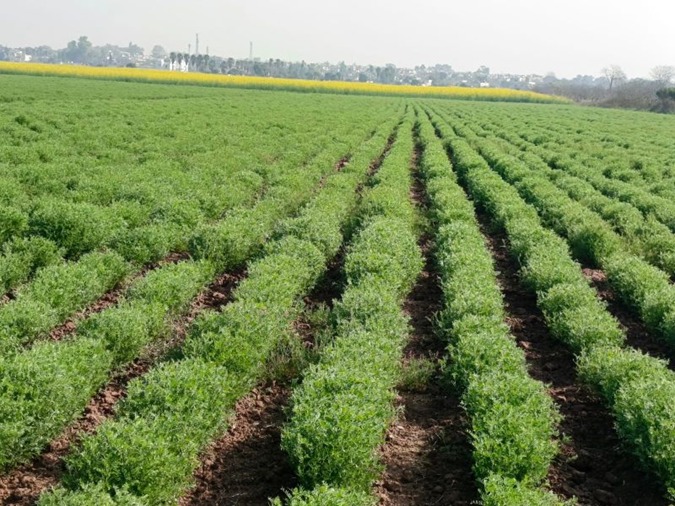
The National Agricultural Research Centre (NARC) has developed a high-yielding lentil variety, NARC Lentil-24, which is performing well in field trials in Islamabad.
“The new variety is expected to significantly boost productivity across the country, enhancing farm incomes and strengthening food security,” Dr. Shahid Riaz Malik, Principal Scientific Officer and Program Leader at the NARC, told Wealth Pakistan.
He said NARC Lentil-24 combines high yield potential with climate resilience, resistance to multiple diseases, and improved plant architecture, making it suitable for mechanized harvesting. This variety has wide adaptability and can perform well across diverse agro-ecological zones and cropping systems in the country.
Dr. Shahid noted that pulses occupy around 1.16 million hectares — about 5% of Pakistan’s total cropped area — compared to cereals dominating 56%, and highlighted the need to enhance their share in the cropping system. He said major pulses grown in Pakistan include chickpea, lentil, mung bean, mash, and kidney beans, while the country’s total cropped area is 22.51 million hectares.
He pointed out that the production of pulses in Pakistan faces multiple challenges, including low and unstable yields due to rainfed conditions, climate change-induced stresses such as droughts and floods, pest and disease attacks, and cultivation on marginal lands with low inputs.
Explaining the extent of the challenge, Dr. Shahid said a significant yield gap exists in the pulses sector. While the national average yield stands at around 553 kg per hectare, progressive farmers are achieving nearly 1,500 kg per hectare, and the potential yield can reach up to 3,000 kg per hectare.
“This wide gap highlights the untapped productivity potential and underscores the importance of improved seeds, better farm practices, and modern technologies to bridge the difference.”
He further highlighted technological and infrastructure gaps, including limited access to quality seeds, mechanization, and irrigation, along with weak extension services and poor post-harvest management.
To address these issues, he emphasized the need for advanced breeding and genetic innovations, including the development of climate-resilient and high-yielding varieties using modern tools such as genomics, speed breeding, and artificial intelligence.
Dr. Shahid said NARC is already working on improving crop management through better water-use efficiency, enhanced nitrogen fixation, and climate-smart practices, supported by its speed breeding facility.
He stressed the importance of strengthening seed production and supply systems to ensure timely availability of quality seeds, alongside promoting public-private partnerships and improving certification and quality control mechanisms.
Dr. Shahid also underscored the growing potential of value-added processing and food innovation, noting that pulse-based products could tap into expanding domestic and global markets, including the rising demand for plant-based protein alternatives.
Calling for stronger collaboration, he emphasized the need for coordinated national and international research efforts and effective knowledge transfer to farmers to accelerate progress in the pulses sector.
Emphasizing their importance, he explained that pulses are rich in protein, dietary fiber, vitamins, and minerals, have a low glycaemic index, and are naturally free of cholesterol and gluten. Environmentally, they contribute to nitrogen fixation, efficient water use, and reduced carbon footprints, making them ideal for sustainable agriculture.
Credit: INP-WealthPk