


INP-WealthPk
China's GDI fuels Pakistan's 5Es agenda for economic transformation
July 13, 2026
By Muhammad Zulqarnain
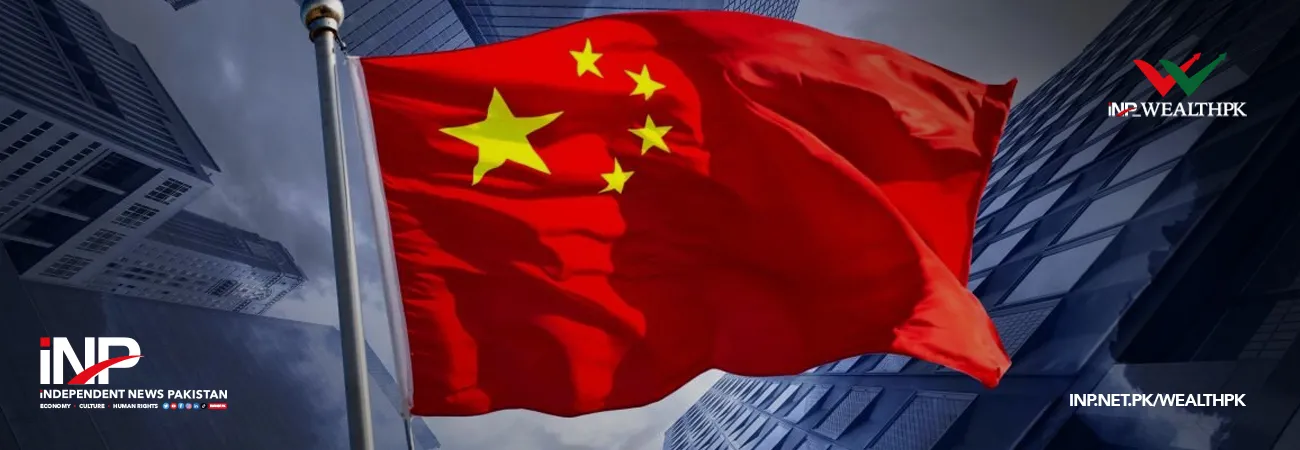
The growing alignment between China's Global Development Initiative (GDI) and Pakistan's 5Es Framework under the URAAN Pakistan programme offers an opportunity to accelerate industrialisation, strengthen economic resilience and promote sustainable long-term growth through deeper bilateral cooperation, experts say.
They believe the convergence of the two development frameworks can expand Pakistan-China cooperation beyond infrastructure into areas such as industrial modernisation, digital transformation, renewable energy, agricultural productivity, technological innovation and human capital development.
Speaking to Wealth Pakistan, Shah Jahan Mirza, Senior Adviser on Energy, Investment and Green Transition, said the GDI and Pakistan's 5Es Framework share many complementary priorities that can serve as a roadmap for addressing the country's long-term development challenges.
"The Global Development Initiative promotes inclusive, innovation-driven, green and sustainable development, while Pakistan's 5Es Framework focuses on exports, e-Pakistan, environment and climate change, energy and infrastructure, and equity and empowerment. These priorities complement each other and provide a strong foundation for meaningful collaboration," he said.
Mirza said the alignment could encourage broader cooperation in industrial modernisation, digital connectivity, renewable energy, agricultural development and skills enhancement.
He stressed that Pakistan could benefit from China's experience in industrial planning, advanced manufacturing, digital governance and technological innovation to strengthen domestic institutions and improve economic competitiveness.
"China's development model demonstrates the importance of policy continuity, investment in productive sectors and technological advancement. Pakistan can benefit by adapting these lessons to its own development priorities," he said.
Highlighting the importance of export-led growth, Mirza said stronger industrial cooperation under the GDI could help expand Pakistan's manufacturing capacity, diversify exports and integrate domestic industries into regional and global value chains.
"Economic transformation requires shifting from consumption-driven growth to production, value addition and exports. Closer collaboration with China can help Pakistan strengthen its industrial base and expand its export potential," he added.
Bilal Mehmood Chaudhry, Director General at the Ministry of Foreign Affairs, told Wealth Pakistan that the synergy between the GDI and the 5Es Framework reflects the longstanding principles of Pakistan-China relations—specifically mutual trust, mutual benefit and sustained cooperation.
He said the alignment reinforces the two countries' shared commitment to industrialisation, digital infrastructure, green development and people-centred growth under CPEC 2.0.
"This partnership should be viewed as an opportunity to institutionalise economic cooperation across multiple sectors rather than limiting engagement to individual projects. China's emphasis on New Quality Productive Forces, driven by artificial intelligence, advanced manufacturing and innovation, also offers useful lessons for Pakistan's future development," he said.
According to Chaudhry, the real strength of the partnership lies in creating an integrated development model in which energy, digital transformation, environmental sustainability, trade, investment and human development reinforce one another.
He said future energy cooperation should focus on renewable energy, smart grids, energy efficiency and technology transfer to strengthen energy security while reducing production costs for industry.
Chaudhry also identified digital transformation as a major area for collaboration, noting that China's experience in digital governance, e-commerce, financial inclusion and industrial innovation could support Pakistan's efforts to modernise its economy.
On environmental sustainability, he said both frameworks recognise the importance of green growth and climate resilience. Joint initiatives in renewable energy, green finance, sustainable agriculture and climate adaptation, he added, could simultaneously advance Pakistan's economic and environmental objectives.
Experts believe the alignment between China's Global Development Initiative and Pakistan's 5Es Framework provides an opportunity to build a more integrated model of economic development centred on industrialisation, innovation and sustainability. They say translating this convergence into concrete policies, stronger public-private partnerships and long-term investment programmes will be essential for delivering measurable economic outcomes.
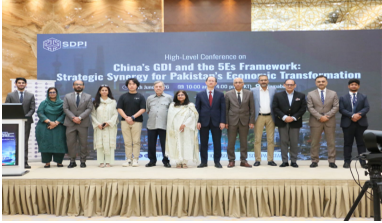
Credit: INP-WealthPk