



INP-WealthPk

China's anti-desertification model offers blueprint for Pakistan
July 03, 2026
By Azam Tariq
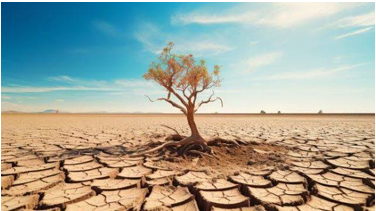
China's success in reversing desertification through scientific land management and large-scale ecological restoration offers a practical blueprint for Pakistan as it seeks to tackle land degradation, strengthen climate resilience and restore productivity in its arid regions, experts say.
China recently became the world's first country to achieve zero net growth in land degradation, with its sandified land shrinking by an average of 10 million mu annually, reversing the annual expansion of 5.15 million mu recorded at the end of the last century, according to the National Forestry and Grassland Administration.
The achievement has been driven by the Three-North Shelterbelt Forest Program, one of the world's largest ecological restoration initiatives. Since the programme entered its critical implementation phase in 2023, China has invested 88.9 billion yuan (about $13.06 billion), launched 544 key projects and restored approximately 16.27 million hectares of degraded land. The initiative has combined ecological restoration with livelihood generation through medicinal plants, economic forests, work-relief programmes and solar-powered desert control projects.
While China has demonstrated that sustained ecological restoration can reverse decades of land degradation, Pakistan continues to face significant environmental challenges. Research by the Institute of Soil and Environmental Sciences at the University of Agriculture Faisalabad estimates that land degradation affects around 33% of the country's territory, including nearly 9 million hectares of cultivable wasteland, more than half of which is located in Balochistan.
The Ministry of Climate Change and Environmental Coordination has also acknowledged that nearly 50% of Pakistan's land area is affected by various forms of degradation caused by deforestation, overgrazing, salinity and waterlogging. Desert regions such as Cholistan, Thar and the arid landscapes of Balochistan and Sindh illustrate both the scale of the challenge and the potential for ecological restoration.
Against this backdrop, experts believe Pakistan can benefit from adapting China's experience to local environmental and socio-economic conditions.
Speaking to Wealth Pakistan, Dr Muhammad Faisal Ali, Assistant Professor specialising in climate change and agriculture at the Pakistan Institute of Development Economics (PIDE), said Pakistan should establish joint demonstration sites in Cholistan or Kharan to serve as technology testing centres and training hubs for desert restoration.
He said capacity building should be practical and institutionalized, suggesting sending Pakistani government officials, researchers, NGOs and technical experts to China for specialized training. The knowledge gained should then be translated into technical manuals and restoration practices tailored to Pakistan's ecological conditions.
Beyond technical cooperation, Dr Ali stressed the importance of establishing sustainable financing mechanisms. He recommended utilizing provincial development funds alongside international climate finance instruments such as the Green Climate Fund (GCF) to support long-term restoration programmes.
For immediate results, he urged policymakers to prioritize rangeland rehabilitation through reseeding and controlled grazing.
"Because in these areas, livestock supports local communities a lot," he said. "When you focus on these things, their socio-economic status will automatically improve. Their pastoral income will increase."
Aftab Mehmood, Conservator of Forests, Diamer, told Wealth Pakistan that China's achievements demonstrate how scientific planning and long-term commitment can successfully restore degraded ecosystems.
"Through scientific land management, large-scale afforestation, sand dune stabilisation, and the use of drought- and heat-resistant plant species, China has demonstrated that degraded landscapes can be restored with vision and commitment," he said.
Mehmood noted that the China-Pakistan Economic Corridor (CPEC) provides Pakistan with an opportunity to benefit from Chinese expertise in GIS-based monitoring, remote sensing, climate-resilient plantation techniques and modern ecological management practices.
Masood Lohar, development and climate change professional and Founder of Clifton Urban Forest, said China's desert restoration experience offers valuable lessons not only for Pakistan but for countries around the world facing similar environmental challenges.
"Pakistan, with deserts such as Cholistan and Thar, as well as the highland and hilly deserts of Balochistan and Sindh, has enormous potential to benefit from the approaches China has successfully implemented," he said.
Lohar also pointed out that Pakistan possesses one of the world's largest wind corridors, extending from the Thar Desert through Karachi to Jiwani, along with vast solar energy potential in Sindh and Balochistan. However, he cautioned that effective implementation remains the country's biggest challenge.
"Policy-wise, things look good on paper, but when it comes to translating them into action, Pakistan has not been a very good example," he said. "What to talk of desert when we already have failed on our highly fertile and irrigated lands."
As CPEC 2.0 expands cooperation beyond traditional infrastructure into agriculture and environmental sustainability, experts believe China's experience provides Pakistan with a practical model for restoring degraded landscapes while generating rural livelihoods, strengthening climate resilience and promoting sustainable land management.
Credit: INP-WealthPk