



INP-WealthPk
Agro exports plunge 29% as rice shipments fall 37%, weighing on Pakistan’s export performance
April 09, 2026
By Moaaz Manzoor
Pakistan’s agro and food exports declined sharply by 29% to $3.84 billion during July-February FY2025-26, with a steep fall in rice shipments weighing heavily on the overall export performance, according to the Trade Development Authority of Pakistan’s (TDAP) Monthly Trade Report for February 2026.
The report shows that agro and food exports dropped from $5.39 billion in the corresponding period of last fiscal year to $3.84 billion during the current fiscal year, reflecting a substantial contraction in one of the country’s key export segments.
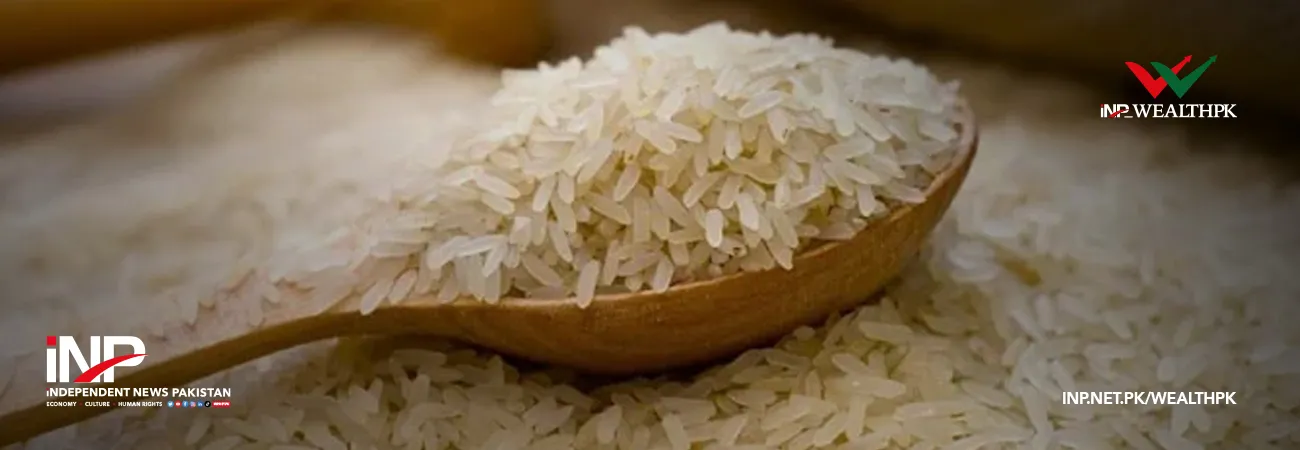
Among major commodities, rice recorded a significant decline, with exports falling by 37% to $1.53 billion during July-February FY2025-26, compared to $2.41 billion in the same period last year. The decline in rice exports contributed prominently to the overall decrease in agro and food exports.
On a monthly basis, agro and food exports also showed a downward trend. In February FY2025-26, exports from this category stood at $467 million, compared to $575 million in February FY2024-25, indicating a decline of 19%.
The report further highlights that while agro and food exports contracted, other export segments showed comparatively stable or moderate performance. Textile and leather exports, which constitute the largest share in Pakistan’s export basket, remained largely unchanged during July-February FY2025-26, standing at $12.93 billion compared to $12.90 billion in the same period last year.
In February alone, textile and leather exports were recorded at $1.39 billion, down from $1.50 billion in February FY2024-25, reflecting a decline of 7% on a year-on-year basis.
Meanwhile, exports of other manufactured products grew during the period under review. These exports increased by 5% to $3.76 billion during July-February FY2025-26, compared to $3.57 billion in the corresponding period of the last fiscal year.
On a monthly basis, exports of other manufacturing products stood at $422 million in February FY2025-26, up from $371 million in February FY2024-25, reflecting an increase of 14%.
The commodity-wise breakdown shows mixed performance across various export categories. While some value-added textile items and industrial products posted increases, several traditional export items, including basic textile categories and agricultural products, recorded declines.
In February FY2025-26, bedlinen exports stood at $321 million, down from $365 million in the same month last year, showing a decline of 12%. Similarly, exports of men’s or boys’ garments (HS code 6203) decreased to $232 million from $248 million, reflecting a decline of 7%.
Other textile-related products also recorded declines during the month. Exports of cotton fabrics (HS code 5209) fell by 7%, while T-shirts (HS code 6109) declined by 11%. Jerseys and pullovers (HS code 6110) also showed a decrease of 22% on a year-on-year basis.
At the same time, certain categories registered growth. Exports of cotton yarn increased by 45% during February FY2025-26 compared to the same month last year, while exports of women’s garments (HS code 6204) rose by 31%. Petroleum products also showed a notable increase of 160% during the month.
The report indicates that export performance across sectors and commodities remained uneven during the period under review, with declines in agro and food exports, particularly rice, contributing significantly to the overall contraction in exports.
According to the TDAP report, the export data is based on provisional figures compiled from sources including the Pakistan Bureau of Statistics (PBS), Web-Based One Customs (WeBOC), and Pakistan Revenue Automation Limited (PRAL), and may be subject to revision.
Credit: INP-WealthPk