



INP-WealthPk
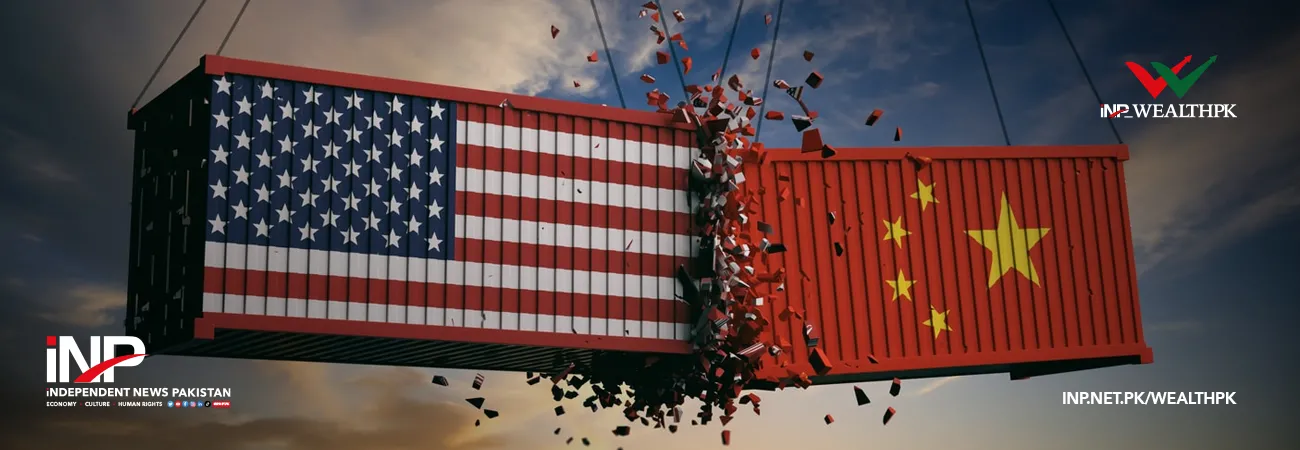
US-China summit seen easing trade tensions, strengthening global economic stability
June 03, 2026
By Azam Tariq
The recent high-level summit between the United States and China, which outlined a framework for “constructive strategic stability,” could help restore confidence in global trade, stabilize supply chains and reduce market uncertainty, as businesses seek greater predictability amid rising geopolitical and economic pressures, according to analysts.
The meeting between US President Donald Trump and Chinese leadership in Beijing on May 15, 2026, marked the first visit by a sitting US president to China in nearly a decade.
According to China’s Ministry of Commerce, both sides agreed in principle to reduce tariffs on products of mutual concern on an equivalent scale and establish trade and investment councils to help manage future economic disputes.
The International Monetary Fund (IMF) also welcomed the engagement, with Communications Director Julie Kozack stating that efforts aimed at reducing trade tensions and uncertainty would support the global economy.
The summit came at a time when global markets remained under pressure from conflicts, supply-chain disruptions and geopolitical rivalries, making stability between the world’s two largest economies increasingly important.
Speaking with Wealth Pakistan, Dr Bilal Zubair, Director of the Research Center for International Strategic Studies at the Center for International Strategic Studies (CISS) in Islamabad, said strategic stability between Washington and Beijing remains critical for global supply chains, the international business environment and the functioning of rules-based economic institutions.
He noted that US-China bilateral trade reached $414 billion in 2025, lower than the previous year. He also cited World Trade Organization (WTO) data showing that global trade in goods and commercial services reached $34.65 trillion in 2025, a 7 percent year-on-year increase, although trade growth is projected to moderate during 2026.
Dr Zubair said both countries remain central to global production and investment flows, with China contributing $4.16 trillion in manufacturing value and the United States adding $2.49 trillion.
He said greater strategic stability would reduce geopolitical uncertainty and economic fragmentation, creating a more predictable environment for global commerce.
Dr Zubair further explained that stronger economic cooperation could enhance certainty and improve supply-chain stability worldwide.
He noted that Chinese manufacturing continues playing an important role for major US companies, including Tesla and Apple, while tensions between the two economies had increased sourcing complexity and operational costs globally.
According to him, stronger bilateral engagement could help ease these challenges and improve business confidence.
Sheharyar Khan, Executive Director of the National Dialogue Forum (NDF), told Wealth Pakistan that improving China-US strategic stability could substantially reduce major geopolitical risks currently affecting global markets.
He said when the world’s two largest economies manage differences through predictable dialogue rather than escalation, businesses and investors face lower risks related to sudden tariffs, export restrictions and supply-chain disruptions, thereby reducing uncertainty across the global economy.
Khan added that stronger economic cooperation could also improve supply-chain efficiency and predictability. He said measures such as stable tariff arrangements, clearer rules for technology and investment, and better coordination regarding critical materials could reduce the costly fragmentation that global markets have witnessed in recent years.
As Washington and Beijing move toward institutionalised dialogue through new trade and investment mechanisms, analysts view the summit as an important step toward managing one of the world’s most consequential bilateral relationships.
With both countries signalling intentions to pursue de-escalation and structured engagement, prospects for a more stable and predictable global economic environment appear increasingly achievable.
Credit: INP-WealthPk
Related Articles