




INP-WealthPk

Pakistan-China B2B push shifts cooperation toward direct industrial partnerships
June 03, 2026
By Qudsia Bano
Pakistan-China commercial cooperation is entering a more structured business-to-business (B2B) phase as investment matchmaking initiatives, sector-specific conferences and new institutional agreements signal a gradual shift from government-led infrastructure cooperation toward direct industrial partnerships.
The momentum follows the 2nd Pakistan-China B2B Investment Conference held in Beijing on September 4, 2025, where between 2,500 and 3,000 curated B2B meetings took place across nine sectors and 40 sub-sectors. According to Pakistan’s Press Information Department (PID), the conference resulted in 21 joint venture agreements valued at $1.5 billion and more than 100 memorandums of understanding (MoUs) worth over $7 billion.
Authorities are now attempting to extend that model through targeted sector-specific engagements. On April 15, 2026, Pakistan’s Ambassador to China Khalil Hashmi visited Ningbo to mobilize B2B investment and industrial cooperation across 21 priority areas. The visit featured a Pakistan-China industrial cooperation summit along with separate B2B investment roundtables in the ICT and pharmaceutical sectors.
Around 100 Chinese enterprises representing home appliances, information technology, chemicals and textiles participated in the summit, while nearly two dozen leading firms joined each roundtable session.
The engagement also facilitated Chinese businesses’ participation in another round of in-person matchmaking activities in Pakistan from May 8 to 14, 2026. According to the PID, Chinese business leaders were encouraged to visit Pakistan for the inauguration of IBI Group’s regional office in Islamabad and meetings with Pakistani counterparts.
The ambassador also invited Chinese firms to participate in the Pakistan-China B2B Investment Conference on home appliances, electric equipment and battery energy storage held in Lahore on May 9-10, 2026, as well as a separate pharmaceuticals and healthcare conference scheduled for June.
The Lahore conference focused on home appliances, battery and power storage devices, and electrical equipment. Its official platform, supported by PIDC, BOI, SIFC, the Ministry of Industries and Production, SMEDA, EDB, FPCCI and Pakistan’s Embassy in Beijing, described the initiative as a hub for investment, technology transfer, export expansion, joint ventures and contract manufacturing.
Pakistan is also seeking to integrate these B2B initiatives into its domestic industrial upgrading and workforce development agenda.
At a TVET symposium hosted by Pakistan’s Embassy in Beijing on April 22, 2026, representatives from China’s Ministry of Human Resources and Social Security, Chinese TVET institutions, Pakistani companies and senior officials discussed skills development in home appliances, electrical equipment and battery storage manufacturing.
Planning Minister Ahsan Iqbal noted that Pakistan’s home appliances market was valued at $5.6 billion, while imports of electrical equipment surged by 75% to nearly $6 billion during the previous year.
Recent State Bank of Pakistan (SBP) data also supports the investment narrative. China remained among the largest sources of foreign direct investment into Pakistan, recording net FDI of $61 million in April 2026 alone and $739.6 million during July-April FY26.
The SBP figures showed total net FDI into Pakistan reached $1.409 billion during July-April FY26, indicating that China accounted for more than half of the country-wise net FDI inflows during the period.
Sector-wise, electrical machinery attracted $121.1 million in net FDI during July-April FY26, while electronics received $99.2 million and power drew $785.6 million. These investment flows closely align with the sectors currently being promoted under the Pakistan-China B2B framework, particularly electrical equipment, energy storage systems, electronics and appliance manufacturing.
Industry representatives believe the next phase will depend largely on whether agreements can move beyond paper commitments and evolve into operational projects.
Muhammad Shakir, Senior Manager at the Federation of Pakistan Chambers of Commerce and Industry (FPCCI), told Wealth Pakistan that China remains Pakistan’s most trusted and reliable economic partner following recent FPCCI-Guangzhou Chamber engagement.
He said Pakistan should use Chinese cooperation to build local capabilities in battery management systems, installation services, after-sales support and safety standards.
“The opportunity is not limited to importing batteries,” he said. “The broader potential lies in building a complete ecosystem around storage systems, solar integration and industrial power solutions.”
Tufail Ahmed, Operations Manager at Lean Automation Pvt Ltd Pakistan, said Pakistan’s electrical equipment and home-appliance industry could significantly benefit if cooperation shifts from trade to local assembly, component manufacturing and technology transfer.
He said the May 2026 Lahore conference was particularly important because its focus areas — home appliances, electrical goods and battery storage — are directly connected with Pakistan’s import bill, domestic consumer market and industrial energy requirements.
Meanwhile, the FPCCI-Guangzhou Chamber MoU signed in April 2026 introduced a practical dispute-resolution mechanism through dedicated arbitration desks at both institutions aimed at resolving commercial disputes and improving business confidence, particularly among small and medium-sized enterprises.
However, analysts say implementation remains the real challenge.
Pakistan has already secured commitments worth around $8.5 billion through the Beijing conference outcomes, but translating those agreements into functioning projects will require industrial land allocation, tax clarity, reliable energy supply, faster approvals, skilled labour and adequate security arrangements for Chinese personnel.
The government has pledged full facilitation, security support and follow-up mechanisms for signed agreements, while sector-specific investment pitch books and online orientation sessions have also been developed to improve matchmaking quality.
If implemented effectively, the current B2B drive could help Pakistan move beyond import dependence toward localized production in appliances, electrical equipment, battery systems and export-oriented manufacturing.
The developments during April and May 2026 suggest Pakistan and China are increasingly moving beyond traditional public-sector infrastructure cooperation and attempting to build direct commercial pipelines connecting investors, manufacturers, technology providers, chambers and training institutions.
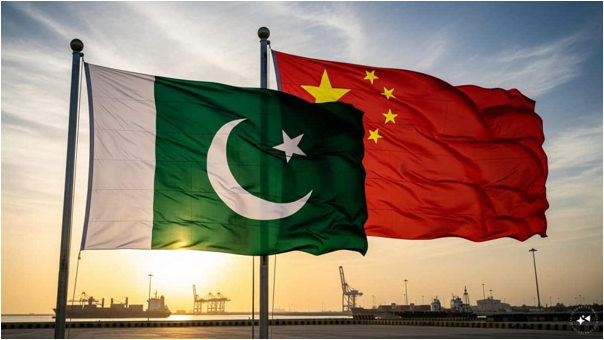
Credit: INP-WealthPk
Related Articles