



آئی این پی ویلتھ پی کے

Rupee shows mild gains in March despite inflation, external pressures
April 07, 2026
By Moaaz Manzoor
The Pakistani rupee remained broadly stable against major international currencies during March, posting a slight overall appreciation against the US dollar despite rising geopolitical uncertainty, higher inflation, and continued volatility in global commodity markets, reports Wealth Pakistan.
According to the State Bank of Pakistan, the weighted average customer exchange rate for the US dollar stood at 279.1814 for buying and 279.6065 for selling on March 2. By March 6, which marked the close of the first week, the dollar eased to 279.1343 and 279.5594. It declined further to 279.0278 and 279.4529 on March 13, and then to 278.9892 and 279.4143 on March 19. By March 31, the greenback closed at 278.8821 for buying and 279.3072 for selling, reflecting a slight overall appreciation of the rupee during the month.
The euro followed a downward trajectory over the same period. It opened at 328.4284 for buying and 328.9181 for selling on March 2, slipped to 324.1733 and 324.6653 by March 6, declined further to 321.0042 and 321.4918 on March 13, and stood at 319.9032 and 320.3838 on March 19. By March 31, it closed at 319.9240 and 320.4049.
The British pound also weakened during the month. It began in March at 374.7343 for buying and 375.3057 for selling, eased to 373.0315 and 373.6197 by March 6, declined to 372.1259 and 372.7000 on March 13, and then to 370.1636 and 370.7355 on March 19. It ended the month at 368.2946 and 368.8579.
The Saudi riyal remained broadly stable, moving from 74.3978 and 74.5153 at the start of the month to 74.3206 and 74.4292 by March 31. The Chinese yuan also stayed within a narrow range, easing from 40.6559 and 40.7078 to 40.4038 and 40.4558 over the month. The Japanese yen showed modest volatility, opening at 1.7838 and 1.7864 and closing at 1.7468 and 1.7494.
Broader macroeconomic indicators released during the month provided mixed support to exchange-rate stability. The State Bank of Pakistan kept the policy rate unchanged at 10.5% in March, adopting a cautious stance amid uncertainty linked to Middle East tensions and volatile global commodity prices. Pakistan also reached a staff-level agreement with the International Monetary Fund on the EFF and RSF reviews, which could unlock about $1.21 billion, subject to approval.
Inflationary pressures, however, remained visible. According to the Pakistan Bureau of Statistics, CPI inflation rose to 7.3% year-on-year in March 2026, up from 7.0% in February and the highest reading since August 2024. On the external front, the trade deficit stood at $2.7 billion in March, with exports falling 14% year-on-year to $2.3 billion and imports declining 5.4% year-on-year to $5.0 billion.
Speaking with Wealth Pakistan, Syed Zafar Abbas, Manager at Zahid Latif Securities, said the current stability of the rupee may be difficult to sustain amid rising external pressures. He noted that some exchange rate adjustment and a tighter monetary stance, including higher interest rates, may be required in the coming months to contain inflation and support macroeconomic stability.
According to Arif Habib Limited, the Real Effective Exchange Rate (REER) stood at 102.54 in February 2026, down 0.7% month-on-month. During the last week of March, SBP-held reserves increased by $6.2 million to $16.4 billion, while commercial bank reserves rose by $47.8 million to $5.4 billion, providing additional support to the rupee.
Overall, the rupee’s performance in March reflected relative resilience amid a challenging external environment, supported by a stable monetary stance, a modest improvement in foreign reserves, and continued engagement with the IMF.
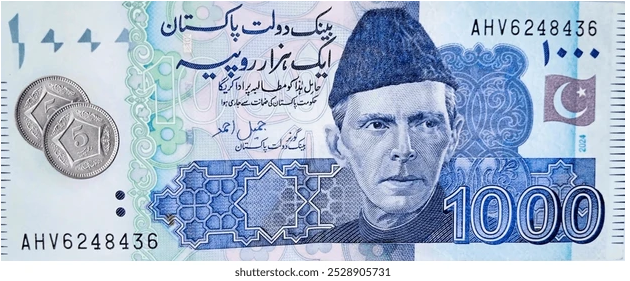
Credit: INP-WealthPk
متعلقہ مضامین