


آئی این پی ویلتھ پی کے
Pakistan explores climate-smart tea farming in northern hills
December 31, 2025
Azeem Ahmed Khan
Pakistan is exploring the commercial cultivation of tea in its northern highlands after assessments by the Food and Agriculture Organization (FAO) confirmed large areas suitable for plantations, positioning the crop as a long-term, climate-smart option that combines environmental protection with economic opportunities.
Dr Farrukh Siyar Hamid, Technical Tea Consultant with the FAO, said detailed surveys had identified nearly 268,000 hectares of land across northern Pakistan suitable for commercial tea cultivation, offering the country a chance to cut its heavy dependence on imports while creating sustainable rural livelihoods in ecologically fragile regions.
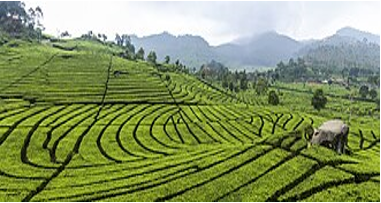
From an environmental perspective, tea offers clear advantages for the mountainous terrain. A perennial shrub, it can remain productive for 70 to 100 years and requires no tilling once established, helping preserve soil structure and organic content. “When grown on slopes, its dense canopy reduces water runoff, limits erosion, and helps extend the life of dams and reservoirs,” Dr Farrukh said.
“Tea also makes wasteland productive,” he said, adding that in Pakistan the crop is well suited to elevations of around 1,000 metres and above, with flavour and quality shaped by elevation and local microclimates. Building on these environmental advantages, the FAO is also promoting an integrated tea-olive plantation model to boost farm incomes, enhance carbon sequestration, reduce greenhouse gas emissions, and protect biodiversity, Dr. Farrukh said.
“The FAO encourages farmers to adopt tea and olive together so they can simultaneously generate income from both crops,” he added. Building further on these climate-smart farming approaches, tea estates are also being viewed as anchors for a broader green growth strategy rather than stand-alone agricultural projects. Plans include linking tea clusters with tourism zones in Khyber Pakhtunkhwa, connecting plantations with destinations such as Kaghan and Kalam, and routes associated with the China-Pakistan Economic Corridor, he said.
The environmental suitability of tea in Pakistan’s northern hills is matched by a compelling economic case, as the country remains heavily reliant on imported tea despite being among the world’s largest consumers. Tea, the world’s second-most-consumed beverage after water, is grown in more than 50 countries and supports millions of livelihoods, yet Pakistan continues to depend almost entirely on overseas supplies to meet the domestic demand, Dr. Farrukh said.
During 2024-25, Pakistan imported about 195,980 metric tonnes of black tea worth Rs116 billion (around $465 million), along with smaller volumes of green tea valued at Rs688 million, Dr Farrukh said, underlining the scale of foreign exchange that could be conserved through domestic production.
The FAO-led surveys across eight districts of Khyber Pakhtunkhwa – Mansehra, Abbottabad, Batagram, Shangla, Swat, Buner, Upper Dir, and Lower Dir – confirmed large tracts of land suitable for tea, far exceeding earlier assessments limited to a handful of locations. The findings strengthen the case for tea as both an economic crop and a land-use solution for Pakistan’s northern hills.
Pakistan’s engagement with tea cultivation dates back to a Chinese feasibility study in 1982, followed by the establishment of the National Tea Research Station in 1986, which was later upgraded to the National Tea and High-Value Research Institute. The institute now operates pilot green tea processing facilities from China and a pilot black tea plant gifted by Turkey, laying the technical groundwork for commercial expansion, Dr. Farrukh said.
Although production remains limited, Pakistan has been exporting small quantities of green tea to Japan for about a decade. Since 2012, around four to five tonnes annually have been supplied through institutional channels after initial marketing in Mansehra and the Hazara region. “The Japanese liked our green tea very much,” Dr Farrukh said, pointing to niche export potential.
Tea cultivation is labour-intensive, from nursery development to plucking, processing, packaging, and marketing, creating employment opportunities for rural communities, particularly women. Because tea leaves must be processed within four hours of harvesting, factories are typically located close to plantations, anchoring jobs and value addition within local economies, he said.
FAO’s technical support project aims to shift tea from research plots to commercial scale through public-private partnerships, Dr Farrukh said. Proposed models include smallholder plantations, village-based clusters, and larger estates on state-owned or environmentally protected land, aligning economic activity with sustainable land management.
Dr Farrukh said the FAO’s role had been to highlight Pakistan’s tea potential and attract investors, including from China, who would now engage with government authorities on long-term strategies. Given tea’s economic life of up to a century, he said, the sector required patient capital and stable policy support.
Credit: INP-WealthPk
متعلقہ مضامین