i NEWS PAK-CHINA

KIU, China's IMPLAD sign long-term Partnership on Himalayan Medicinal Plant ResearchBreaking
December 03, 2025
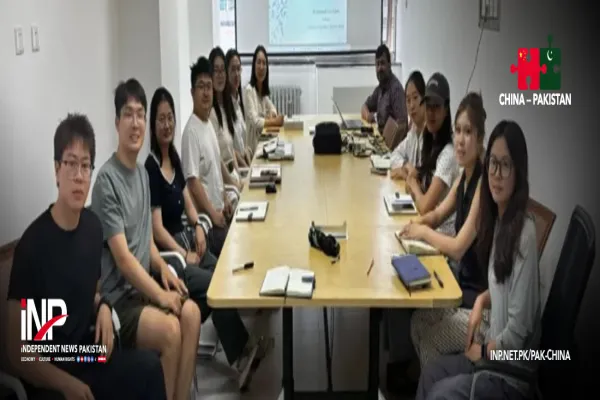
The Karakoram International University (KIU) on Monday entered a long-term scientific partnership with China’s Institute of Medicinal Plant Development (IMPLAD), a subsidiary of the Chinese Academy of Medical Sciences, to advance research, conservation and pharmaceutical development based on the unique medicinal flora of the Himalayan, Karakoram and Hindukush ranges. The agreement was signed by KIU Vice Chancellor Engr. Prof. Dr. Attaullah Shah and IMPLAD researcher Prof. Dr. Chang Liu.
Under the Document of Understanding, the collaboration will run through 2030 and aims to advance joint efforts to standardize Himalayan medicinal plants for scientific and pharmaceutical use, Gwadar Pro reported. As per the agreement, the KIU will establish a Biodiversity Conservation Center, Seed Bank and Genome Bank at its main campus, while both sides will conduct joint studies on traditional healing practices, chemical profiling of plant species and biodiversity conservation strategies.
Student and faculty exchanges in taxonomy, genomics and phytochemistry are also planned. Calling the collaboration a milestone for northern Pakistan, Dr. Shah said the initiative “not only places KIU prominently on the global scientific map but also serves as a guarantee to preserve and benefit from the ancestral healing heritage of the local people of Gilgit-Baltistan.” He added that the project supports China-Pakistan cooperation under major regional frameworks.
“The project aligns with the scientific and cultural cooperation goals of the China-Pakistan Economic Corridor (CPEC) and the Belt and Road Initiative,” he said, noting its significance for climate-vulnerable mountain ecosystems. Prof. Liu described the mountain ranges shared by the two countries as an important reservoir of natural remedies. “The Himalayan and Karakoram ranges are among the world’s most precious treasures of medicinal plants,” he said.
Combining Chinese scientific expertise with Pakistan’s biodiversity, he added, will “open new possibilities in herbal medicine.” Joint field expeditions are expected to begin in 2026, while groundwork for KIU’s new conservation facilities will be laid next year. Dr. Sajjad Haider of KIU’s Department of Environmental Sciences has been appointed focal person for the project while the core also includes Prof.
Dr. Sher Wali, Dr. Saeed Abbas, Dr. Iftikhar Ali of the Chemistry Department. The university says the initiative could help China and Pakistan take a leading role in the scientific standardization of Himalayan medicinal species, paving the way for new drug discoveries and safeguarding fragile ecological and cultural resources.
Credit: Independent News Pakistan (INP) — Pak-China
Related News