


i INP-WEALTHPK

Industrial potatoes can help boost Pakistan’s export earningsBreaking
January 01, 2026
Azeem Ahmed Khan
Pakistan needs to move beyond traditional table potato production and develop industrial potato varieties if it wants to stabilise prices, reduce post-harvest losses and compete in high-value global markets, a leading horticulture expert has said. Talking to Wealth Pakistan, Shoaib Ahmad Basra — board member of the Pakistan Horticulture Export and Development Company (PHDEC) and former president of the Sargodha Chamber of Commerce — said Pakistan’s potato sector has reached a critical turning point.
“Potato is Pakistan’s largest vegetable export in terms of volume and value, yet we have not seriously invested in industrial potato varieties,” Basra said. “We grow table potatoes very well, but if we want to enter the global market for chips, frozen fries and other processed products, we must cultivate varieties that meet international standards.” He noted that potato exports usually gain momentum from December onwards, when fresh produce and cold-stored stocks become available.
In recent years, Pakistan has also witnessed bumper harvests — a development that brings both opportunity and risk. “Potato production has increased significantly, but managing surplus output is a challenge,” he said. “However, this surplus can become an advantage if we process it instead of dumping it into low-value markets.” Basra pointed out that global supply disruptions have created new openings for Pakistan.
Climate change has affected potato production in major producing regions such as Russia and Central Asia, where erratic weather and extreme temperatures have damaged crops and tightened supplies. “As a result, international prices have surged,” he said. “Potatoes that once sold for Rs 800 to Rs 1,000 per 100 kg are now commanding Rs 4,000 to Rs 6,000. The surge has finally delivered strong profits for growers, prompting many farmers to switch from other crops to potatoes.”
Pakistan’s competitiveness has also improved due to the adoption of high-quality seed varieties imported mainly from the Netherlands. “These are the same varieties grown in Europe, and demand for them is very strong,” Basra said, adding that Pakistan has recently outperformed competitors such as India and Bangladesh in certain markets. Despite these gains, he warned that Pakistan remains stuck at the lowest end of the value chain.
“Only around four percent of our total potato production is processed, and value-added exports are just about $6 million — extremely low considering our production volume,” he said. The main constraint, according to Basra, is varietal mismatch. “Industrial potatoes require specific characteristics such as low sugar content, proper texture and controlled moisture levels. If you try to make fries from conventional table potatoes, the product fails to meet international standards,” he explained.
Although some processing capacity exists, Basra said large-scale investment will only follow once suitable varieties are widely grown. “When the right raw material is available, investors automatically step in. Value addition has the power to completely transform this sector,” he added. He warned that without diversification, Pakistan will continue to face cycles of oversupply and falling prices. He also stressed the need for better market intelligence to identify where fresh produce should be sold and where processed products offer higher returns.
Currently, Pakistan’s potato exports are largely confined to the Middle East, neighbouring countries and a few developing markets. “High-value destinations such as the US, Europe, Japan, South Korea and Australia remain largely untapped,” he said. Basra also praised platforms such as the International Food and Agriculture Exhibition (FoodAg), calling them vital for connecting Pakistani exporters with global buyers. “I personally witnessed strong international interest.
Buyers from over 80 countries participated, and demand for value-added products was clearly visible,” he said. He urged PHDEC and other stakeholders to move decisively. “If we adopt good agricultural practices, we can easily double exports of our existing varieties. With industrial potatoes, the potential is far greater,” he said. He also stressed the need for stricter seed regulation, warning that rising rejection rates could damage Pakistan’s export credibility.
“When I started exporting in 2012, rejection rates were around five to seven percent. Today, they have risen to 25–35 percent. If this continues, we could face a crisis similar to what happened in citrus,” he cautioned. Summing up, Basra said the path forward was clear. “If we want a sustainable future for the potato sector, we must move decisively toward industrial potato production and value addition — and we must start now.”
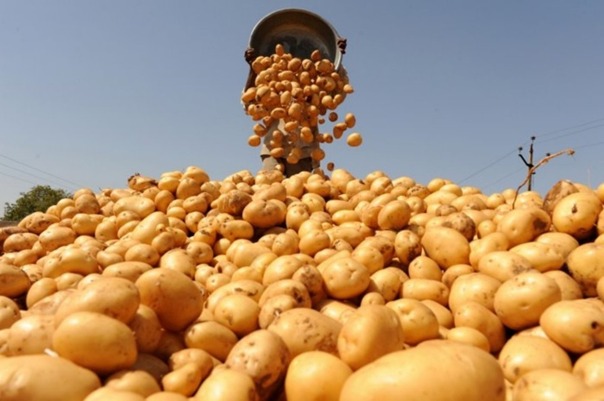
Credit: INP-WealthPk
Related News