


i INP-WEALTHPK
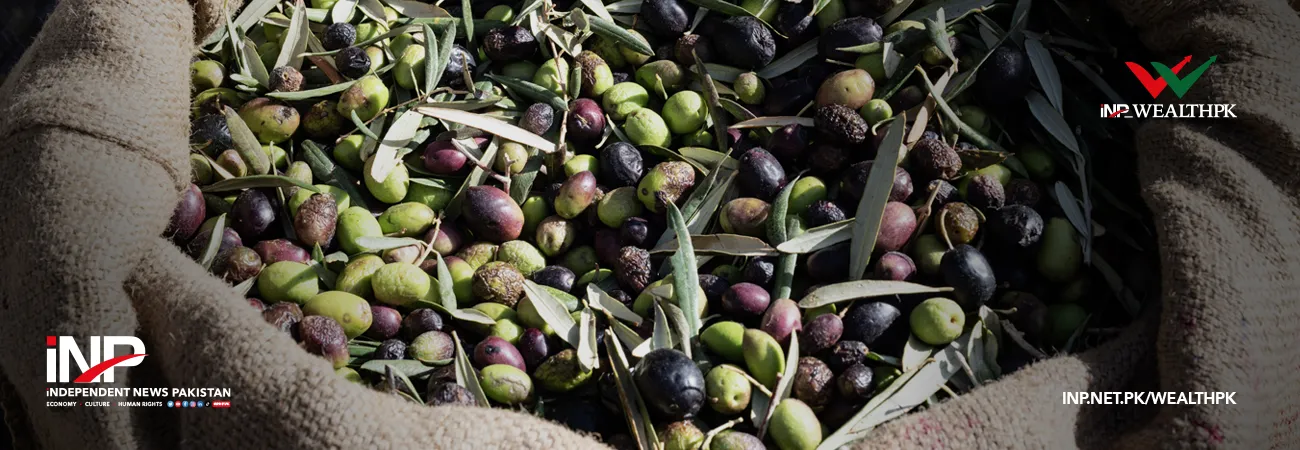
Climate suitability offers huge potential for olive cultivation in SindhBreaking
December 23, 2025
Ahmed Khan Malik
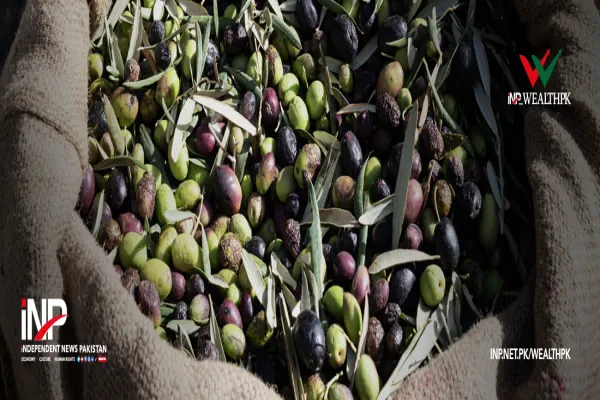
Sindh has the potential to emerge as a major contributor to Pakistan’s expanding olive sector, an industry that offers high economic returns, improved rural livelihoods, and reduced dependence on imported edible oils, experts say.
Sindh’s agricultural landscape is poised for a promising transformation, as specialists highlight the province’s suitability for large-scale olive cultivation due to its favourable climate and soil conditions.
Talking to Wealth Pakistan, agricultural specialist Dr Qammaruddin said the southern region’s warm summers, mild winters, and well-drained soils provide an ideal environment for olive trees, which are naturally resilient to arid and semi-arid conditions.
He noted that Sindh’s climatic pattern closely resembles that of Mediterranean countries, where olives thrive despite minimal water requirements. This makes olive farming not only feasible but also a sustainable option at a time when water scarcity is becoming an increasing challenge.
Dr Qammaruddin said the Sindh Agriculture Department, in collaboration with various research institutions, has intensified efforts to assess olive adaptability across the province. Initial pilot projects in districts including Karachi’s outskirts, Hyderabad, Thatta, Jamshoro, and parts of upper Sindh have produced encouraging results.
According to him, modern drought-tolerant olive varieties have demonstrated strong growth and fruiting potential, even in areas previously considered unsuitable for high-value crops.
Successful olive cultivation, he said, could bring about a significant shift in regional farming patterns. Water-intensive crops such as sugarcane and rice have become less viable in many parts of Sindh due to irrigation shortages. In contrast, olives require considerably less water and maintenance.
Farmers participating in early pilot programmes have reported that olive plants show strong resistance to harsh weather conditions, soil salinity, and pest attacks — characteristics that could help stabilise agricultural productivity in the province.
The economic prospects linked to olive farming are also substantial. Global demand for olive oil continues to rise, driven by growing consumer preference for healthier and natural food products.
Pakistan currently relies heavily on imported edible oils, placing a significant burden on foreign exchange reserves. Dr Qammaruddin noted that expanding domestic olive production could save millions of dollars annually and strengthen local processing industries.
He added that the establishment of olive mills, oil extraction units, and value-added product facilities in Sindh would further stimulate rural employment and entrepreneurship.
Meanwhile, Abdul Qadir, an agricultural expert at the Sindh Abadgar Board (SAB), told Wealth Pakistan that the federal government and development agencies have launched initiatives to distribute olive saplings, introduce modern farming techniques, and train farmers in orchard management and oil extraction.
He said Sindh’s agricultural universities are also conducting advanced research to identify the most suitable olive cultivars for the province’s diverse agro-climatic zones. Additionally, drip irrigation systems — already gaining acceptance among progressive farmers — are being promoted as an efficient means to optimise water use in olive farming.
However, Abdul Qadir cautioned that scaling up olive cultivation would require strong policy support, dedicated funding, and sustained technical training. He stressed that ensuring the availability of certified saplings, strengthening market linkages, and developing local oil-processing capacity are critical to enabling farmers to shift to this high-value crop.
Without these measures, he warned, Sindh’s olive cultivation potential may remain largely untapped.
Credit: INP-WealthPk
Related News