


i INP-WEALTHPK
China’s innovation drive opens path for Pakistan’s industrial upgradeBreaking
March 25, 2026
By Ayesha Saba
China’s 15th Five-Year Plan (2026–2030), which places science, technology and innovation at the centre of its development agenda, is opening a window for Pakistan to strengthen its industrial base and improve export competitiveness through technology-driven growth. According to budget proposals submitted to China’s national legislature earlier this month, government spending on science and technology will rise to 426.4 billion yuan in 2026, with basic research expenditures increasing by 16.3%.
The plan prioritises artificial intelligence, green energy transition, advanced manufacturing and expanded research and development, alongside improved funding mechanisms to attract private investment. The report also highlights the integrated development of education, science and technology and human resources, with policies aimed at strengthening coordination between innovation and talent development.
It further notes support for regional innovation systems to drive balanced growth. Talking to Wealth Pakistan, Liaquat Ali Shah, Independent Policy Advisor and former Project Director for CPEC-Centre of Excellence, said China’s innovation-led strategy reflects operational commitments rather than aspirational goals, supported by 109 major projects across six priority sectors.
He said this presents a concrete and time-sensitive opportunity for Pakistan to align its industrial strategy with emerging technology trends. Highlighting Pakistan’s domestic strengths, Shah said the country’s IT sector and university infrastructure remain underutilised assets. He noted that applying artificial intelligence in industrial processes does not require frontier innovation but the ability to absorb and adapt existing technologies.
“Pakistan’s technical graduates can play a meaningful role in this transition, provided the education system is aligned with technology development and commercialisation,” he said. He also emphasised the need to develop mid-level technical skills, including manufacturing engineers, automation specialists and power electronics technicians, to sustain industrial upgrading.
Shah said the success of this opportunity will depend on the quality of Pakistan’s business environment. He noted that Chinese firms consider policy consistency, investor protection, reliable energy supply and efficient logistics as basic requirements when evaluating overseas investment destinations. He said gaps in these areas remain a key domestic challenge for Pakistan.
He identified Special Economic Zones (SEZs) as the most immediate policy tool to attract Chinese investment into export-oriented manufacturing. However, he noted that their underperformance—due to macroeconomic instability, security concerns, policy inconsistency and a fragmented industrial ecosystem—has limited their effectiveness.
Shah stressed the need for a targeted sectoral approach instead of broad-based industrialisation strategies. “Pakistan should focus on sectors where its labour cost advantages and existing capabilities can be effectively combined with Chinese capital and technology,” he said, pointing to higher-value textiles, agro-processing, light engineering and precision manufacturing such as surgical instruments.
He also highlighted Pakistan’s geographic advantage, noting that it provides access to regional markets including Central Asia, the Middle East, South Asia and Africa. To tap this potential, he said Pakistan needs stronger trade facilitation agreements, improved transit frameworks and better export financing mechanisms to position itself as a regional production hub.
Shah said that investment must go beyond job creation and contribute to industrial learning. “Investment that creates jobs but fails to build industrial knowledge represents a missed opportunity,” he said, stressing the importance of strengthening technology education and human resource development. Asad Rehmann, Policy Analyst at S&P Global, said Pakistan must proactively align its industrial strategy with China’s innovation-driven growth model to enhance productivity and global competitiveness.
He emphasised the need to build knowledge-based and technology-driven partnerships with China. “We need our industry to integrate with China and other countries on a technology transfer and knowledge-based footing so that productivity and competitiveness can improve and joint ventures can be developed,” he said.
Rehmann noted that China’s high-tech industry is expanding rapidly, positioning it as a global technology leader and creating opportunities for cooperation in advanced manufacturing, green technologies and innovation-driven sectors. However, he said Pakistan must first address structural constraints. “The country needs to remove bottlenecks to investment and create a business-friendly environment to attract and sustain foreign industrial partnerships,” he added.
Experts said China’s experience shows that sustained investment in innovation, combined with strong industry linkages and human capital development, can drive long-term economic transformation. They said Pakistan can benefit by aligning its industrial strategy with emerging technologies, strengthening institutional capacity and creating an enabling environment for technology-driven investment.
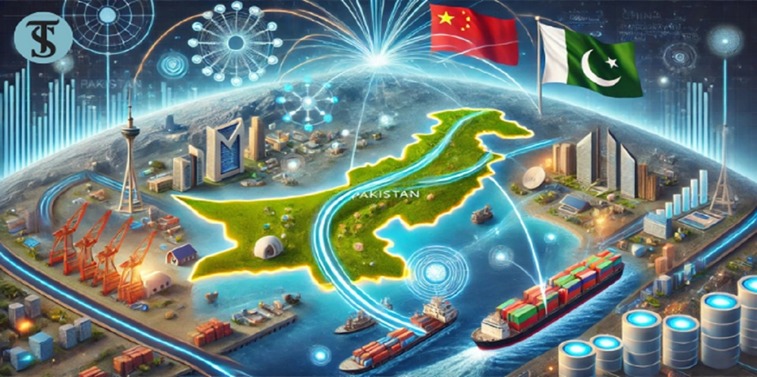
Credit: INP-WealthPk
Related News