


i BLOGS

Pamaal: Is it a real-life Story?Breaking
November 20, 2025

“Pamaal” isn’t just a drama — it’s the story of countless women whose lives reflect the same silent struggles. It has been written with such honesty and beauty that one cannot help but feel its truth. Yes, Pamaal is based on real story — not just one, but thousands that remain untold. After the drama went on air, countless viewers commented that this is their life too — that they are suffering through the very same things, and yet no one truly understands them.
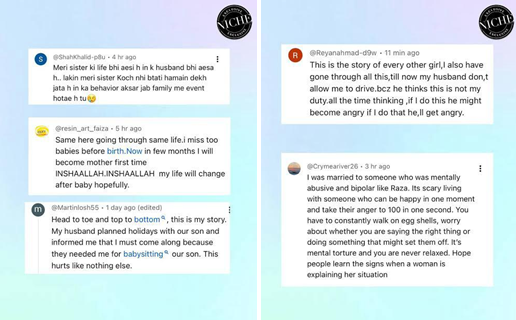
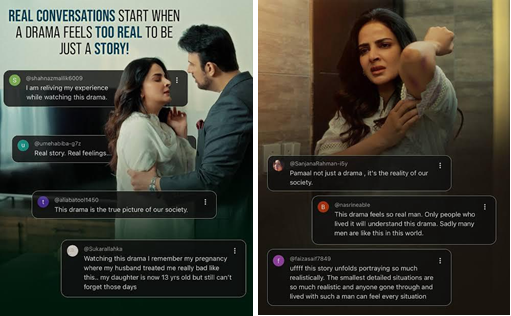
In our society, a woman is expected to handle everything on her own with strength and perfection. Nobody ever pauses to ask whether she can carry all this alone, or whether she should have to. When will we finally understand that a woman doesn’t just need food and clothing? She needs her kingdom — her emotional space — she needs love, confidence, care, and respect. Money comes much later. A woman’s consent about having a child and when to have a child is important, and as a society, we must start recognizing Why? Sadly, millions of women spend their entire lives deprived of these essentials, and they still convince themselves that they are happy. No one truly understands how many times and in how many ways their identity is quietly erased.
In many homes, a woman’s opinion is dismissed as irrelevant. She is repeatedly made to feel unintelligent, irresponsible, unaware of the outside world, and incapable of understanding people. But is she less intelligent? If that were true, God would never have entrusted her with the profound responsibility of raising children and nurturing homes — tasks far more complex than they appear.
Malika, the drama’s protagonist, has a house but no space to breathe freely. She has money, but no autonomy. She cannot go anywhere by choice, she cannot dress the way she wants, she cannot even name her own child. These “small” things highlighted in the drama are, in truth, not small at all. They represent deep psychological wounds that affect not just one woman but an entire generation. A capable, talented human being is reduced to feeling unworthy — that is no small matter.
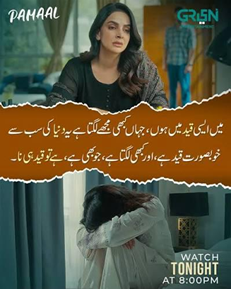
Malika’s mother repeatedly tells her to be patient and grateful — not because she doesn’t understand, but because she fears society. The old belief still echoes: “The house you marry into is the same house your funeral should leave from.” We must understand the truth — a divorced daughter is better than a dead daughter.
Islam honored women with the title “Queen of the Home.” Yet in our society, most women are treated more like maids than queens. And what’s worse is that women themselves often stand against other women before men even enter the picture.
Sadly, some viewers also commented, “What’s the issue? Malika’s husband is such a good man, every woman goes through this — there’s nothing new.” But every woman is unique, and every woman deserves to understand her worth. A man is meant to be her shade, her support — not her ruler.
Credit: Independent News Pakistan (INP)
Related News