


i BLOGS
Fresh Iranian Missile Strikes Hit Israel as Iran Dismisses Trump’s ‘Talks’ as False ClaimsBreaking
March 24, 2026
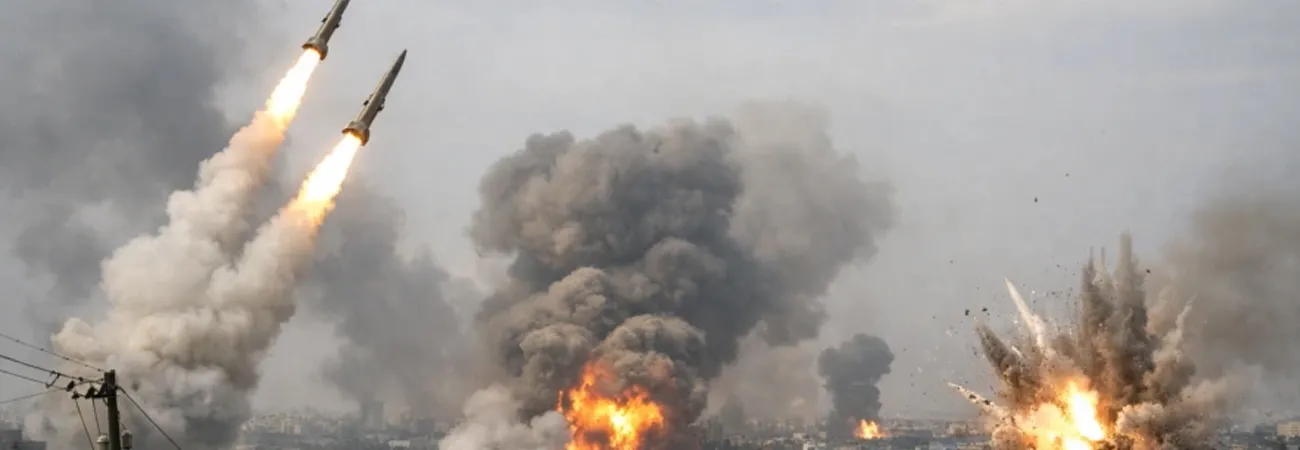
Tensions in the Middle East have sharply increased after Iran launched several waves of missiles toward Israel, according to Israeli military officials. Air raid sirens sounded across multiple areas, including Tel Aviv, where a residential building suffered severe damage. Large holes were seen in the structure, though it remains unclear whether they were caused by a direct missile strike or falling debris from intercepted rockets. Emergency teams have been working to locate and rescue civilians trapped inside damaged buildings.
At the same time, Israel reported carrying out major airstrikes in central Tehran. These attacks targeted strategic locations, including command centres linked to Iran’s intelligence and military operations. Israeli forces also struck dozens of additional sites overnight, focusing on missile storage facilities and launch systems.
Meanwhile, political developments have added uncertainty to the situation. The U.S. president stated that recent discussions with Iranian officials had been “productive,” leading to a temporary delay in plans to target Iran’s energy infrastructure. This announcement initially eased global concerns, causing stock markets to rise and oil prices to drop significantly.
However, the situation quickly became unclear when Iranian leadership denied that any direct negotiations had taken place. Iranian officials described the claims as misleading and accused the U.S. of trying to influence global markets through information tactics. They also signalled that military operations would continue, including potential actions against U.S. interests in the region.
The Strait of Hormuz, a critical route for global oil shipments, remains a major concern. Iran’s threats to disrupt traffic through this passage have already caused volatility in energy markets. Although prices briefly fell after the announcement of possible talks, they soon rebounded as uncertainty returned.
Diplomatic efforts are still ongoing behind the scenes. Reports suggest that several countries, including regional and international players, are acting as intermediaries to pass messages between the U.S. and Iran. There is also speculation that direct talks could take place soon, possibly involving senior officials from both sides.
Despite these efforts, the situation remains highly unstable. Military actions continue, political statements are conflicting, and global markets are reacting rapidly to every new development. With thousands of casualties already reported, the conflict is not only a regional crisis but also a growing concern for global security and economic stability.
Overall, while there are signs of possible diplomacy, the risk of further escalation remains high, and the coming days will be crucial in determining whether tensions ease or intensify further.
Credit: Independent News Pakistan (INP)
Related News