



INP-WealthPk
With about 280m students, China builds world’s largest high-quality education system
March 14, 2026
By Special Correspondent
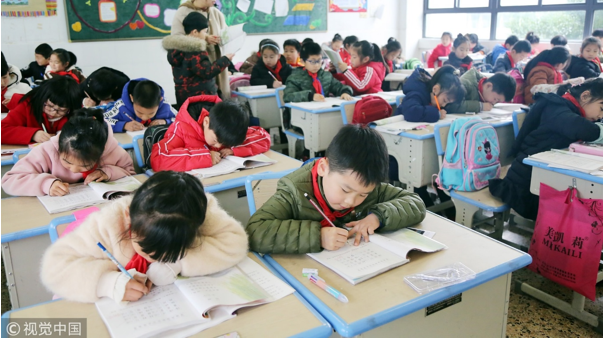
China has built what it describes as the world’s largest high-quality education system, with about 280 million students enrolled in nearly 440,000 schools across the country, according to Education Minister Huai Jinpeng.
Speaking at a press conference on the sidelines of the national legislative session in Beijing, the minister said China has made significant progress in expanding access to education and improving the quality of its education system at all levels.
China’s gross enrollment rate for preschool education has reached 92.9 percent, exceeding the Organisation for Economic Co-operation and Development (OECD) average of 84.7 percent. The admission rate for senior high schools stood at 92 percent in 2025, reflecting broad access to secondary education.
The higher education sector has also expanded rapidly in recent years. The enrollment rate for higher education has more than doubled since 2012 to exceed 60 percent. Between 2021 and 2025, about 55 million students graduated from Chinese universities and colleges.
The country’s top universities increased enrollment capacity by adding 38,000 seats over the past two years, according to the minister. During the same period, more than 540 new cooperative institutions and academic programs were established between the Chinese mainland and other countries and regions at the undergraduate level and above.
China has also expanded its academic programs to meet evolving development needs. From 2021 to 2025, more than 8,600 new undergraduate program sites and over 4,500 master’s degree-granting sites were added. Many of the newly introduced or adjusted disciplines and majors are designed to support future development and the holistic growth of students.
The minister said China will continue to advance reforms aimed at aligning talent supply more closely with economic and social development needs.
China’s education system has also received international recognition in areas such as basic education and science education. The country ranks among global leaders on several key international student assessment indicators. In September 2025, the UNESCO International Institute for STEM Education was established in Shanghai.
Alongside academic development, China has been promoting a health-first philosophy in education to support students’ physical and mental well-being.
Under a nationwide initiative, schools across all provincial-level regions have introduced 15-minute breaks between classes and two hours of daily physical activities for primary and junior high school students.
Official monitoring data show that the overall rate of good or excellent physical health among Chinese students has been rising steadily, while the overall student myopia rate has declined for four consecutive years.
China also plans to further strengthen student fitness by developing more engaging physical education classes and promoting sports activities such as basketball, football and volleyball across campuses.
Authorities have also placed greater emphasis on students’ mental health. Planned measures include organizing arts performances, labor-practice activities, games and other events to support students’ psychological well-being.
Additional steps include introducing spring and autumn breaks, increasing the number of mental health teachers, and conducting further research on mental health education, counseling services and intervention.
At the same time, authorities will continue efforts to regulate the education environment by addressing issues such as illegal schooling, excessive study hours and campus bullying, while strengthening supervision of school meals.
Credit: INP-WealthPk