



INP-WealthPk
Used-car import schemes undermining growth of Pakistan’s local automobile industry
March 06, 2026
By Moaaz Manzoor
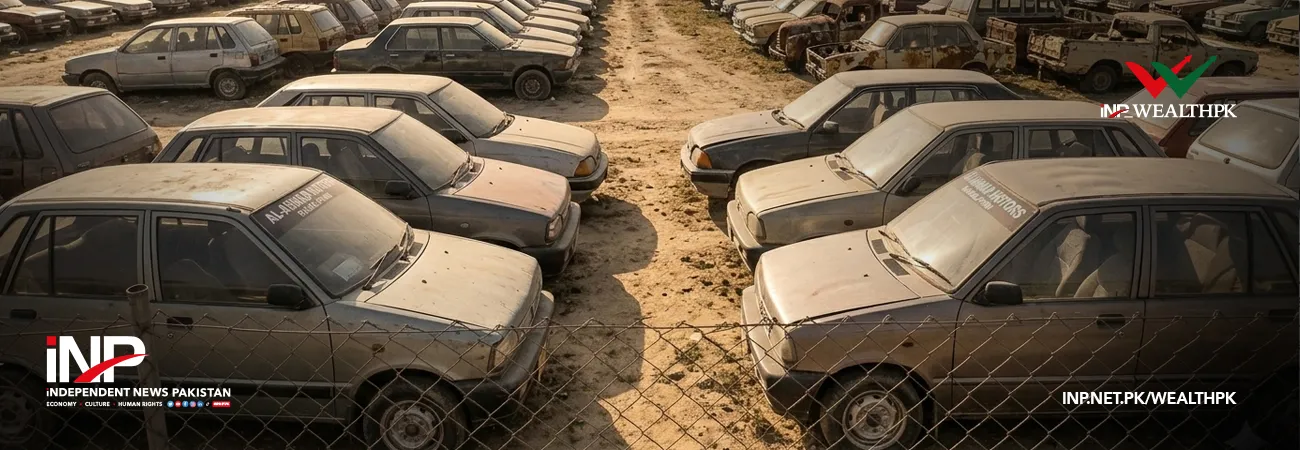
Pakistan’s used-car import schemes, particularly those operating under baggage and gift provisions, are affecting the growth and investment prospects of the country’s domestic automobile manufacturing industry.
According to a study on Pakistan’s automobile sector conducted by the Centre of Excellence in Competition Law at the Competition Commission of Pakistan, imports of used vehicles through these special schemes have influenced the structure and performance of the local automobile market.
The report explains that the baggage and gift schemes allow overseas Pakistanis to bring used vehicles into the country under specific conditions. While these provisions were originally introduced to facilitate overseas Pakistanis in importing personal vehicles, the volume of cars entering the market through these channels has gradually increased.
As a result, imported used vehicles have become direct competitors to locally assembled automobiles, particularly in the passenger car segment. The study notes that this competition can reduce demand for vehicles produced by domestic assemblers.
Lower demand for locally assembled vehicles affects production volumes within the industry. The report highlights that Pakistan’s automobile sector relies heavily on economies of scale to maintain cost-efficient manufacturing. When demand shifts toward imported used vehicles, local assemblers may find it more difficult to achieve production levels necessary for efficient operations.
Reduced output can also affect the wider vendor network linked to vehicle manufacturing. The automobile industry depends on a large ecosystem of suppliers producing components such as metal parts, plastic components, electrical systems, and other automotive inputs.
When assembly volumes decline, local auto-parts manufacturers may receive fewer orders from assemblers, which can affect the sustainability of the vendor industry.
The study also raises concerns regarding valuation practices in the used-car import regime. According to the report, under-invoicing and inconsistencies in valuation can create market distortions by making imported used vehicles relatively more competitive than locally assembled models.
The report notes that Pakistan’s used-vehicle import regime has evolved over time as government policies and regulatory measures have changed. However, imported vehicles continue to influence domestic market conditions.
Because the automobile industry forms an important part of Pakistan’s large-scale manufacturing sector, shifts in vehicle demand can have broader implications for industrial activity and related industries.
The study concludes that establishing a balanced policy framework between imported vehicles and locally assembled automobiles will be important for supporting sustainable growth in Pakistan’s automotive manufacturing sector.
Credit: INP-WealthPk