




INP-WealthPk

US tariff risk puts India’s exports under pressure over Russian oil dependence
October 15, 2026
By Ayesha Saba
India’s continued dependence on Russian crude is increasingly exposing its export industries to a difficult trade-off between securing affordable energy and protecting access to the United States, as Washington acquires wider powers to penalise major buyers of Russian oil.
The pressure has become more tangible after US President Donald Trump signed the Lindsey O. Graham Sanctioning Russia and Iran Act into law on September 18. The legislation authorises tariffs of up to 100% on goods from countries among the five largest purchasers of Russian crude oil or natural gas, subject to provisions contained in the law.
India has already experienced the consequences of linking Russian oil purchases with US trade policy. Washington imposed an additional 25% tariff on Indian imports in August 2025, citing purchases of Russian oil. The surcharge was removed on February 7, 2026, after the White House said India had committed to stop importing Russian oil and increase US energy purchases.
Russian crude, however, remains an important part of India’s energy supply. India imported around 2.1 million barrels per day from Russia in August 2026, with volumes expected to ease to around 1.75 million barrels per day in September. Russia nevertheless remained India’s largest crude supplier.
Talking to Wealth Pakistan, Dr Fazal Mehmood, Assistant Professor at the Pakistan Institute of Development Economics, said India’s headline growth figures might remain strong, but tariff exposure is creating pressure beneath the surface in sectors that depend heavily on the US market.
“India may still be posting overall growth, but that should not obscure the vulnerabilities developing in its external sector. Higher US tariffs, uncertainty around Russian oil purchases and a widening merchandise trade deficit can squeeze export margins and make investment decisions more difficult for trade-dependent industries,” he said.
He added that the risk becomes more serious when energy and foreign policy choices begin affecting market access.
“India has benefited from discounted Russian crude, but if that advantage is offset by higher tariffs on manufactured exports, the economic gain becomes much less straightforward. Labour-intensive sectors are particularly exposed because they compete on narrow margins and cannot absorb repeated tariff shocks indefinitely,” he said.
Mehmood said much would depend on how Washington implements the new law, but the legislation has already increased uncertainty for Indian exporters and placed energy policy at the centre of an increasingly difficult India-US trade relationship.
Speaking to Wealth Pakistan, an official of the Trade Development Authority of Pakistan (TDAP), who wished to remain anonymous, said a widening tariff differential between India and Pakistan could create an opening for Pakistani exporters, particularly in textiles and apparel, where the two countries compete in several product categories in the US market.
If Indian goods become significantly more expensive because of higher US duties, American buyers could look for alternative suppliers offering similar products at more competitive landed prices, the official said.
However, he maintained that the benefit would not come automatically. Pakistan would need sufficient production capacity, reliable energy, competitive financing, shorter delivery times and consistent compliance with US quality and sourcing requirements to convert any tariff advantage into actual orders.
The official said the real opportunity is not simply that Indian products might become more expensive, but whether Pakistani manufacturers could use a temporary price advantage to secure new buyers, expand capacity and turn diverted orders into longer-term market relationships before the tariff environment changes again.
A Pakistan Business Council study examining previous US tariff pressure on India found significant potential for Pakistani exporters, particularly in textiles, if Indian products lose price competitiveness in the American market.
However, the study also stressed that India has a much larger and more diversified export base, meaning trade diversion would not automatically translate into equivalent gains for Pakistan.
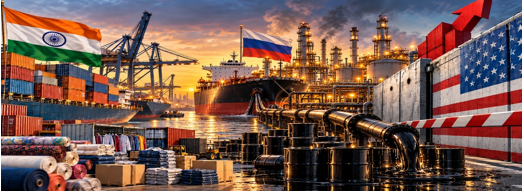
Credit: INP-WealthPk
Related Articles