



INP-WealthPk
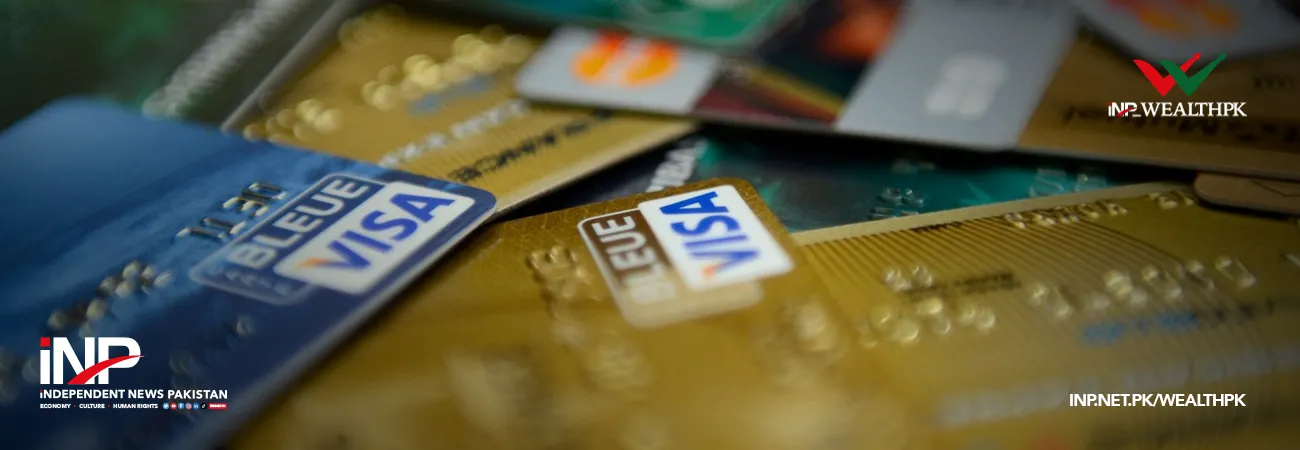
Payment cards reach 68.3 million as debit cards dominate Pakistan's digital banking
July 03, 2026
By Farooq Awan
The number of payment cards in circulation in Pakistan continued to grow during the third quarter of FY2025-26, reaching 68.25 million by the end of March, with debit cards maintaining their overwhelming dominance as the country's preferred formal payment instrument, according to the State Bank of Pakistan's Payment Systems Quarterly Review.
The report shows that banks had issued 68.25 million payment cards by the end of March 2026, reflecting continued expansion in access to formal banking services. Debit cards accounted for the overwhelming majority of the total card base, while credit, prepaid and social welfare cards represented a much smaller share of the market.
Debit cards have remained the backbone of Pakistan's card payment system, largely because they are automatically issued with most bank accounts and allow customers to access their own deposits through ATMs, point-of-sale terminals and online payment platforms. Credit cards, by comparison, continue to serve a relatively limited segment of higher-income consumers.
The expansion in card issuance coincided with continued growth in the country's banking network and digital payment infrastructure. According to the report, commercial banks continued to expand the number of ATMs and point-of-sale terminals, providing customers with broader access to cash withdrawals and electronic payment services across the country.
Payment cards remain an important component of Pakistan's broader digital financial ecosystem despite the rapid growth of mobile banking applications and instant account-to-account transfers. Consumers continue to rely on debit cards for ATM withdrawals, retail purchases, e-commerce transactions and cashless payments at merchants that accept card-based payments.
The report indicates that card-based infrastructure continued to support millions of transactions during the quarter, particularly for retail purchases and cash withdrawals. At the same time, the central bank has continued encouraging banks to improve payment acceptance infrastructure by expanding point-of-sale deployment and strengthening interoperability across payment networks.
While mobile banking applications and Raast have emerged as the fastest-growing digital payment channels, payment cards continue to play an important role in expanding financial inclusion by providing customers with convenient access to formal financial services. The combination of debit cards, ATMs, digital banking applications and merchant acceptance points is gradually creating a more integrated payments ecosystem.
The report also shows that Pakistan's broader retail payments landscape continued to expand during January-March 2026. Digital channels processed 3.4 billion retail payment transactions worth Rs68.3 trillion, accounting for nearly 92% of all retail payment transactions by volume, illustrating how payment cards now operate alongside mobile banking, internet banking and digital wallets rather than functioning as standalone payment instruments.
Overall, the continued increase in payment card issuance reflects the gradual expansion of Pakistan's formal financial system. Although digital wallets and instant payment platforms are becoming increasingly popular for everyday transactions, debit cards remain the country's most widely held payment instrument, providing an important bridge between conventional banking services and the rapidly evolving digital payments ecosystem.

Credit: INP-WealthPk