INP-WealthPk
Pakistan’s olive sector emerges as high-value investment opportunity
February 19, 2026
Azeem Ahmed Khan
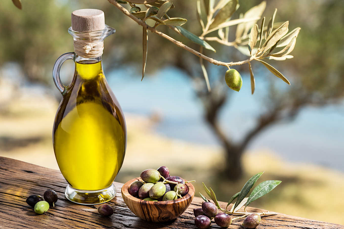
Pakistan’s olive sector is fast emerging as a high-value investment destination, driven by expanding plantations, growing private participation, and rising domestic and global demand, says the head of the National Olive Project.
“With government backing, an olive policy is nearing cabinet approval and extensive funding from various agencies,” Mohammad Tariq, National Project Director, Olive Promotional Program in Pakistan, told Wealth Pakistan.
“So, the roadmap for sustainability is taking shape,” he stressed.
"Olive is a very high-value crop and has a lot of potential, which will be explored in the coming time,” he said, adding, “The olive sector is emerging in Pakistan, offering one of the best opportunities to diversify agriculture.”
The national olive program spans cultivation, processing, branding, packaging, certification, and exportation, creating space for investment not only in farming but also in consultancy services, nurseries, processing, marketing, and branding.
“So, there is great potential for increasing export and trade in this area,” he said, noting that skilled manpower and technical know-how remain limited, opening opportunities for investors in training and services too.
Pakistan’s large, low-cost labor force also offers a competitive edge compared with traditional olive-producing countries, where labor shortages and higher costs are a growing challenge, Tariq said.
He cited rising consumption, particularly in urban areas, as another driver of opportunity, with the number of consumers increasing steadily. While challenges remain - including reliance on imported machinery and limited business advisory services - untapped areas such as olive leaf, olive fruit, and olive pomace processing offer further scope for expansion, he said.
Tariq said Pakistan’s olive imports are declining while exports are rising, underscoring the sector’s momentum. He noted that global olive oil trade is expected to grow significantly in the coming years amid increasing health awareness worldwide.
Tariq added that his efforts have also contributed to the development of 19 high-yielding, disease-resistant, and climate-resilient varieties of several high-value crops, including low-density crops such as olive.
“Olive is a promising and attractive area in Pakistan. With continued support, this sector can participate in global trade and generate impressive returns,” Tariq said.
He said olive development in Pakistan is progressing in phases, with plantations expanding each year, alongside the installation of oil extraction units of varying capacities across different provinces and regions.
Tariq said the government has focused on building the entire value chain rather than limiting efforts to cultivation alone. This includes value-addition laboratories demonstrating fruit processing, depitting, grading, and slicing, as well as the establishment of processing plants that are now being offered to the private sector on a matching-grant basis.
Nursery tunnels have helped shift the sector away from reliance on imported plants from countries such as Italy, Spain, Turkey, and Tunisia. Local certified olive plants are now being produced in Pakistan’s private sector, supported by a reference laboratory for olive oil quality testing.
“The program is focused on lifting the economy, especially the rural economy,” Tariq said, adding that large tracts of barren land have become productive, reducing land degradation and desertification.
He pointed to major progress in the Potohar region, including areas around Rawalpindi, Attock, and Jhelum, where olive cultivation was previously absent. Expansion of plantations has helped curb soil erosion and downstream siltation during monsoon seasons, while supporting rural livelihoods and climate resilience.
Pakistan is also gaining international recognition, with support from Italian partners and other global organizations. Tariq noted that startup activity has accelerated sharply, with more than 100 enterprises now operating across marketing, processing, value addition, and related services, compared with just one or two at the start of the program.
He highlighted a milestone achievement last year when a local startup, LO Loralai Olive, won a quality award at a New York competition, calling it a major encouragement for the sector.
Credit: INP-WealthPk