



INP-WealthPk
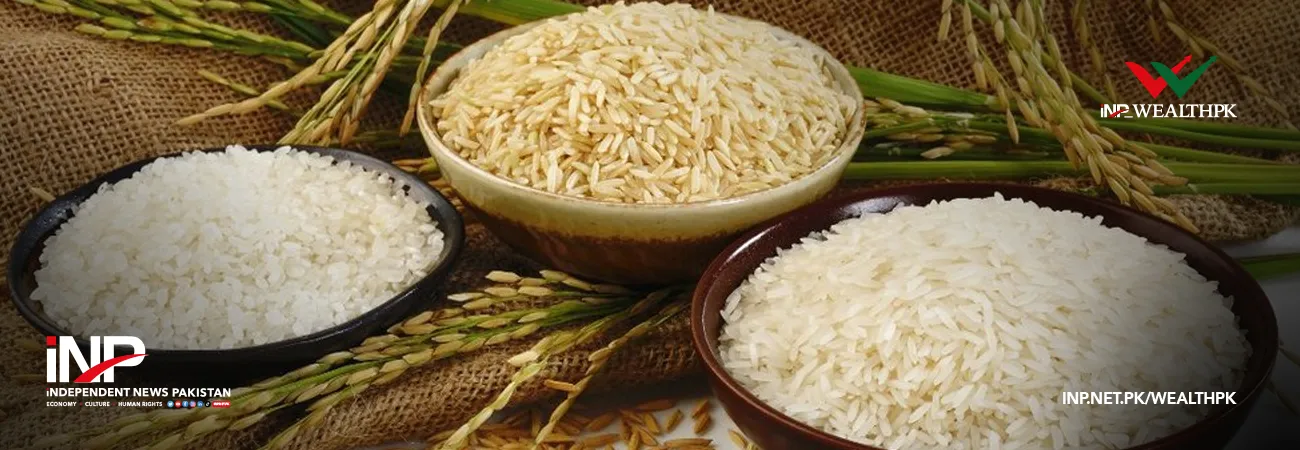
Pakistan rolls out incentives, steps up diplomatic push to revive slipping rice exports
February 19, 2026
Azeem Ahmed Khan
Pakistan has introduced export incentives and stepped up diplomatic outreach to arrest a sharp decline in rice shipments, as rising costs and weaker global demand weigh on one of the country’s key agricultural exports, an official document said.
Rice exports fell from $3.93 billion in fiscal year 2023-24 to $3.35 billion in 2024-25, with a further drop of $854 million recorded between July and December of the current fiscal year, the document shows. The decline was attributed to rising production, energy and logistics costs, reduced price tolerance in international markets, and liquidity constraints faced by exporters.
Despite these constraints, Pakistan retains sizeable exportable stocks, including Basmati and non-Basmati varieties, representing export potential of around $2 billion at prevailing global prices. Pakistan currently has an exportable surplus of about 0.6 million metric tons of Basmati and 3.5 million metric tons of non-Basmati rice.
In response, Prime Minister Shehbaz Sharif directed the Ministry of Commerce to submit a “firm and actionable” proposal to the Economic Coordination Committee to bridge the competitiveness gap in rice exports, the document said.
The Ministry of Commerce has since been working on multiple measures to boost rice exports, including the introduction of the Duty Drawback of Local Taxes and Levies (DLTL). Secretaries from three ministries – Ministry of National Food Security and Research, Ministry of Commerce, and Ministry of Industries and Production – have visited chambers of commerce and business associations in recent weeks to discuss the export slump and possible remedies.
Meanwhile, consultations have also been held with the Rice Exporters Association of Pakistan (REAP). The association proposed several steps but did not back subsidies as a first option.
Following approval by the Export Development Board, the Ministry of Commerce issued the DLTL for Rice Order 2026 on January 23, 2026 making the facility applicable to consignments shipped through June 30, 2026.
The scheme offers nine percent DLTL on Basmati and Brown rice with free-on-board (FOB) value of $750 per metric ton or above, and three percent on specified rice categories with FOB values below that level.
The order also included eligibility criteria, automated claim processing through the Pakistan Single Window, the State Bank of Pakistan and Pakistan Customs, as well as audit and penalty provisions.
Alongside financial incentives, Islamabad has launched a diplomatic push to secure government-to-government export opportunities. The commerce minister and secretary, with support from the foreign ministry, have engaged ambassadors from Bangladesh, the Philippines, China, Gambia and Indonesia, while the Trade Development Authority of Pakistan has been tasked with preparing a marketing and trade promotion plan for priority markets, including the United States, the European Union, ASEAN, Central Asian Republics and Africa.
On concerns raised by REAP relating to under-invoicing and mis-declaration of Basmati exports to Afghanistan and Iran, the Ministry has requested FBR to establish a foolproof mechanism to curb the practice.
Credit: INP-WealthPk