



INP-WealthPk

Pakistan needs disciplined project planning to match China’s execution model
April 29, 2026
By Hasan Salahuddin
Pakistan’s growing backlog of development projects and rising implementation costs are highlighting the urgent need for a shift toward disciplined, long-term infrastructure planning, with China’s model offering key lessons in strategic alignment and execution efficiency.
In its 2026 Government Work Report, Beijing outlined plans to improve infrastructure planning, optimise public resource allocation, deepen zero-based budgeting and reform public bidding to align projects more closely with national priorities. These reforms are being implemented alongside targeted project pipelines under the 15th Five-Year Plan (2026–2030).
China has also moved early on project execution. In December 2025, the National Development and Reform Commission approved an initial batch of 2026 projects worth about 295 billion yuan, covering transport, water, energy and research sectors. This reflects a system built on early preparation, sequencing and clear prioritisation.
In contrast, Pakistan faces mounting implementation challenges. According to assessments by the International Monetary Fund, weaknesses in project appraisal, selection and monitoring continue to affect outcomes. A 2025 governance diagnostic report noted that the cost of completing Public Sector Development Programme (PSDP) projects has surged to Rs10.7 trillion—more than 14 times the 2022–23 allocation—underscoring the scale of inefficiencies.
Although the National Economic Council approved a Rs4.224 trillion development outlay for 2025–26, experts say the core issue is no longer just financing, but selecting, preparing and completing the right projects on time.
Dr. Ata Ul Musawir, Assistant Professor of Project Management at the University of Central Punjab, said China’s success lies in linking long-term vision with medium-term planning and annual execution.
He explained that China aligns its long-term national goals with strategic frameworks such as Vision 2035 and successive Five-Year Plans, ensuring that projects are selected in line with clearly defined priorities. Pakistan, by contrast, relies heavily on annual planning cycles through the PSDP and provincial Annual Development Programmes, where political transitions often disrupt continuity and shift focus toward new schemes instead of completing ongoing ones.
He added that Pakistan also needs to balance infrastructure development with investments in education, health, job creation, technology and water security to ensure more inclusive and sustainable growth.
On execution, Dr. Musawir said China’s system benefits from single-point accountability, central coordination, strong front-end planning and digital monitoring. Pakistan, he noted, continues to face weak accountability, frequent design revisions, bureaucratic delays and limited post-completion evaluation of project benefits.
He suggested reforms including empowered project leadership, strict accountability mechanisms, linking incentives to performance, ensuring land acquisition before project approval, and expanding the use of modern construction technologies.
Aatif Alvi, Deputy Chief Engineer at Inter State Gas Systems, said Pakistan can draw lessons from China’s system without replicating it wholesale.
He said China’s model works because it connects long-term strategy with execution through strong central coordination. In Pakistan’s context, he pointed to the China-Pakistan Economic Corridor as a more relevant example of phased and prioritised implementation.
Alvi stressed that no major project should proceed without complete feasibility, secured land, financing clarity and regulatory approvals. Such discipline, he said, would reduce delays, cost overruns and mid-course revisions.
He also called for a single empowered institutional mechanism to replace overlapping committees and resolve inter-ministerial and provincial bottlenecks within defined timelines. Strategic projects, he added, should be insulated from political transitions, while monitoring systems must evolve into practical tools for identifying bottlenecks and enforcing accountability.
He further emphasised the need for integrated planning that links infrastructure development with industrial growth, trade facilitation, logistics and investment promotion—an approach that has underpinned China’s project success.
Economists say Pakistan’s infrastructure challenges are not due to a lack of funding alone but stem from fragmented planning and weak execution systems. Without structural reforms, rising project costs and delays will continue to limit the impact of public investment.
For Pakistan, adopting a more disciplined, strategy-led approach to project planning and execution could significantly improve development outcomes. Aligning long-term vision with institutional accountability and timely delivery will be critical to ensuring that infrastructure investments translate into sustained economic gains.
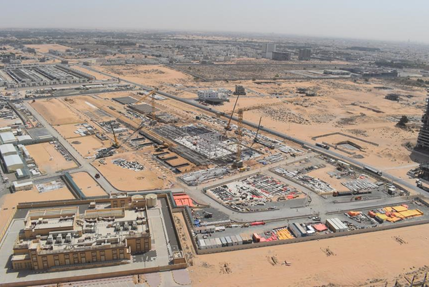
Credit: INP-WealthPk