


INP-WealthPk
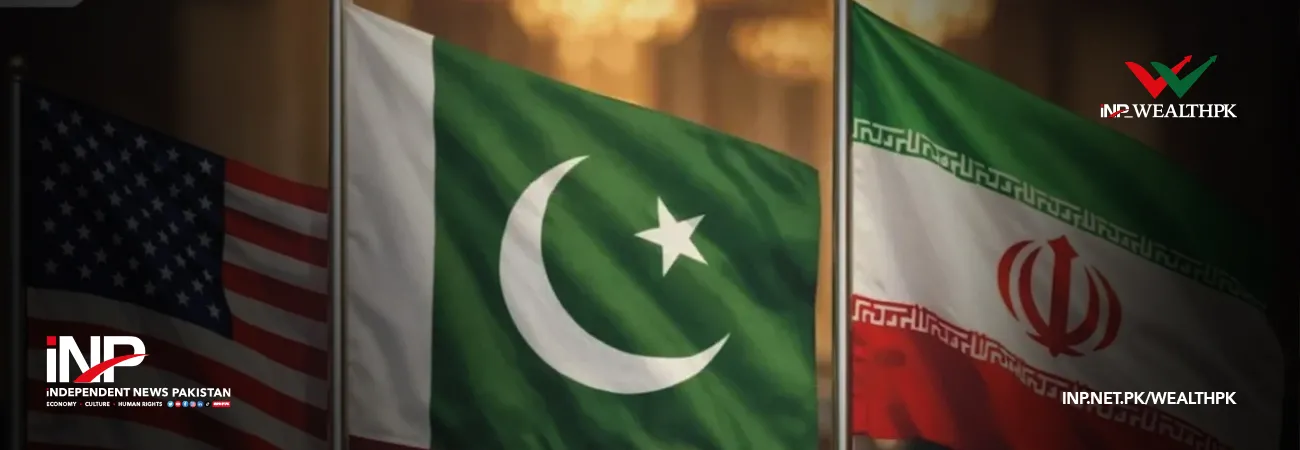
Pakistan navigates delicate diplomatic balance amid US-Iran-Israel tensions
March 30, 2026
By Azam Tariq
Pakistan is treading a careful diplomatic path as tensions involving the United States, Iran and Israel intensify, seeking to preserve strategic relationships while advocating restraint. Policymakers appear focused on avoiding entanglement, even as shifting geopolitical currents test the country’s ability to sustain neutrality and safeguard its economic and security interests.
Islamabad has also sought to position itself as a facilitator in de-escalation efforts, including reported diplomatic outreach aimed at easing US-Iran frictions. With the region marked by heightened military signalling and growing uncertainty, Pakistan’s approach reflects both its geographic proximity to Iran and its long-standing partnerships with Gulf states and Washington, resulting in a complex balancing act.
Speaking with Wealth Pakistan, Sheharyar Khan, Executive Director of the National Dialogue Forum, said maintaining a balanced foreign policy stance is becoming increasingly difficult as Pakistan faces competing imperatives.
He noted that the country must simultaneously manage its sensitive relationship with Iran, sustain strategic and economic ties with Gulf partners, and maintain workable engagement with the United States. As tensions shift from diplomatic signalling towards potential military confrontation, the space for maintaining equidistance is narrowing.
He further highlighted that domestic considerations add another layer of complexity. Growing unease within Pakistan’s Shia community, triggered by developments involving Iran, could risk internal polarisation if foreign policy choices are perceived as biased.
At the same time, Pakistan’s defence understanding with Saudi Arabia creates implicit expectations of support in the event of escalation, placing Islamabad in a structurally constrained position. Khan said these dynamics collectively reduce Pakistan’s ability to sustain strategic ambiguity while balancing external pressures and internal stability.
On Pakistan’s potential role as a diplomatic bridge, Khan noted that while Islamabad can offer itself as a facilitator for dialogue, its influence remains limited.
He pointed out that Pakistan is not a principal actor shaping the strategic calculations of the United States, Israel or Iran, which restricts its role to facilitative rather than decisive engagement. Moreover, its credibility as a neutral actor is increasingly scrutinised due to its close ties with Gulf states and its working relationship with Washington, leading to perceptions — particularly in Tehran — of possible alignment.
He also warned of interconnected risks if the conflict widens, including vulnerabilities in energy supplies due to dependence on Gulf routes, which remain exposed to disruption in the Strait of Hormuz.
Additional concerns include diplomatic overextension, internal sectarian tensions, and the possibility of strategic entrapment arising from defence commitments to Saudi Arabia, all of which could limit Pakistan’s strategic autonomy.
Fahad Nabeel, CEO of Geopolitical Insights, told Wealth Pakistan that Pakistan has so far managed the situation prudently by avoiding direct involvement in the conflict.
This approach, he said, has enabled Islamabad to maintain back-channel communications with multiple stakeholders, potentially contributing to de-escalation efforts. However, he noted that the conflict carries significant economic implications for Pakistan, particularly due to its reliance on Gulf energy supplies and remittances from a large expatriate workforce in the region.
Nabeel said Pakistan’s balanced relations with the United States, Iran and Gulf countries remain a strategic asset.
He noted that Islamabad has communicated its constraints to Tehran, including its mutual defence understanding with Saudi Arabia, while also recognising its limited capacity to influence the internal decision-making of the principal actors. This realism, he said, has helped Pakistan maintain credibility while navigating a complex diplomatic environment.
He added that prolonged conflict could exacerbate economic challenges, as rising energy costs may fuel inflation and strain fiscal stability. Any economic slowdown in Gulf countries could also affect employment opportunities for Pakistani workers, thereby reducing remittance inflows.
Nabeel further said that if Saudi Arabia were to become directly involved in the conflict, Pakistan could face expectations of support, though the scale and nature of such involvement would likely depend on the intensity of the crisis.
Expert assessments suggest that Pakistan’s diplomatic strategy is anchored in cautious engagement, aiming to balance competing external relationships while mitigating domestic and economic risks.
Although structural constraints limit its influence, Islamabad’s continued emphasis on dialogue and restraint positions it as a constructive, though constrained, actor in a volatile regional environment.
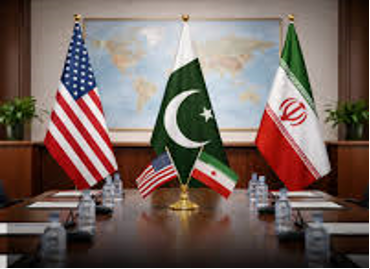
Credit: INP-WealthPk